
Forum Replies Created
-
AuthorPosts
-
 znModerator
With the departure of Gerald Everett, 2nd year Tight End Brycen Hopkins will be looking to seize his opportunity to make an impact! Hopkins averaged 15 yards per catch during his college career at Purdue! pic.twitter.com/b18HRGA6nB
— RAMS ON FILM (@RamsOnFilm) May 20, 2021
znModeratorSeattle's offense is LETHAL 🔪 pic.twitter.com/rZIRKs4QL1
— PFF (@PFF) May 20, 2021
znModeratorRobert Woods and Cooper Kupp ranked among 32 best WRs in NFL https://t.co/n8cKKJq1Kw
— Rams Wire (@TheRamsWire) May 20, 2021
—
[see the link above in the tweet] ie, from that:
Pro Football Focus ranked the top 32 receivers in football heading into the 2021 season and both Woods and Kupp made the cut – in consecutive spots, too.
Woods was 29th, with Kupp one place behind him at No. 30.
Here’s what PFF wrote about Woods, who has improved dramatically since going from the Bills to the Rams.
Woods has recorded a higher receiving grade in each of his four campaigns with the Rams than in any of his seasons with the Bills. He ranks among the 15 highest-graded wide receivers since 2017 while also slotting into the top five in both yards after the catch per reception (5.6) and percentage of catchable targets caught (92.8%).
And here was PFF’s take on Kupp, who “isn’t higher on this list because of his ability, or lack thereof, to effectively win on his own from the outside.” As primarily a slot receiver, that’s not exactly a hot take.
Kupp has consistently been one of the NFL’s most productive slot receivers since he was drafted out of Eastern Washington in 2017. His 2.12 yards per route run from the slot over the past four years is the fourth-highest mark among wide receivers. He also ranks second in broken tackles forced after the catch from the slot (27) and is tied for first in yards after the catch per reception on those same reps (6.0).
znModeratorIt’s a cover-up.
Reporter: “Are you absolutely certain that none of your members were in any communication with any of the people who stormed Capitol Hill?”@GOPLeader: *Exits* pic.twitter.com/4OMX6ofugU
— The Lincoln Project (@ProjectLincoln) May 20, 2021
znModeratorStory of #Palestine for those who pretend they know it all .
“Stand on the right side of history “ pic.twitter.com/JOiaEXeiPl
— Rabee’a Abrar ربیعہ (@rubiaabrar) May 20, 2021
May 20, 2021 at 3:42 pm in reply to: Rams picks w/ Rams Videos–interviews, players react to being drafted, etc. #130020znModeratorMany have already stated it, but it's genuinely wild how much Tutu Atwell and Todd Gurley look alike. I think it's the mouth, specifically when he talks lmaohttps://t.co/hzzHho5do7
— Sosa K (@QBsMVP) May 20, 2021
znModerator[Detroit quarterbacks coach] Mark Brunell thinks the 2021 Lions could pull a 1996 Jaguars-like surprise
Lions quarterbacks coach Mark Brunell is aware that no one thinks his team is going to be any good this year. And he’s OK with that, because he’s been on another team that greatly exceeded its low expectations.
That team was the 1996 Jaguars, an expansion team in only its second year of existence that made it to the AFC Championship Game.
“I was part of a team that very few people gave us a chance to do anything,” Brunell said, via the Detroit News. “Going into 1996, the expectations were really low. All we heard was, ‘Maybe get to .500, maybe win five or six games, a lot of inexperience, a lot of lack of talent’ and this and that. We actually started out that season and the first 11 games we were 4-7, and then we turned it around.
“My point in saying all that is we were a team that people didn’t give much of a chance to do anything. It kind of sounds familiar doesn’t it? My point is that it can happen. We believe it’s going to happen, and there’s something about being part of a football team where everyone outside the building says that you can’t and the message inside the building is, ‘You know what? Forget about what you’re hearing or what people are saying. You have to believe that you can.’ Certainly this is going to be a group that is going to believe that we can, that we can do some good things early, regardless of what’s being said out there, outside of the Detroit Lions.”
It would be very surprising if the Lions made the playoffs at all, let alone the conference championship game. Brunell thinks he’s with a team that is going to surprise people.
znModeratorJohn Wolford switches to jersey number 13, Kurt Warner gives his full endorsement. https://t.co/uvwxwxFjWv
— Rams Wire (@TheRamsWire) May 20, 2021
znModeratorSweet 16 for Andrew Whitworth. Big Whit returns for his 16th season in 2021! pic.twitter.com/RRCTGdsf2f
— RAMS ON FILM (@RamsOnFilm) May 20, 2021
znModeratorMay 20, 2021 at 12:18 am in reply to: Kurt Warner on Rams offense, defense, & on Aaron the Donald #130011znModeratorznModeratorA professor became a police officer — and learned what’s really broken about policing
“What’s broken in policing is what’s broken in American society.”It’s hard to understand the culture of policing in America from the outside.
There’s an informal code among police officers, “the blue wall of silence,” that encourages them not to talk to outsiders. There have been good attempts to study the police — who they are, what they believe in, what makes them tick — but if you really want to know how they see the world and their role in it, you almost have to become one.
And that’s exactly what Rosa Brooks, a law professor at Georgetown University, did in 2015. Brooks has spent much of her career in the national security world, focusing on human rights and the expanding role of the military in government, but she decided to become a sworn reserve police officer with the Washington, DC, Metropolitan Police Department. After graduating from the police academy, Brooks worked part time as a patrol officer from 2016 to 2020 and eventually wrote a book about her experiences called Tangled Up in Blue: Policing the American City.
I reached out to Brooks in the aftermath of the Derek Chauvin trial to talk about what she learned about policing, how a militaristic mindset spurs police to exaggerate threats and over-deploy violence, and whether the project made her more or less sympathetic to law enforcement.
This conversation doesn’t shy away from the ugly realities of policing in America, but it is an attempt at nuance. As Brooks acknowledges, the police have an extraordinarily difficult job and they’re often asked to do things they can’t — and shouldn’t — do. But there are problems within law enforcement culture that produce racist and violent outcomes, and we discuss what those are and how they might be solved.
A lightly edited transcript of our conversation follows.
SEAN ILLING
Did you have any assumptions about law enforcement that were shattered once you became a police officer?ROSA BROOKS
I wouldn’t say I had assumptions that were shattered. Some of that is because I’ve done a lot of work on how humans come to do horrific things and justify it to themselves. One big takeaway from all that research is that there aren’t a lot of clear villains in the world. There are people who do awful things and they tend to be people just like us. They tend to just have been in a situation in which they had some justifying narrative for why they’re doing these awful things.So I didn’t expect to find any monsters when I became a cop, and I didn’t. I met people who I didn’t think should be in policing, and I met wonderful people who are really struggling to work through what it means to be a good cop and to grapple with the critiques about racism and violence. I guess you can say that I expected things to be complicated, I expected it to be a world full of people stumbling around trying to do their jobs and feel okay about it, and that’s basically what I found.
SEAN ILLING
What surprised you?ROSA BROOKS
How difficult it really is to be a cop. It was incredibly humbling. I thought, “I’ve got all these fancy degrees. I’ve been around the world. Here’s a thing that any 25-year-old community college graduate seems to do just fine.”Boy, I realized in a hurry how hard it really is. And it reinforced my belief that we need to reimagine public safety. We pile too many roles onto cops. We expect them to be social workers and medics and mediators and mentors and warriors and counselors, and no one can be all of those things.
SEAN ILLING
You got to know a lot of police officers. What do they think about their job and how they’re perceived by the public right now?ROSA BROOKS
I think it’s been a tough time and a tough time especially for my friends who are African American cops really trying to do good in the world within a system shaped by centuries of racism. A lot of thoughtful officers are asking if they can actually do good inside the system, or if they need to leave be an agent of change on the outside.I see two profound truths that are in tension with one another. One is that policing in America perpetuates extremely unjust socioeconomic divisions, particularly along the lines of race, and policing in America is stunningly violent compared to policing in most other countries. That’s a profound truth.
But there’s another profound truth, which is that the overwhelming majority of police officers will never even point their weapon at another human being during their entire career, much less shoot someone.
In DC, at least, the average cop only arrests someone about once a month. They spend most of their time responding to calls. You’re taking sick people to the hospital. You’re doing CPR on people who overdose. You’re trying to find a kid who’s missing. You’re trying to help protect a victim of domestic violence or comforting a robbery victim. This is a profound truth, too: A lot of cops spend a lot of their time responding to people’s requests for help. Many cops never use excessive force, and they’re courteous and kind and thoughtful, but all of that good doesn’t cancel out the abuses or the structural problems.
It’s hard to talk about this in our polarized discourse. You’re either locked into “Police are heroes and fuck you if you think otherwise” or it’s “Cops are brutal racist pigs and they exist to kill Black people.” These are both wrong.
SEAN ILLING
What do you think is actually broken about the culture of law enforcement?ROSA BROOKS
There’s a lot wrong, but it’s also hard to make generalizations since we don’t have a national police force. We’ve got 18,000 different law enforcement agencies, most of which don’t talk to each other. So it’s hard to make generalizations.But I think it’s safe to say that the majority of police academies in this country still operate on kind of a military boot camp model. And that’s how the majority of police departments are organized. A lot of the debates about police militarization focus on the superficial things like the gear they wear or the surplus military equipment they use. But it’s the organizational aspects and the training that have a much more profound effect on police behavior.
SEAN ILLING
How so?ROSA BROOKS
One of the things that I talk a lot about in my book is the degree to which so much of police culture and police training builds off this myth of policing as terribly dangerous all the time. Anybody could kill you at any time. There’s no such thing as a routine call. Any situation could turn lethal in a millisecond.That is both true and completely misleading.
It’s true in the sense that anybody could kill you at any time. I mean, somebody could kill you at any time, too. Somebody could burst in your door right now and kill you. It could happen. It probably won’t, and you’re not going to organize your life around the possibilities that that will happen because it’s sufficiently implausible.
When I ask cops, “Take a guess how many police officers are killed on the job each year, not in accidents but intentionally killed,” I usually get answers like, “1,000” or “500.” It’s just under 50. That’s tragic and terrible for those people and their families, but it’s statistically not nearly as dangerous as police officers tend to think it is. But that perception of constant threat, which is inculcated by the training and the culture, really has a very profound impact on how officers relate to people — and in some cases make officers trigger happy.
The other thing we can’t lose sight of is that what’s broken in policing is what’s broken in American society. Policing does not exist in a vacuum. We live in a society that is structurally racist. We live in a society that is structurally classist. And our criminal justice system in general and policing in particular, they all bear the same scars that our whole society has. How do we get rid of racism in policing? Well, we need to get rid of racism in society because you’re not going to be able to take this one piece of it and separate it out.
SEAN ILLING
This idea that we can train police officers like warriors, that we can arm them like soldiers, and then expect them to not internalize a militaristic ideology and approach their job like an occupying force seems terribly misguided.ROSA BROOKS
The justification that police who defend paramilitary training give — and there are some good, thoughtful human beings who do defend it — is something like, “Look, if you’re a police officer, you are going to be asked to run toward the gunfire when everybody is running away. People are going to scream at you. They’re going to spit at you. They’re going to insult you. You need to be able to keep your cool in all of those situations.”So the defenders will say that the academy is stress-testing for this. If you can’t keep your cool when an instructor is screaming insults at you and ordering you to get down and do pushups, then how are you going to keep your cool when you’re on the street and 50 people are standing around in a circle when you’re doing something perfectly legitimate and lawful and spitting at you and calling you names? This is how we make sure you can keep your cool then.
I get that argument in the abstract, but I don’t think it tends to work terribly well. I worry that many recruits take away the opposite lesson. The lesson that they take away from the police academy is that it’s okay for powerful people to yell at people with less power. It’s okay for people with power to demand and expect instant obedience rather than questions from those with less power, and it’s okay to punish disobedience with physical pain. Those are not lessons that we should want police officers to be carrying with them in their interactions with the community.
SEAN ILLING
I take all those points and don’t disagree, but I’m also trying to imagine — really imagine — what it’s like to be a police officer in a country with more guns than people. Overstating the threat is not helpful, and yet the threat is real and being a police officer in the US is not the same thing as being one in the UK or Portugal or wherever.ROSA BROOKS
I think it’s part of that sense of constant threat, and it’s something that you hear all the time from cops. If you say something like, “Look, most patrol officers in the UK aren’t armed,” they’ll say, “Yeah, but neither is the rest of the population.” So, yeah, when I say the threats are exaggerated, it’s not to say that there are no threats.A week before I started at the police academy, a young woman in a neighboring jurisdiction was shot and killed. She was on her first day out of the academy, her first day patrolling. She went with her partners to a domestic violence call. They get to the house, and they start walking toward it, and a guy opens the front door and starts shooting at them. She was killed, and a couple of the other officers ended up in the hospital seriously injured. That can happen.
None of us are very good — Americans in particular — at assessing risk and probability. Psychologists and cognitive psychologists have done lots of work on how recency and vividness can affect our perception and make us think that because we learned of something vivid and awful that happened recently, we tend to greatly overestimate the frequency. Yes, the threat is real. There is a much more serious threat of violence toward police officers in this country than in countries where there are fewer guns in civilian hands. But, no, it’s not nearly as bad as most police officers think it is.
SEAN ILLING
I think we all want to see lethal force used as minimally as possible. The question for me is, how much risk should we ask police officer to take? Should we ask them to disarm someone with a knife in their hands? Should we ask them to go hand-to-hand with someone who’s resisting when they’re wearing a live gun on their hip? I’m not sure where to draw the line, but there has to be a line.ROSA BROOKS
Cops are trained to disarm people. They’re trained in defensive tactics. They’re trained to respond when someone is being aggressive toward them. They’re trained to wade into fights and try to drag people away from each other. So we should expect cops to take certain levels of risk — that’s part of the job.At the same time, there are situations where I think people are too quick to label a police shooting as murder when, in fact, the officer was justified in using force. Most of us don’t tend to question, for instance, when a mass shooter is eventually killed by the police. We’re like, “Yeah.” There are other situations that aren’t that dramatic where I think the use of force is legally and morally justifiable.
But I also think the fact that officers have guns leads them to pull out the gun as a first resort and not as a last resort.
SEAN ILLING
Did the four years you spent on the force make you more or less sympathetic to police?ROSA BROOKS
Again, I went into it thinking the world doesn’t contain a whole lot of villains or heroes, so I wouldn’t say it made me more sympathetic or less sympathetic. I think it made the areas in which I’m sympathetic and unsympathetic have more granularity to them.I did come out of it thinking that the rhetoric that vilifies cops is wrongheaded and, in fact, self-undermining. Police officers have to be part of the conversation about how to change policing, and to the extent that the rhetoric we use just alienates cops and makes them feel defensive, it does a disservice to the cause of transforming policing.
I run a program at Georgetown, a fellowship program for young DC police officers, and we talk about all the hard issues. We talk about race. We talk about violence. We talk about, what is the role of police in a diverse, democratic society? Do we know? Is there a consensus on that? What is good policing? Do we know? Can we measure it?
Most people go into policing out of public spirit and idealistic reasons. A lot of them get that beaten out of them. But the people within policing who care about changing it do tend to have a much clearer sense of what will work, what will not work, why things are the way they are, and if you want to change something you have to understand it.
I also think that policing for many African Americans has been a route into the middle class. It’s a stable government job with a pension, good benefits, and so on. The more we just vilify cops, we are driving away some of the very people who could and should be some of the most effective advocates for change. The project of transforming policing should involve building bridges to the many, many people within policing who also feel like the system is broken and needs change. We need more of these conversations and we need them as soon as possible.
znModeratorVideo shows South Carolina deputies repeatedly tasing Black man before he dies in jail
https://news.yahoo.com/video-shows-south-carolina-deputies-001600368.html
Officials in South Carolina on Friday released hours of body-worn camera footage and details about the final hours of the life of Jamal Sutherland, a Black man who died in January after he was pepper-sprayed and electroshocked with a taser in his jail cell.
Sutherland, 31, was arrested on Jan. 4 after a “large scale fight” broke out at a psychiatric facility where he was receiving mental health treatment, according to a statement from North Charleston Mayor Keith Summey. He said the city police department did its job delivering Sutherland “safely” from the facility to the jail.
The next morning, Charleston County sheriff’s deputies attempted to remove Sutherland from his cell for a bond hearing.
In the video, two sheriff’s deputies are outside Sutherland’s jail cell and one deploys a taser, or stun gun, and appears to use it repeatedly as Sutherland cries out in pain and writhes on the floor.
A timeline of events published by WBCD, an NBC affiliate in Charleston, indicated pepper spray was also deployed. Sutherland was pronounced dead one hour and 15 minutes after the deputies first tried to remove him from his cell and after nearly an hour of resuscitation attempts.
The county coroner’s office said an autopsy showed the cause of death as “excited state with adverse pharmacotherapeutic effect during subdual process,” according to WBCD.
Charleston County Sheriff Kristin Graziano described the events of Jan. 5 as a “horrible tragedy” and said she “deferred to the family’s wishes to keep the video private until they were ready.”
“Our officers removed Mr. Sutherland from his cell that morning in order to ensure that he received a timely bond hearing, as required by law,” Graziano said in a statement. “Their efforts were complicated by the increasing effects that Mr. Sutherland was suffering as a result of mental illness. This unfortunate tragedy has revealed an opportunity to review existing policies.”
A lawyer for Sutherland’s family, Mark Peper, said on Friday, “People with mental health issues are entitled to the same exact civil rights as you and me and every other healthy, wealthy person in this world.”
Peper said Sutherland’s “last question on this earth” was “what is the meaning of this?”
“We will answer this question,” Peper said.
Fighting back tears, Amy Sutherland, Jamal’s mother, told the media Friday she was proud of her son.
“Mentally ill, still able to say, ‘Thank you, Jesus, take care of me,’” she said. “I want y’all to know Jamal was a great man. He had faults like everybody else, but he was a great man.
“I don’t want any violence in my city,” she continued. “I want us to view this tape and I want us to learn what we don’t want happening here.”
znModeratorAuthorities restrained them, shocked them with stun guns or blasted them with pepper spray. But when dozens of Black people died in custody, the autopsies blamed their genetic makeup, not the police. A @nytimes investigation from @jenvalentino and me. https://t.co/B8uRCpHfwM
— Michael LaForgia (@laforgia_) May 15, 2021
znModeratorCops holding other cops accountable. This is all the people want. https://t.co/QDl1FC9Aju
— Brett Kollmann (@BrettKollmann) December 23, 2020
May 19, 2021 at 11:26 pm in reply to: internal atrocities: Malcolm X , Fred Hampton, MLK, Tulsa #130002znModeratorHow many of you were taught about the Tulsa Race Massacre in school?
I wasn’t #AmericanHistory https://t.co/WyJJI80mrc— Arne Duncan (@arneduncan) May 20, 2021
znModeratorSosa K@QBsMVP
No NFL team ran jet motion more than the Rams last season (293 snaps). From 2019/20, here’s Tutu Atwell’s ranks on jet motion among all CFB players:29 targets (1st)
285 yards (1st)
28 receptions (1st)
14.1 YAC/reception (2nd, min. 10 targets)They’re 100% gonna have a plan.
When you look at some of the questions about Atwell’s game, ability to release off the LOS vs. press will likely be question #1. Good news, the Rams know what they’re doing. They ran bunch formations more than any team in NFL in 2020:
Bunch formation: 523 (1st) / 45.1% (1st)
Point? Well, a smart team has a clear and concise usage plan prepared for their incoming “impact” players. Put Atwell at Z/Y where he can line up off the LOS to protect him, line up in bunch for free releases, and use in jet motion as a threat + “free”/easy production.
znModeratorRams rook Bobby Brown III is ready to learn everything he can from @AaronDonald97 ✊ pic.twitter.com/taNLvRDT8K
— B/R Gridiron (@brgridiron) May 19, 2021
znModerator2nd ranked defense in these early defensive rankings. Seems fair as does the write up.
High expectations for this group, obviously. https://t.co/I4ITSiOoKH
— BTHRams (@BTH_Rams) May 19, 2021
znModeratorI wonder, why did Kromer quit.
I don’t even think it’s entirely clear he quit, per se. Sounded mutual, which means it could be a firing in part.
znModeratorfrom NFL Power Rankings 2021: 1-32 poll, plus the most improved offseason teams and players who benefited from the draft
4. Los Angeles Rams
Players who benefited most from draft: OL Brian Allen, Coleman Shelton and Austin Corbett
The Rams lost center Austin Blythe to the Chiefs in free agency and did not draft a replacement. That means Allen, Shelton and Corbett will compete for the starting job in 2021 and possibly earn the opportunity snap to quarterback Matthew Stafford for several seasons beyond. Allen has the most experience after starting nine games as a second-year pro in 2019, but he has not appeared in a game since suffering a season-ending knee injury that year. Shelton has no NFL experience at the position, and Corbett, who started the past two seasons at guard, has played the position in only the preseason. — Lindsey Thiry
znModeratorPremise: another Star Trek time travel bit. In this one, a Deep Space 9 episode called “Little Green Men,” the 3 Ferengi end up on 1947 Earth. They’re trying to communicate but some kind of radiation interferes with their translators.
…
znModeratorfrom PFF Quarterback Rankings
https://www.pff.com/news/nfl-quarterback-rankings-all-32-starters-ahead-of-the-2021-nfl-season
11. MATTHEW STAFFORD, LOS ANGELES RAMS
Sean McVay must be the happiest coach of the offseason. He can finally dial up the deep passing game he’s probably always dreamt of. The addition of Matthew Stafford makes this offense that much more dangerous.
Stafford offers the same steady stream of passing on intermediate-level throws, but he will excel on passing plays of 20 or more yards downfield. But let’s not take for granted what Tom Brady accomplished in a first-year offense; it does take some time to get new terminology down. That will be the biggest hurdle for Stafford, but if the transition is smooth, the Rams could be taking another trip to the Super Bowl.
znModerator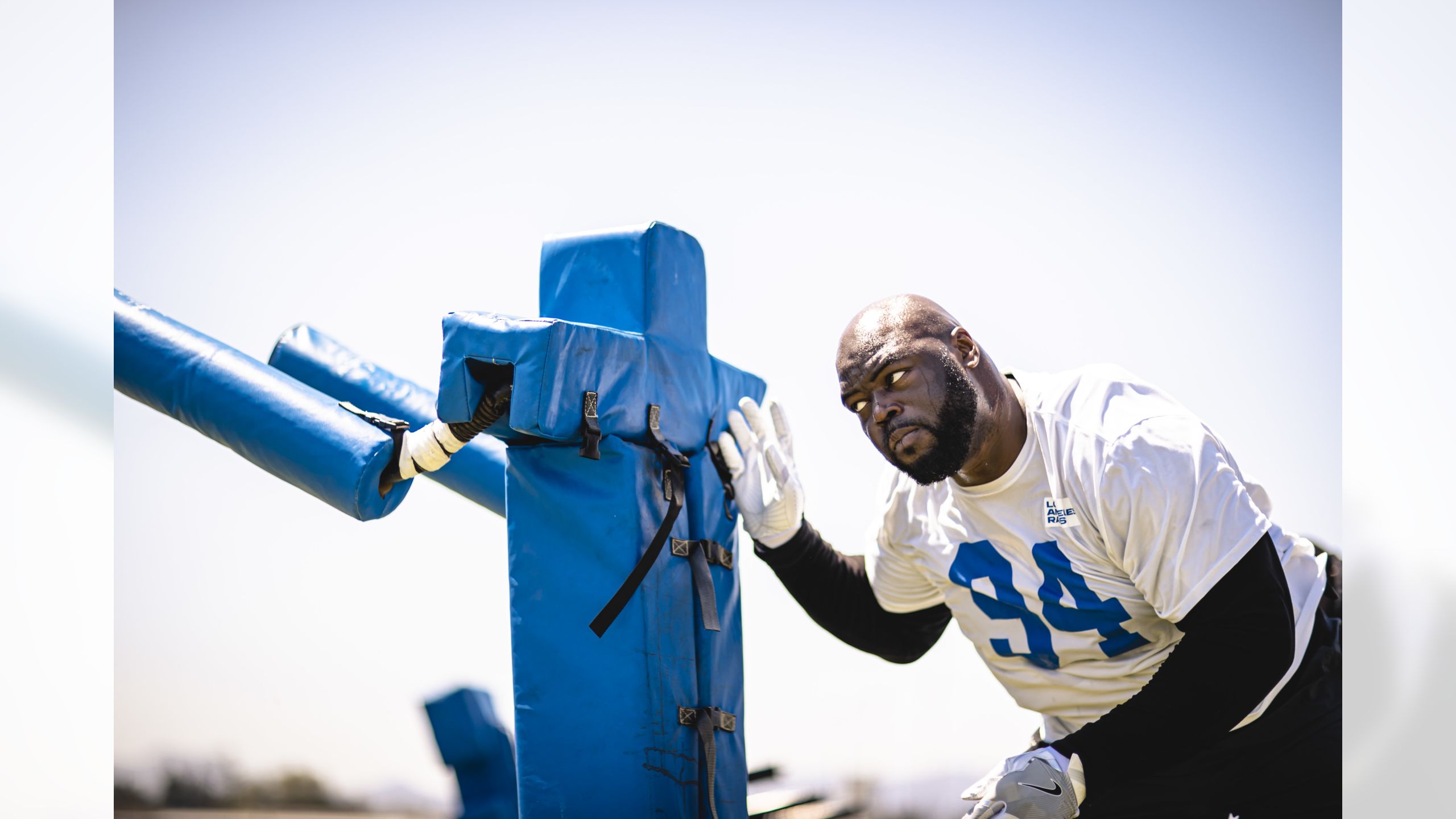
RAMS DEFENSIVE LINEMEN ARE TRAINED TO SNEAK UP AND LISTEN IN ON THE OPPOSING TEAM’S OFFENSIVE HUDDLE.
znModerator69RamFan
By moving Corbett to center and with Evans at RG….
Our OL just got bigger and physically stronger
Corbett is our smallest starting O-Lineman at 6-4, 306lbs and every one else is 6-5 and over 310lbs
To add in our OL bench players,,,, they are all over 310lbs with the exception of Allen (and I don’t believe he will make the 53 man squad, but if he does, I’ll be really surprised)
znModerator.@DeSeanJackson10 with the one-handed snag 👀 pic.twitter.com/pEEGykGDFe
— Los Angeles Rams (@RamsNFL) May 18, 2021
znModeratorThe Broncos announced they've agreed to terms with Roman Phifer to become the club's senior personnel executivehttps://t.co/E115M4vcNp pic.twitter.com/9lTtCBWTDa
— Around The NFL (@AroundTheNFL) May 18, 2021
znModeratorAnyone else noticed a monumental shift in Western media coverage of the Gaza war in the last few days?
What started as Israel whitewashing has since become a scathing uncovering of Israel’s barbarity. https://t.co/PdYmVv0sJf
— Hamza #SaveSheikhJarrah (@Hamza_a96) May 18, 2021
znModeratorBig Pharma says they need to charge astronomical prices to pay for research and development. Yet, the amount they spend on manipulating the market to enrich shareholders completely eclipses what's spent on R&D. Today, I confronted a CEO about the industry's lies, with visuals ⤵️ pic.twitter.com/c3jSLr0yVd
— Rep. Katie Porter (@RepKatiePorter) May 18, 2021
znModeratorStaff ➡️ @CooperKupp! 👀 pic.twitter.com/DBxKBtCgNw
— Los Angeles Rams (@RamsNFL) May 18, 2021
-
AuthorPosts