
Forum Replies Created
-
AuthorPosts
-
 znModerator
Seems illegal! https://t.co/oBMDSlFQUX
— Cameron DaSilva (@camdasilva) September 14, 2020
znModeratorJ.B. Long@JB_Long
Rams don’t punt in the first half, but settle for 3 FG attempts and miss one of them.End up trailing 14-13, and the Cowboys will receive the 3Q kick.
Interesting to see Fuller playing for Rapp in the back end. Terrific start for the offensive line. Dak very sharp.
Joe Curley@vcsjoecurley
-Jared Goff is 12 of 19 for 168 yards
-Malcom Brown has 72 yards from scrimmage and a TD on 10 carries and two catches.
-Robert Woods has 79 yards from scrimmage on four receptions and a carry.
-Rams were outgained 255 to 241.DOWNTOWN RAMS [DTR]@DowntownRams
#Rams trail the #Cowboys at the half 14-13. Bizarre to be losing a game you feel they have controlled.Sosa K@QBsMVP
The Rams didn’t invest nothing at ILB and it showed in that half. The issue was the remainder of the defense didn’t step up one bit. The missed tackles were brutal from all three levels.znModeratorGUESS WHO?!@AaronDonald97 just moved up to second all-time on the franchise sack list. pic.twitter.com/jvjbEYEFb3
— Los Angeles Rams (@RamsNFL) September 14, 2020
znModeratorWE SEE YA, ROOK!
Not too shabby for your first NFL catch, @VanJefferson12!🤩 pic.twitter.com/MXoq5iN1TV
— Los Angeles Rams (@RamsNFL) September 14, 2020
znModeratorStu Jackson@StuJRams
Van Jefferson. Wow.The rookie WR just hauled in a 31-yard completion from Jared Goff to set up the Rams at the Cowboys 21.
Rich Hammond@Rich_Hammond
Well, that was gorgeous. Welcome, Van Jefferson.Ryan Clark@Realrclark25
Van Jefferson can really play man. This was an amazing throw by Goff as well. Threw Jefferson away from Diggs, but kept it in play. Redline*znModeratorJim Fadler@jimistlboy
So I see the screens are back #RamsBucky Brooks@BuckyBrooks
The @RamsNFL fly-sweep misdirection package is difficult to defend because they will run the fly sweep, off-tackle run to the motion, off-tackle run away from motion, WR/RB screen game, bootlegs and play-action deep shots. That’s a lot to defend from the same initial action.znModerator znModerator
Special teams takes the field! 🙌@JakeMcQuaide x @JHekker x @ssloman118 pic.twitter.com/sgHRNMJQkW
— Los Angeles Rams (@RamsNFL) September 13, 2020
znModeratorCooper Kupp & Robert Woods ready in the new Bone uniforms. pic.twitter.com/c90PWwP9J0
— J.B. Long (@JB_Long) September 13, 2020
September 13, 2020 at 7:32 pm in reply to: any other games interest you today? … a thread for discussing all other games #120908znModeratorDeAndre Hopkins balled out today in his Cardinals debut:
14 catches
151 yardsAnd a 24-20 win over the 49ers 👀 pic.twitter.com/Wd4d1XhxF9
— Sports Illustrated (@SInow) September 13, 2020
==
First game as a Cardinal, sets new career-high with 14 catches.
What a debut for DeAndre Hopkins.
(via @NFL)pic.twitter.com/D1FJmOUP31
— NFLonCBS (@NFLonCBS) September 13, 2020
September 13, 2020 at 7:27 pm in reply to: any other games interest you today? … a thread for discussing all other games #120907znModeratorI spent a full month on a half hour long video trying to explain that the Cards had a real defense now, and yet people are still surprised by today’s results.
Arizona is legit, and Vance Joseph is finally having the time of his life out there. https://t.co/lxt7LmJPVa
— Brett Kollmann (@BrettKollmann) September 13, 2020
znModeratorCameron DaSilva@camdasilva
Xavier Jones up tonight EyesRams have 4 RBs active
September 13, 2020 at 7:22 pm in reply to: any other games interest you today? … a thread for discussing all other games #120905znModeratorSeth Walder
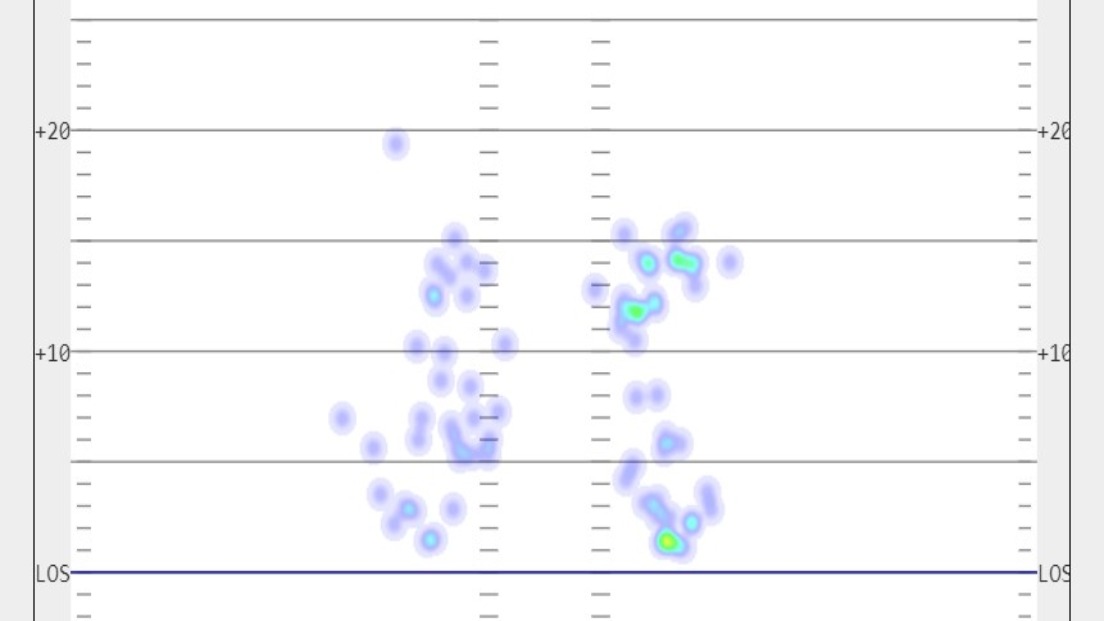
ESPN AnalyticsHere’s Jamal Adams’ pre-snap location heat map from today, via Next Gen Stats. Moved all over. He rushed the passer 10 times.
 znModerator
Gary Klein@LATimesklein
It’s a little strange to see Greg Zuerlein loosening in a Dallas Cowboys T-shirt. Saying hello to Johnny Hekker.September 13, 2020 at 6:52 pm in reply to: any other games interest you today? … a thread for discussing all other games #120901znModeratorBob Condotta@bcondotta
Jamal Adams on watching an offense score 38 points: “I’m not used to it.”September 13, 2020 at 6:34 pm in reply to: any other games interest you today? … a thread for discussing all other games #120900znModeratorWhat the heck is going on with Carson? What the heck is going on with Ertz? What the heck is going on with the offensive line? What the heck is going on with this team?
We search for answers in today's 10 Eagles Instant Observations: https://t.co/qxAbfLrImi
— Reuben Frank (@RoobNBCS) September 13, 2020
znModeratorSoFi Stadium, the NFL's crown jewel, is the culmination of Rams owner Stan Kroenke's vision and the NFL's desire to return to the L.A. market. Today it hosts its ever NFL game as the Rams welcome the Cowboys.
Story by @nathanfenno and @LATimesfarmer https://t.co/u7HeF5EaAg
— Los Angeles Times (@latimes) September 13, 2020
September 13, 2020 at 6:26 pm in reply to: any other games interest you today? … a thread for discussing all other games #120898znModeratorJACKRABBIT!
Janoris Jenkins picks off Tom Brady 🐰
(via @NFL) pic.twitter.com/8ZYiouyix5
— Sunday Night Football (@SNFonNBC) September 13, 2020
September 13, 2020 at 6:25 pm in reply to: any other games interest you today? … a thread for discussing all other games #120897znModeratorDebuts, revivals and plenty of impressive performances. Here's what we learned from Sunday's Week 1 early gameshttps://t.co/kLXJk2z8gu pic.twitter.com/WiIC1ox2un
— Around The NFL (@AroundTheNFL) September 13, 2020
September 13, 2020 at 6:24 pm in reply to: any other games interest you today? … a thread for discussing all other games #120896znModeratorLarry Fitzgerald just made SUCH a heads-up play. With the clock running out and no timeouts, Fitz sprints the ball to the middle of the field to ensure Kyler could kill the clock. Arizona drilled a FG on the next play. It’s the little things!
(@CamCox12) pic.twitter.com/NS8MLGsvI1
— Field Yates (@FieldYates) September 13, 2020
September 13, 2020 at 6:24 pm in reply to: any other games interest you today? … a thread for discussing all other games #120895znModeratorWashington's Head Coach Ron Rivera, who was diagnosed with cancer earlier this year, got a planned IV at halftime in order to make sure he could continue in the 2nd half.
Incredible. pic.twitter.com/ndCQq4MzGa
— ESPN (@espn) September 13, 2020
znModeratorAs many Rams players walk into the stadium today, they are wearing shirts with the names and pictures of victims of police brutality and racial violence. Players have been organizing this effort as a team for a few weeks now. https://t.co/k6swnWwPE8
— Jourdan Rodrigue (@JourdanRodrigue) September 13, 2020
znModerator.@thereal_cam3 arriving in style for his NFL debut! pic.twitter.com/eIsaWd0Oj4
— Los Angeles Rams (@RamsNFL) September 13, 2020
znModeratorOregon officials said they are preparing for a ‘mass fatality incident’ as 500,000 people stand in evacuation zones from the wildfires ravaging the West Coast
Oregon officials say they’re preparing for a “mass fatality incident” as wildfires continue to spread throughout the state.
There are currently six reported deaths in Oregon due to the fires that have devastated millions of acres, and 40,000 residents have been evacuated, with 500,000 more in evacuation zones.
Oregon is joined by other states including California, Colorado, and Utah in combatting wildfires that have destroyed the homes of hundreds of people throughout the region.
Wildfires continue to ravage the West Coast, including Oregon, where officials have evacuated 40,000 people from the blazes that have devastated millions of acres and destroyed thousands of buildings.
On Friday, Director of the Oregon Office of Emergency Management Andrew Phelps said Oregon is gearing up for a “mass fatality incident” as large fires continue to spread throughout the state, according to CBS Portland.
“This is going to be a long term recovery operation,” he said according to the outlet. “The long term recovery is going to last years.”
Oregon has been among the states hit hard by dozens of wildfires that have sparked throughout the region. There are six reported deaths in the state, including that of a 12-year-old boy and his grandmother. Officials have evacuated 40,000 Oregon residents, and 500,000 more are currently in evacuation zones, Gov. Kate Brown said Friday according to CBS Portland.
Evacuation orders are also in place in other states throughout the region that have been slammed by the wildfires, including Colorado, California, and Utah, the National Interagency Fire Center said Saturday according to a USA Today report. California has reported 19 deaths in the state due to the wildfires. Daniel Berlant, Cal Fire’s assistant deputy director, said Friday that five of the state’s 10 largest wildfires in its history have broken out this fire season.
On Friday, President Donald Trump addressed the wildfires, which broke out weeks ago, and thanked the thousands of first responders and firefighters that are on the frontlines battling the flames. The president has authorized FEMA to offer disaster relief aid. White House Deputy Press Secretary Judd Deere said the president will travel to Sacramento, California, on Monday to discuss the wildfires.
znModeratorRams Brothers@RamsBrothers
Hard to believe Aaron Donald’s first sack on Dak Prescott tonight will be the first time Aaron Donald has sacked Dak Prescott in his career.Long overdue.
==
A view of the Rams end zones, field and cardboard fans at SoFi Stadium. pic.twitter.com/qPur5hy3Uv
— Lindsey Thiry (@LindseyThiry) September 13, 2020
September 13, 2020 at 5:01 pm in reply to: any other games interest you today? … a thread for discussing all other games #120890znModeratorDan Orlovsky@danorlovsky7
Carson Wentz is hurting his team. Point blank-hes hurting the team. Only reason Wash is in game is WentzNFL Update@MySportsUpdate
Carson Wentz has been sacked 8 times today by Washington’s defense. Getting crushed.Michael Silver@MikeSilver
Six and a half minutes into their 2020 season, the @49ers look a lot like they did in 2019. So, at this point, do the @AZCardinals… but the game is youngAndrew Siciliano@AndrewSiciliano
Cam’s first Patriots TD…rushing
Brady’s first Bucs TD…rushing
Burrow’s first Bengals TD..rushingvaughn mcclure@vxmcclure23
Matt Ryan throws for 450 yards and Julio Jones (157), Calvin Ridley (130), and Russell Gage (114) all go over 100 yards receiving, but Falcons lose the opener to the Seahawks 38-25Geoff Schwartz@geoffschwartz
If this is going to be Seattle’s offense moving forward… I might have underestimated them. Congrats Seahawks twitter. You have bullied Carroll into running an offense through Wilson. Face with tears of joyTony Dungy@TonyDungy
First drive for Tom Brady as a Buccaneer is crisp and classic. Brady was sharp throwing to multiple receivers and spreading the ball around. Lack of crowd noise in the SuperDome definitely noticeable as well. Tampa 7—Saints 0Mike Clay@MikeClayNFL
Gurley had 1 yard on 5 targets, which means he picked up where he left off with the Rams in that departmentSeptember 13, 2020 at 2:35 pm in reply to: any other games interest you today? … a thread for discussing all other games #120885znModeratorGurley looks really slow.
Yeah maybe I will pull that one on.
znModeratorCowboys at Rams
from https://www.espn.com/nfl/story/_/page/viewersguide09112020/nfl-week-1-game-picks-schedule-guide-fantasy-football-tips-odds-injuries-more#dallarMatchup rating: 68.9 | Spread: DAL -2.5 (51.5)
What to watch for: The Rams’ defense returns stars Aaron Donald and Jalen Ramsey, but under first-year coordinator Brandon Staley, the unit will face a tall challenge in stopping Dak Prescott, Ezekiel Elliott and the top-rated 2019 Cowboys offense directed by second-year coordinator Kellen Moore. Staley, whose defense is expected to emulate the Bears’ and Broncos’, must find a way to keep the Cowboys from gaining the 263 rushing yards they piled on the Rams late last season. — Lindsey Thiry
Bold prediction: Prescott will see a pass intercepted. Not bold? In four season openers, he has thrown 131 passes without having a pass picked off. To close last season, Prescott did not have an interception in the final four games. — Todd Archer
Best of NFL Nation
• 32 bold predictions for the NFL season
• Why Brady-Brees matchup is unprecedented
• Cowboys’ McCarthy ready for fresh start
• Burrow to begin pivotal rookie season
• Bills aim to dethrone Patriots, win SBStat to know: Last season, Prescott became the fifth player in NFL history to pass for 400 yards, four touchdowns and zero interceptions in an opener. And after compiling 4,902 pass yards in 2019 — the second most in franchise history — he could join Tony Romo as only Cowboys QBs with consecutive seasons of 4,000-plus passing yards.
Injuries: Cowboys | Rams
What to know for fantasy: The Rams held wide receiver Michael Gallup to a season-low six yards in Week 15 last season, but he caught 10 passes for 196 yards and three scores over the final two weeks of 2019 and saw his ADP rise throughout draft season this summer. See Week 1 rankings.
Betting nugget: The Rams are 1-8-1 in their past 10 games as a home underdog. Read more.
Archer’s pick: Rams 33, Cowboys 30
Thiry’s pick: Cowboys 28, Rams 21
FPI prediction: LAR, 49.9% (by an average of 0.1 points)Matchup must-reads: Cowboys’ Prescott: I will “seize the moment” after difficult offseason … Ramsey worth the price but gives Rams another huge contract to work around … Cowboys 2020 season preview: All eyes on Prescott, McCarthy chemistry … From St. Louis to SoFi Stadium, only six Rams complete the journey … Sources: Cowboys rework Martin deal for ’21 cap … Rebuilding? Reloading? Rams at a crossroads entering the 2020 season
znModeratorznModerator.@SteveMariucci sees an offensive explosion coming for #DALvsLAR… and he sees @richeisen losing the ratings battle to Sunday Night Football 😂 pic.twitter.com/Fo0Uy44vnU
— NFL GameDay (@NFLGameDay) September 13, 2020
-
AuthorPosts