Forum Replies Created
-
AuthorPosts
-
July 17, 2020 at 5:29 pm in reply to: big story coming on the Washington no-name-yet team… scandals brewing #118091
 znModerator
Report: NFL punishment of Dan Snyder would likely be limited to a fine https://t.co/mMwzQcojLf
— ProFootballTalk (@ProFootballTalk) July 17, 2020
znModeratorRams T Whitworth, Family Test Positive for Novel Coronavirus
Howard Balzer
https://www.si.com/nfl/cardinals/news/andrew-whitworth-family-test-positive
As the NFL and NFLPA continue to work toward making work environments safe for training camp, just how dangerous the novel coronavirus can be was experienced in a huge way by Los Angeles Rams tackle Andrew Whitworth.
During a conference call Friday with NFLPA executive director DeMaurice Smith and union president JC Tretter, the starting center for the Cleveland Browns, Whitworth joined the call to talk about the recent harrowing experience of his family.
Whitworth, the Rams’ player rep, opened by saying, “Our leadership, JC and those guys, have done a tremendous job and continue to be a solid voice for us. You’re going to have to make good decisions and have to be careful outside the building. We’re talking about things as simple as going to lunch with someone because all it takes is one exposure.”
He then explained: “My story is an example of that. We had a family member that simply just went to lunch with a friend and as innocent as it can be a couple days later we were traveling all together and she started to not feel well, and ended up deciding to get a test and the next thing we know, she had it. A couple days later my wife and I had it, a couple days later our kids had it so we were about 7-for-7 at that point. Then unfortunately we had just visited my wife’s family and we were traveling with them as well and her mom and dad both got it.
“Obviously, people of an older age it seems to be much tougher; it definitely was on them and unfortunately her dad got to a state where he had to be hospitalized. Luckily for us it’s such a blessing we got him home about four or five days ago. He’s home with us now. We’re very blessed to have him and for him to be OK. But its definitely a scary thing and you realize how contagious this really is. It doesn’t take much and it can spread like wildfire. For us, it’s affected us personally, scary but for our family, our kids we ended up OK everything seemed to go pretty normal pretty mild case, but for her parents it wasn’t that way.”
That drives home what the players are facing as they advocate for a return to play that is as safe as possible considering that is many cases not only players, but their families will be traveling to their team’s city, in which there are currently serious hot spots.
July 17, 2020 at 3:59 pm in reply to: NFL on having a season w/ pandemic (thread 1, to 7/17)) #118086znModeratorWhat we learned from the NFLPA's Friday conference call https://t.co/SnlU5x0qTR
— Rams Wire (@TheRamsWire) July 17, 2020
July 17, 2020 at 2:53 pm in reply to: NFL on having a season w/ pandemic (thread 1, to 7/17)) #118084znModeratorDan Graziano@DanGrazianoESPN
NFLPA prez JC Tretter: “We’ve had coaches say the protocols are too much to ask, coaches come forward and saying, ‘Everyone’s going to get sick, so we might as well all get sick together.’ Those attitudes can’t happen. There are consequences to getting sick.”July 17, 2020 at 1:44 pm in reply to: the virus & the education industry (ie. what should schools do) #118082znModeratorznModeratorMore than 6 in 10 Americans do not trust what Trump says about the coronavirus pandemic https://t.co/BpqwP6y2BJ
— Emily Guskin (@EmGusk) July 17, 2020
July 17, 2020 at 1:03 pm in reply to: big story coming on the Washington no-name-yet team… scandals brewing #118078znModeratorWashington owner Snyder vows culture change amid allegations
Washington NFL owner Dan Snyder said Friday he’s committed to improving the culture inside the team after allegations of sexual harassment, while the league will wait for a law firm’s review before taking action.
The Washington Post reported Thursday that 15 female former employees said they were sexually harassed during their time with the team. Snyder said the behavior described in the story “has no place in our franchise or society.”
He hired District of Columbia law firm Wilkinson and Walsh to conduct an independent review of team policies, culture and allegations of workplace misconduct. The league said in a statement it will meet with lawyers after the investigation is complete and will act based on the findings.
Snyder also pledged to make organizational changes.
“Beth Wilkinson and her firm are empowered to do a full, unbiased investigation and make any and all requisite recommendations,” Snyder said. “Upon completion of her work, we will institute new policies and procedures and strengthen our human resources infrastructure to not only avoid these issues in the future but most importantly create a team culture that is respectful and inclusive of all.”
He said the commitment to establishing a new culture and higher standard began with the hiring of Ron Rivera as coach this year. Rivera told The Athletic he was brought in to change the culture and “create an environment of inclusion.”
The NFL said it expects the team and all employees to be cooperative but is not yet making its own review of the team.
“These matters as reported are serious, disturbing and contrary to the NFL’s values,” the league said. “Everyone in the NFL has the right to work in an environment free from any and all forms of harassment.”
Director of player personnel Alex Santos, assistant Richard Mann II and longtime broadcaster and senior vice president Larry Michael are no longer with the team. Michael announced Wednesday he was retiring after 16 years.
Santos, Mann, Michael and former business executives Dennis Greene and Mitch Gershman were mentioned in the Post story.
July 17, 2020 at 9:12 am in reply to: big story coming on the Washington no-name-yet team… scandals brewing #118075znModeratorBefore the story broke there were some rumors, which turned out to be wrong in a lot of ways. Nothing wrong with posting rumors–but the real WaPo story sorted that out and killed a lot of those rumors.
But looking back, some of the rumors were just weird, and I put that on the people who tweeted them.
Like this guy (it’s in this thread). Nominally, the opening bit isn’t so bad:
Harrison Weinhold@RadioHarrison
This will be a story about how the front office for the past 10 years has hidden and protected men in the building against sexual assault and harassment allegations and legal action. Look at recent firings and retirings if you need specific names, but they’ll be out soonOkay. Pretty much substantiated stuff.
But then there’s this (same guy):
Front office and team personnel fucking media members in exchange for scoops and leaks. Protecting leadership, coaches, players from getting in trouble with their wives, etc and then using that information for blackmail, leaks and to keep people obedient (Gruden, Allen, McLovin).
It’s not just that he named Gruden. Who, turns out, has nothing to do with any of this.
Look at what he did. He has the female reporters who complained of harassment having sex with team officials to get info.
He turned the entire issue upside down. He has female reporters as aggressively using sex to get info–when the ACTUAL story was that female reporters were being harassed while trying to do their jobs.
I suspect this guy just made that up based on his own “hunches.”
This guy is an EXAMPLE of the mindset that’s being complained about.
July 16, 2020 at 9:28 pm in reply to: the virus & the education industry (ie. what should schools do) #118072znModeratorFrom the White House podium:
“Science should not stand in the way” of reopening schools. https://t.co/pE2AN6GtyM— Weijia Jiang (@weijia) July 16, 2020
znModeratorTrump’s Fumbling of the Coronavirus Crisis Could Kill the College Football Season
The president is marinating in a midsummer mess of his own creation, and his epic failure of leadership will result in a ruined college football season.https://www.si.com/college/2020/07/16/trump-fumble-coronavirus-response-college-football-season
One of Donald Trump’s favorite things to do as President has been visiting college football games in friendly locations, bathing his eternally needy ego in applause and affirmation. Last season alone, he attended the LSU-Alabama game in November, the Army-Navy game in December, and the College Football Playoff championship between LSU and Clemson in January. The First Football Fan was nearly as ubiquitous within the sport as Kirk Herbstreit.
That’s going to be a difficult vanity play to repeat in 2020.
There will be no college football crowds of the usual size. There might not be college football, period. Pessimism percolates as the time for solutions dwindles. We are speeding in the wrong direction as a nation in terms of combating the coronavirus pandemic, and one of the cultural casualties of American casualness is an endeavor millions of us want and every college athletic department needs.
If the season dies, we know who had the biggest hand in killing any chance of it happening: Donald Trump.
When he inevitably gets around to Twitter-ranting about what has happened to the sport, Trump should instead do what he never does—accept some accountability for the state of affairs. By blowing the summer he’s jeopardized the fall, doing more to endanger the college football season than anyone in America.
Slow to respond, quick to downplay the risk, unwilling to create a national strategy, quite willing to attack governors who took the pandemic seriously, pushing for premature openings of states, flaunting a no-mask stance for months and turning that into a belligerent political statement, Trump and his ideologues are now marinating in a midsummer mess of their own creation. What an epic failure of leadership, one that will deprive Trump of his cherished autumn fealty festivals at a packed football stadium.
As athletic departments do their best to cloister athletes and drive down positive test counts, the spread of disease in regions around many campuses is like wildfire. And on Thursday, the decision makers in college sports laid out the current crisis in stark terms.
A graphic in the NCAA’s latest set of return-to-sport guidelines was a reality slap. The graphic showed where the United States was in terms of confirmed cases in late April, when the NCAA began crafting procedures for how college athletics can resume in the fall. It showed the projected downward trend line for where the U.S. was heading, if it sustained initiatives it had begun and reopened with commensurate pragmatism and care. And it showed how our numbers went the other way while Europe, Canada and Japan flattened the curve.
Graphic showing 7-day rolling count of confirmed COVID-19 cases in the U.S., Europe, Canada and Japan
NCAAFrom the NCAA report: “As the graph below indicates, when the NCAA began discussions about return of sport after the cancellation of 2020 winter and spring championships, there was an expectation that such a return would take place within a context that assumed syndromic surveillance, national testing strategies and enhanced contact tracing. Although testing and contact tracing infrastructure have expanded considerably, the variations in approach to reopening America for business and recreation have correlated with a considerable spike in cases in recent weeks. This requires that schools contemplate a holistic strategy that includes testing to return to sports with a high contact risk.”
The rest of the NCAA document, and a corresponding set of policies from the Power 5 conferences that was obtained earlier Thursday by my Sports Illustrated colleague Ross Dellenger, portray the daunting task facing college sports—and primarily football—this fall. Crafted with the input of dozens of health experts, the two documents lay out parameters that make it difficult to envision a fall season being played without massive interruption. If it’s played at all.
Consider this, from the NCAA guidelines: “When an athlete tests positive for COVID-19, local public health officials must be notified, and contact tracing protocols must be put in place. All individuals with a high risk of exposure should be placed in quarantine for 14 days as per CDC guidance. This includes members of opposing teams after competition. The difficulty is defining individuals with a high risk of exposure, and in some cases, this could mean an entire team (or teams).”
So, this is a potential scenario as the schedule currently stands: Ohio State plays at Michigan State Oct. 17. Afterward, a Buckeye who saw significant action in the game tests positive. The entire team could then be subject to missing the matchup the following week at Penn State, and the Spartans could be decimated for their game the following week against Indiana. And who knows about the week after that.
Virus spread had been sufficiently contained in some other countries to allow sports to be played, thus far without disastrous fallout. The U.S. has lost all containment, yet still is hoping to play games. Professional leagues are one thing—well-paid adults represented by unions are making their own choices. College athletics, which many in America consider a raw deal for the star athletes in revenue-producing sports, are something else entirely.
Even if everything were going smoothly, the college football optics would not be great. Things are not going smoothly in Donald Trump’s America.
From July 8-15, the average daily confirmed virus cases in the U.S. was 63,018, according to The New York Times. That’s the highest seven-day average to date, which has added rising stress to hospitals and medical personnel in hard-hit states such as Florida, Texas and California.
But this isn’t just about caseload, which many Trump acolytes like to dismiss as immaterial. The positivity rate is climbing, and so is the death rate. The average death toll from July 8-15 was 726, highest it had been in a month after bottoming out at 471 earlier in July. Bad trend. Very bad trend.
What could shut down a season? The NCAA delves into that as well, noting the increase in COVID-19 spread and saying that “it is possible that sports, especially high contact risk sports, may not be practiced safely in some areas. In conjunction with public health officials, schools should consider pausing or discontinuing athletics activities when local circumstances warrant such consideration.” Among the factors that could end a season: “Campuswide or local community test rates that are considered unsafe by local public health officials.”
For everyone screaming that positive tests among young athletes don’t matter, health officials beg to differ. Healthy young people do not live in a vacuum, even on a college campus. They come in contact with many others who can be more susceptible to major health issues, up to and including death.
The caution being preached by every major conference, and the NCAA, is not politics. It’s on advice of people who deal with this disease for a living.
Still, a perverse line of thought has percolated in some dim corners that people with a stake in the game are rooting for the virus and against college football. The NCAA is not rooting against football. The power conferences, having fed at the revenue trough for decades and now begging fans to wear masks, are not rooting against football. The sports media industry, which is staring at its own economic disaster, is not rooting against football.
All those entities very much want college football. They’re also listening to experts tell them why college football is a really risky endeavor right now.
Perhaps football in the fall was always an impossible dream, but it seemed much more real in late May and early June, with America sacrificing and caseloads dropping. Then the shallow reservoir of Trumpian forbearance ran out, and people went back to doing whatever they wanted to do, gorging on “freedom.”
And now we’ll see whether some semblance of college football can still be played. If not, send the receipts for a lost season to 1600 Pennsylvania Avenue.
znModeratorThe Wizard of Az! So dynamic in living color. Az Hakim returns for 6 vs Denver, 2000 pic.twitter.com/hjoJNkCtOm
— RAMS ON FILM (@RamsOnFilm) February 19, 2020
July 16, 2020 at 6:42 pm in reply to: big story coming on the Washington no-name-yet team… scandals brewing #118069znModeratorFive takeaways from Washington Post’s Redskins story on alleged sexual harassment
https://www.washingtonpost.com/sports/2020/07/16/redskins-story-report-takeaways/
As owner Daniel Snyder prepares to rename Washington’s NFL team amid extreme pressure and the franchise’s minority owners are actively seeking to sell their shares, several women have detailed repeated instances of sexual harassment that have lingered around the organization for some time.
In interviews with The Post, 15 former female employees described numerous incidents in which executives and scouts made unwelcome overtures or comments of a sexual nature and in some cases were encouraged to wear revealing clothing and flirt with clients to close sales calls.
“I am done with the NFL,” one of the women said, adding that the team “has killed any dream of a career in pro sports.”
1. The team environment tolerated frequent sexual harassment and verbal abuse of female employees.
Over the past several years many of the team’s current and former employees have been critical of the culture they experienced under Snyder and former team president Bruce Allen. In The Post story, the 15 former female employees detailed their experiences in a workplace where executives berated them and commented inappropriately about their appearances.
The women said they often felt helpless and believed complaints about the executives’ behavior were ignored. One woman, Emily Applegate, said she assumed Allen, who was not accused of inappropriate behavior, knew what was happening because his office was just 30 feet away from her and saw her “sobbing at my desk several times every week.”
Allen, who was fired at the end of last year, did not reply to interview requests.
2. Washington’s NFL team didn’t have the proper structure to handle harassment complaints.
The story notes that the team’s human resources staff consisted of one full-time staffer, who also performs administrative duties at the team headquarters. That means just one person is responsible for more than 220 full-time employees.
Women, interviewed by The Post said they often were told informally by veteran female staffers which male employees avoid and to stay away from places such as the open stairwell in the middle of the team’s facility, where men could look up their skirts.
In a statement, the team said it hired a new human resources manager in 2019, and this employee works with the team’s legal department on any issues involving employee conduct.
3. Snyder belittled executives, helping to create an uncomfortable workplace for everyone.
Snyder was not accused of harassment but was described as belittling to his senior employees. Women who worked for Dennis Greene, the former president of business operations, said Greene made them uncomfortable by encouraging them to wear low-cut blouses and tight skirts when meeting sales clients but also were conflicted in their feelings about him given the way they saw Snyder treat him.
For instance, a former employee said Snyder constantly teased Greene about being a cheerleader in college and once made him do cartwheels at the end of an executive staff meeting.
Both Snyder and Greene declined to comment for the story.
4. The team has hired an outside attorney to study the franchise’s culture.
In a statement on Thursday, Washington’s NFL team said it has hired D.C. attorney Beth Wilkinson and her law firm Wilkinson Walsh “to conduct a thorough independent review of this entire matter and help the team set new employee standards for the future.”
Wilkinson’s review is the second the franchise has undertaken in recent days. On July 3, the team announced it is doing a “thorough review” of its longtime name “Redskins.” Earlier this week, the team said that review has started and will result in its retiring the name ‘Redskins.’
5. Alex Santos, Richard Mann II and Larry Michael all left the team after complaints were raised.
Several women interviewed described incidents of inappropriate touching and comments from Santos, the former director of pro scouting. Mann, the former assistant director of pro scouting, was accused to sending flirtatious and sexual texts to two former female employees. Many women said Michael, the team’s longtime play-by-play announcer, made objectifying and off-color comments about female employees.
Santos and Mann were fired last Saturday this past week, and Michael abruptly announced his retirement Wednesday afternoon.
Santos, Mann and Michael each declined to comment.
July 16, 2020 at 6:35 pm in reply to: big story coming on the Washington no-name-yet team… scandals brewing #118068znModeratorBrett Kollmann@BrettKollmann
Just finished the article. Washington is/was rotten to the core. Dan Snyder may not have been directly implicated in the harassment, but when half the executive team acts in such a repugnant manner to female employees over 10 years, it falls on him.Sell the team, Dan.
Bill BarnwellB@billbarnwell
It’s clear from the Post story that the men who were harassing reporters and coworkers in the Washington organization felt like they could operate with impunity. Their behavior was awful, and it’s on Daniel Snyder to create a culture where there are repercussions. He did not.It’s been clear for a long time that the only thing which matters to Snyder is money. I hope that the same sponsors who pressed Snyder to change the name of the team think long and hard about whether they want to be involved with this team while Snyder is the owner.
July 16, 2020 at 6:25 pm in reply to: big story coming on the Washington no-name-yet team… scandals brewing #118067znModeratorExclusive: Fifteen women who worked for Redskins allege sexual harassment by former scouts and members of owner Daniel Snyder’s inner circle https://t.co/MwMTOFupF9
— The Washington Post (@washingtonpost) July 16, 2020
==
The much-anticipated Washington Post report is out, and it says 15 female employees of the Washington NFL team allege they were sexually harassed https://t.co/oNAInYeDhf
— ProFootballTalk (@ProFootballTalk) July 16, 2020
July 16, 2020 at 1:02 pm in reply to: big story coming on the Washington no-name-yet team… scandals brewing #118061znModeratorAdam Schefter@AdamSchefter
The Washington Post is preparing a story about its NFL team that is expected to highlight the culture that is existed. Within the past week, front office members Richard Mann III and Alex Santos, as well as radio play-by-play voice Larry Michael, all left the organization.Washington’s NFL team hired DC attorney Beth Wilkinson to review the organization’s protocols, per league sources. While Wilkinson is expected to conduct a deep dive into the organization’s past culture, team officials are highly upset/frustrated about speculation running amok.
Ryan Winnick@rwinnick
People seem to forget that redskins cheerleaders had their passports taken and had to take topless photos while the redskins invited spectators.A+ orgTina Butera, M.D.@TinaBMD
Gruden covering up assault and drugs was pretty public. And he was well know for his drunk escapades and extra marital affairs at several Ashburn bars. Not sure why this would be so secret.July 16, 2020 at 12:40 pm in reply to: Goff talk … June to Sept. (a lot of great stuff here) #118060znModeratorznModeratorTake a look at the Top 10 @EAMaddenNFL Ratings for pass rushers 😤 #Madden21
Thoughts? pic.twitter.com/6kFKbdH65t
— FOX Sports: NFL (@NFLonFOX) July 16, 2020
July 16, 2020 at 11:58 am in reply to: NFL on having a season w/ pandemic (thread 1, to 7/17)) #118053znModeratorExpect about double that number by the time initial testing is done. Players maybe be healthy and young but not immune to what is out there in the community. Key to season is what happens after initial tests and quarantine. https://t.co/NsB8f54vCS
— David J. Chao – ProFootballDoc (@ProFootballDoc) July 16, 2020
znModeratorFriendly reminder Taylor Rapp owns Kyler Murray pic.twitter.com/lmRUmu2kZN
— HoldenCantor (@HoldenCantor) July 16, 2020
July 16, 2020 at 11:15 am in reply to: Just a thread for different kindsa interesting things #118049znModeratorChris Evans sends Captain America shield to boy hurt defending his sister from dog https://t.co/kxfojScRc3
— Jim Fadler (@jimistlboy) July 16, 2020
July 16, 2020 at 10:53 am in reply to: big story coming on the Washington no-name-yet team… scandals brewing #118046znModeratorHarrison Weinhold@RadioHarrison
This will be a story about how the front office for the past 10 years has hidden and protected men in the building against sexual assault and harassment allegations and legal action. Look at recent firings and retirings if you need specific names, but they’ll be out soonFront office and team personnel fucking media members in exchange for scoops and leaks. Protecting leadership, coaches, players from getting in trouble with their wives, etc and then using that information for blackmail, leaks and to keep people obedient (Gruden, Allen, McLovin).
it’s a massive boys club + mafia-style organization where the loyal are protected and act with impunity while a gaggle of media reporters are all heavily aware and involved in all the above information – but say nothing because access is gold in a major sports media market.
We can trace this back to the catfish no one looked into because they were all feeding “her” scoops (JLC), RG3’s dick pics, the cheerleader scandal, all the way up to today when almost every real story broken by media is a leak made available through horse-trading.
It’s the most toxic organization in sports for over a decade. To think that level of toxicity wasn’t pervasive off the football field is naive. They trot out fan favorites as window dressing while talentless leaders keep jobs because it’s too dangerous not to. That’s over now.
Just a quick download of logic in how news stories are put together.
1. source A comes through with big nugget
2. reporter has to get corroborating evidence
3. reporter writes the story, gets a couple people to confirm – or (bruce Allen) leaks all his personal emails
4. go to the team a couple days before you publish, tell them what you know, get a reaction
5. team goes in full crisis management mode – FUCK CHANGE THE NAME. FUCK FIRE THOSE DUDES. FUCK FUCK
6. Story drops.
7. “yeah we fucked up, we’re changing stuff now – see? the name?”Let’s all live in reality here. They’re handling this no better than they handle a bad player signing or a bad leak. It’s obvious CYA (cover your ass) stuff that won’t work. This is sex scandal stuff and possible Rooney rule violations (again, only Bruce could know that). wake up
the team made multiple women sign NDA’s and paid them off after he sexually harassed or assaulted them. This isn’t news if you’ve been remotely paying attention to the team. Its the entire front office culture there and has been for over a decade.
znModeratorCenturies of Racism Have Created a Mental Health Crisis Among Black Americans
https://www.yahoo.com/lifestyle/centuries-racism-created-mental-health-192800198.html
“He wanted me to run, so he could shoot me in the back,” my father said through tears that refused to fall. It was last month, the day before Father’s Day. Instead of making plans to celebrate, my dad and I sat in grief and fear together, like so many Black parents and their children, over the senseless loss of more Black lives.
He was telling me the story of how, as a 16-year-old walking around his neighborhood in Savannah, Georgia, he had been picked up by the police. After being taken to a field and told to “run,” he instead proceeded to kneel on the ground with his hands up. That didn’t stop a police officer from beating him to the ground with his baton to “teach him a lesson,” but it did mean that my father lived through an experience that so many Black boys and men don’t.
Over the past several weeks, we’ve witnessed a national dialogue about racism against Black people in America unlike I’ve ever seen. That, coupled with hearing my Dad share his own experiences, has triggered many memories of violence I experienced at the hands of racist people and institutions in my own life. As the cofounder and co-CEO of a mental health company, Shine, I am reckoning with how those experiences have shaped my relationship with my own mental wellbeing.
I keep reliving my first vivid experience of racism: I was in my front yard when a tall kid from my elementary school, a boy four years older, used my face as a punching bag and repeatedly spat the N-word at me. I was in the first grade. I distinctly remember the sweat that dripping off of his face while he beat me. I cycled through three different elementary schools in Warren, Pennsylvania, where I grew up, because white children and teachers couldn’t keep their hands off me. One teacher had a bad habit of grabbing me aggressively and verbally degrading me in front of other kids. When my mom reported her to the school’s principal, the principal proceeded to tell us that I “should probably find another school,” because she didn’t think I “belonged there, anyway.”
By the time I reached middle school, the racism I experienced went from episodes of physical assault to everyday vicarious racism. My middle school boyfriend’s best friend constantly showed him videos of Black porn, asking him how it was possible to find me attractive. I spent a suspicious amount of time in the nurse’s office, so I could avoid the racist boys in my gym class every Thursday. Years later, a white college classmate penned a Wikipedia-sourced essay on “ebonics” and what she described as the “irony of how Black people fought for education, and now they don’t even use it,” which our professor commented was a “great thesis.”
When I entered the workforce, the racism I experienced became more veiled. Remarks like “I asked for authentic, not ghetto” or “I felt like you were too aggressive in that meeting” or “Why do all the Black girls hang out together? I hope this isn’t an us against them thing” ring through my head when I think back on my experience in corporate America.
My experience, with all the privileges I hold as a light-skinned, able-bodied, cis-gendered, heterosexual woman, are a fraction of what many Black children and adults in America go through every single day—and that is glaringly reflected in the state of our collective mental health. For hundreds of years, this compounding systemic racism and generational trauma has wreaked havoc on Black wellbeing.
Not only are Black Americans 20 percent more likely to have serious psychological distress compared to our white counterparts, but research shows that we are also more likely to have feelings of sadness, hopelessness, and worthlessness. According to the Anxiety and Depression Association of America, depressive occurrences in Black people are more disabling, persistent, and resistant to treatment than those experienced by white people. Additionally, Black people are more likely to be victims of violent crimes, and therefore more likely to experience PTSD. Black women, specifically, are far more likely to be sexually assaulted than any other population. Let that sink in.
Black people even have our own mental health disorders. Research shows that chronic experiences of racism and microaggressions can result in “racial battle fatigue,” which includes anxiety and worry, hyper-vigilance, headaches, increased heart rate and blood pressure, and other physical and psychological symptoms. This is in addition to the physiological impacts of sharing the same cells as our ancestors who were beaten, tortured, raped, and enslaved for hundreds of years.
When it comes to treatment for mental illness, Black people are at a serious disadvantage. The data shows that racial minorities who demonstrate behavioral struggles as children are more likely to be referred to the juvenile system, rather than receive the care they need. Black people aren’t supported in our mental health struggles at a young age, and when we do seek help, it’s difficult to find providers that understand us, trust us, or relate to our experience; just as with physical health care within the Black community, we see provider bias, lack of cultural competence, and socioeconomic barriers to mental health care. Lack of professional representation is part of the issue—in 2018, only 4 percent of American Psychology Association members were Black. Add all this together, and you might understand why only 30 percent of Black people with mental illness receive treatment each year, compared to the U.S. average of 43 percent.
I started Shine because I was tired of this lack of representation and inclusion in “wellness.” As I navigated the landmines of racism throughout my childhood and in corporate America, the media seemed to be telling me that all I had to do was be a little skinnier, whiter, and richer to feel better—that my mental health could be improved with a $5,000 silent retreat or by watching videos of Tony Robbins yell at his followers.
That didn’t work for me. Or my friends or family members. Or my co-founder, Naomi Hirabayashi, who is Asian. We were tired of hearing from corporations that pretended that mental and emotional health was the great equalizer because our experiences just weren’t the same.
At Shine, representation and inclusion are at the heart of what we do—more than 80 percent of our team are people of color, and of the nearly 1,000 meditations in our app, 90 percent are created and voiced by Black women. We don’t shy away from specificity—our content tackles issues specific to Black mental health, LGBTQ+ mental health, women’s mental health, the intersection of all of those identities, and more. The impact shows in our community, which is twice as representative of Black women as the American population.
If we, as a society, care about Black mental health, we will take a long overdue look at both the factors that contribute to the worsening mental health within the Black community, and work to make our mental health industry more informed by those factors. I am one of the roughly three dozen Black women in America who has raised at least one million dollars in venture capital; while it’s crucial that Black founders like myself get the support, amplification, and funding needed to do our work, we are just one piece of the puzzle. Without wide-scale private and public funding of mental healthcare initiatives for Black Americans, more support for Black practitioners seeking to enter the field of mental health, and much deeper and more representative research on the why behind the disparities we see, there is no question: We will still be here in 100 years.
I am still coming to terms with the impact that racism has had on my own mental health. My daily anxiety, the grief I hold in my body every day—I know that these aren’t just the result of a “busy” “overconnected” culture. No, my mental health struggles are directly tied my father’s experience with the police that day. And to the experience of my ancestors. To my childhood bullies. To my negligent bosses. To my daily experience being a Black woman in America.
If we’ve seen anything from these past weeks, it’s that we can do more and we can do better and we can do it right now. Being Black in America is tantamount to death by a thousand cuts. If you believe that Black Lives Matter, I challenge you to also believe and fight for Black mental health.
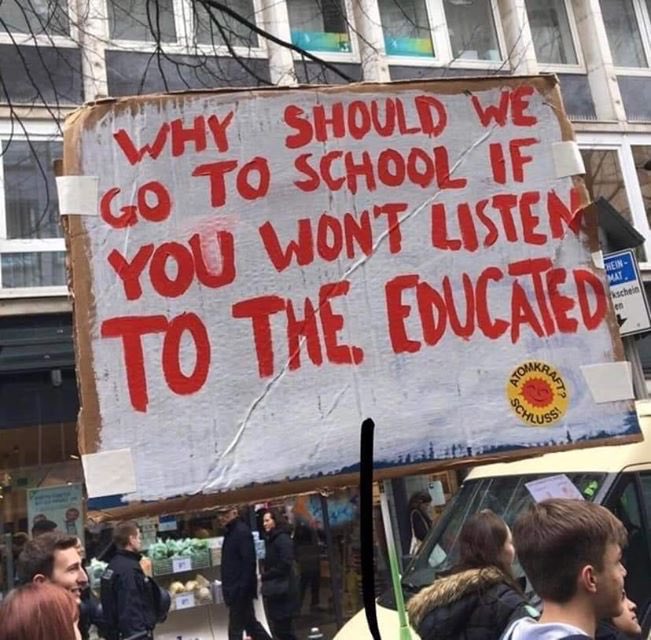
July 16, 2020 at 1:16 am in reply to: the virus & the education industry (ie. what should schools do) #118038znModeratorAbout 1/4 of our staff is anti-maskers to the point of saying they would refuse to wear a mask.
Man.
Educators are supposed to be educated.
July 15, 2020 at 10:34 pm in reply to: Goff talk … June to Sept. (a lot of great stuff here) #118037znModeratorThis is here because Goff comes up.
…
Dak didn’t get his big deal. Told ya. And here’s why. pic.twitter.com/jNofz4XqJP
— Colin Cowherd (@ColinCowherd) July 16, 2020
znModeratorSupreme Court Justice Ruth Bader Ginsburg has been discharged from the hospital after being treated for a possible infection earlier this week https://t.co/cB1qmhoMIx
— CNN Breaking News (@cnnbrk) July 15, 2020
znModerator.@AaronDonald97 is just the sixth player in @EAMaddenNFL history to earn a 9️⃣9️⃣ rating in four different years.#Madden21 pic.twitter.com/3ec6eVJVH9
— NFL on ESPN (@ESPNNFL) July 15, 2020
znModeratorEagles:
PFF #1 OLine
9-7 in a weak divisionCowboys:
PFF #4 OLine
8-8 in a weak divisionRams:
PFF #31 OLine
9-7 in a strong division https://t.co/0ABe8TDZhg— Alvin L (@alfsbones) July 15, 2020
znModeratorTop Pass Rushers in Madden 21
Aaron Donald – 99
JJ Watt – 98
Khalil Mack – 97
Von Miller – 97
Fletcher Cox – 96
Cameron Jordan – 96
Chandler Jones – 95
Calais Campbell – 95
Myles Garrett – 93
Chris Jones – 92— NFL Stats (@NFL_Stats) July 15, 2020
znModeratorBrooklynDad_Defiant!@mmpadellan
I was just about to tweet that trump is the first “president” since James K. Polk not to have a dog, but then I remembered he has Mike PenceznModeratorOn the Shameful and Skewed ‘Redskins’ Poll
The Washington Post did a grave disservice by utterly ignoring studies that clearly demonstrate the harm mascotting causes.MAY 25, 2016
https://www.thenation.com/article/archive/on-the-shameful-and-skewed-redskins-poll/
Last Thursday, The Washington Post published a poll on its front page that found that 90 percent of “Native Americans” were “not bothered” by the dictionary-defined ethnic slur “Redskins,” sending shock waves through the sports world and Indian Country. That slur, of course, is also the name of the local NFL franchise that the Post covers.
This article is part of the Edge of Sports series, an ongoing effort to publish new writers on the intersection of sports and politics.
To get this number, the Post’s polling team questioned 504 self-identified Native Americans from all 50 states. Given that I have 50 first cousins who are enrolled in the Navajo and Yankton Dakota Sioux Nations, none of whom likes the team name, I found the results to be curious. When I looked more closely at the methodology of the poll, I was appalled.
First and foremost, the Post states clearly that they did not verify the actual Native American identity or tribal enrollment of its respondents. Unlike most “minorities,” non-Native Americans have often declared themselves Native American with little or no factual evidence or cultural connection whatsoever. Furthermore, 56 percent of those asked said they were not part of any tribal nation or could not name what tribe their ancestors claimed. Imagine asking 500 white Americans for an opinion about Europe and not caring that more than half had no connection to their ancestors’ place of origin.
When asked about this (via e-mail), Scott Clement, the polling director at the Post responded:
We see little reason to suspect respondents would intentionally misreport their racial identity or tribal status to a confidential survey. The overall poll results suggest respondents understood a distinction between racial identification and tribal membership, given that a majority of self-identified Native Americans said they were not enrolled. The substantive questions about the team’s name came at the end of polls on other subjects and after survey respondents already had self-identified, leaving no motive (or even opportunity) for individuals to self-identify as Native American when they learned that the questions would center on the team’s name.
Leaving aside the issues of “self-identification,” there is also a problem with demographics. More than half, 274, were over the age of 50. Native Americans have a median age of 26—nearly 10 years younger than the general American population. The Post claims that they “weighted” the results to make sure that those over 50 were given just 39 percent of the voice. But even with “weighting,” by speaking primarily to people over 50—and then including their quotes in the piece as representative of the survey—the Post presented an inaccurate portrait of who we are as a people.
Male respondents also outnumbered female ones, which was quite a feat as Native American men have the highest mortality rates in the country. I remember when my dad was in his 50s and he went back to his reservation in South Dakota and was shocked to realize he was the only Yankton Dakota man left from his high-school class.
Furthermore, only 76, or 15 percent, of respondents were under the age of 29—and none of the respondents were under 18. Clement said that the Post never polls people under 18. “Our national surveys typically interview the adult population both for its relevance to voting and political participation and practical difficulties in reaching respondents who are younger than that age, i.e. ethical considerations about obtaining parental permission to participate.”
But not polling this segment of the population means the results exclude the Native American students who attend the 2,000 high schools in this country that mascot Native Americans. The White House Initiative on American Indian and Alaska Native Education report [PDF] recounts firsthand experiences of Native youth facing discrimination in their learning environment caused by mascotting.
Aside from demographics, there was also the geographic distribution of the poll. Very few were from areas of the country where most Native American people reside. Only 12 percent of those polled were from the Mountain region where 18 out of 20 of the most heavily populated Native American reservation communities are, according to the US Census. However, 36 percent of the respondents were from the South, where in 1836 most of the Native American population was forcibly marched out on the Trail of Tears. Now, according to the Census, only 13 percent of the total estimated population of Native Americans lives in the South. Clement said that this did not affect their results, e-mailing, “Respondents in the Mountain region were among the most likely to report enrollment with a tribe (67 percent did so), but the share who said the Washington Redskins’ team name was offensive was little different from the overall results (8 percent).”
Brian Pollard, board member of the Native American Journalists Association and former Cherokee Phoenix editor said to me, “What they’ve created is a piece of data that drives a narrative they desired. This is pretty much frowned upon in the world of journalism to create a story in this way. It would be different if Stanford did a poll and The Washington Post covered it. That to me would be much more ethical from a journalistic standpoint. But this was way beyond that. This was something they manufactured from the beginning.”
Even if the poll was conducted perfectly and even if the results had been completely reversed, The Washington Post did a grave disservice by utterly ignoring studies that clearly demonstrate the harm mascotting causes to Native youth—the most vulnerable population in the country by almost any statistic.
Our young people have a rate of suicide 2.5 times higher than average. According to the American Psychological Association, which has called for the ending of the practice of mascotting, Native youth suffer measurably lower self-esteem after exposure to a Native American mascot. It also found that Native respondents who claim to be okay with Native mascots actually experience a greater drop in self-esteem. This finding is particularly relevant to the Washington Post poll, which has been widely interpreted as proof that there’s no harm in using the slur for a $2 billion NFL franchise in the nation’s capital.
On Friday the Native American Journalist Association in conjunction with UNITY: Journalists of Diversity issued a statement criticizing the poll for violating the tenet to “minimize harm” in reporting.
The reporters and editors behind this story must have known that it would be used as justification for the continued use of these harmful, racist mascots. They were either willfully malicious or dangerously naïve in the process and reporting used in this story, and neither is acceptable from any journalistic institution…. It is NAJA’s position that journalism should only be practiced when it is in the interest of public enlightenment and democracy, and should never be used as a tool of racial oppression or corporate cheerleading.
Scott Clement responded to NAJA, writing:
The Post pursued this poll without any idea as to how it would turn out and had no vested interest in the outcome. When activists argue that Native Americans are offended by the name—and when debate over the name is at the center of a major public-policy debate—it’s entirely appropriate for a news organization to conduct a survey to test any assertions made about the breadth and depth of offense among Native Americans. This is customary for any other public policy issue.”
But is this really customary? Are pollsters judging the “breadth and depth” of how offensive other dictionary-defined slurs are? Tragically, it is only Native Americans who have to suffer this kind of humiliation, especially when the multibillion-dollar brand of the paper’s local football team hangs in the balance.
Jacqueline KeelerTWITTERJacqueline Keeler is a Navajo/Yankton Dakota Sioux writer living in Portland, Oregon and co-founder of Eradicating Offensive Native Mascotry (creators of the hashtag #NotYourMascot). She is finishing a collection of essays called Not Your Disappearing Indian and editing an anthology of Native voices for Torrey House Press on preserving sacred lands.
-
AuthorPosts