
Forum Replies Created
-
AuthorPosts
-
February 13, 2016 at 8:23 pm in reply to: Detecting gravitational waves could be as important as first use of telescope #38960
 znModerator
Black hole colliding will sound like an extended Yanni and Kenny G jam. With Japanese drums like Drum Tao playing in the background…
But…we already knew that.
.
znModeratorWhy not vote for Jill Stein?
Well, because at that point, the effort to not triangulate would have failed.
If… God Forbid, I am forced to choose between Hillary Clinton and one of the Republican candidates… then there is NO WAY IN HELL that I would embolden Republicans by giving them the White House.
A nominal Republican in the White House isn’t just that. It’s staffers, it’s the relationship with Congress, it’s which bills get worked on and go to the WH to be signed.
It’s SUPREME COURT JUSTICES!!!
So, there’s no way with me living in the battleground state of FL that I’d let a Republican nominee have a chance.
The Green Party is failing to make its case between elections that they are a viable electoral alternative and there’s no reason why Jill Scott or anyone else should become the next Ralph Nader and siphon progressive votes in a binary system that doesn’t allow for coalitions thus allowing for conservatives to take charge.
At that point, it’s not so much triangulation as the basic life math that every functioning public citizen should know…
On this, I am more in Mack’s camp than WV’s. Fwiw.
For the reasons Mack stated.
znModeratorfrom off the net
==
Crazylegs
big fan of the Knox I era uniforms
I think I like the Puma version the Rams had in St.Louis. They were addressing the sleeve situation pretty well imo.


Russell Athletics did a good job as well.


Nike just ain’t gettin’ it!
 znModerator
NFC West rookie grades: Rams, Cardinals collected best talent
Bucky Brooks
The 2015 NFL season is in the books — and now it’s time to turn toward the 2016 NFL Draft. Before the NFL Scouting Combine shines the spotlight on the next crop of incoming talent, Bucky Brooks is taking a division-by-division look back at each NFL team’s 2015 rookie class, providing grades and highlighting what teams should be focusing on when they head to Indianapolis.
Arizona Cardinals
Round 1 (No. 24 overall): D.J. Humphries, offensive tackle
Round 2 (No. 58 overall): Markus Golden, outside linebacker
Round 3 (No. 86 overall): David Johnson, running back
Round 4 (No. 116 overall): Rodney Gunter, defensive tackle
Round 5 (No. 158 overall): Shaquille Riddick, outside linebacker
Round 5 (No. 159 overall): J.J. Nelson, wide receiver
Round 7 (No. 256 overall): Gerald Christian, tight endThe Cardinals have emerged as a heavyweight in the NFC behind a talent-laden roster loaded with young playmakers. The “Birdgang” will remain among the NFL’s elite with a rookie class that showed tremendous promise throughout the season. David Johnson is an impressive all-purpose RB1 with the size, strength and speed to deliver explosive plays as a runner or receiver. He amassed over 1,000 scrimmage yards — and really delivered the goods as the Cardinals’ feature back down the stretch of the season. J.J. Nelson flashed big-play ability as a deep threat on the perimeter. Although he only snagged 11 receptions during the regular season, seven of those grabs went for 20-plus yards, showing a glimpse of his impact potential. Markus Golden was a nice find as an energetic pass rusher off the edge. He not only has a knack for getting home (four sacks, to go along with two forced fumbles), but he plays with a relentless spirit that energizes the unit. D.J. Humphries failed to make a positive impression as a rookie, but he remains a talented prospect with immense potential. Grade: B+
Combine focus: The Cardinals’ defense needs to replenish the active rushers along the front line, something they could do with the No. 29 pick in the draft.. Thus, the team likely will spend much of the combine visiting with the likes of Eastern Kentucky’s Noah Spence, Georgia’s Leonard Floyd, Utah State’s Kyler Fackrell and Boise State’s Kamalei Correa to see if they can fill roles as edge rushers. The Cardinals also could study Clemson’s Kevin Dodd and Oregon’s DeForest Buckner to project their potential as five-techniques in Arizona’s 3-4 scheme.
Los Angeles Rams
Round 1 (No. 10 overall): Todd Gurley, running back
Round 2 (No. 57 overall): Rob Havenstein, offensive tackle
Round 3 (No. 72 overall): Jamon Brown, offensive lineman
Round 3 (No. 89 overall): Sean Mannion, quarterback
Round 4 (No. 119 overall): Andrew Donnal, offensive lineman
Round 6 (No. 201 overall): Bud Sasser, wide receiver
Round 6 (No. 215 overall): Cody Wichmann, offensive guard
Round 7 (No. 224 overall): Bryce Hager, linebacker
Round 7 (No. 227 overall): Martin Ifedi, defensive endBeyond obvious shortcomings at quarterback, the Rams have assembled a talented collection of players on both sides of the ball during the Jeff Fisher era. The franchise continued to add quality youngsters in 2015, with blue-chipper Todd Gurley headlining a productive rookie class that made immediate contributions in Year 1. The Offensive Rookie of the Year rushed for over 1,100 yards in just 13 games (12 starts), displaying the balance, body control and explosiveness to take it the distance from anywhere on the field. Rob Havenstein, Jamon Brown and Cody Wichmann anchored an offensive line that paved the way for Gurley’s dominance between the tackles. Andrew Donnal also contributed as a valuable backup/spot starter during the season. With the Rams getting key production from a number of first-year players, the future looks bright for the Rams. Grade: A-
Combine focus: The Rams, who hold the 15th overall pick, are a quarterback away from joining the title contenders in the NFC. The team desperately needs a proven playmaker at the game’s most important position, which will lead Fisher and general manager Les Snead to spend countless hours studying North Dakota State’s Carson Wentz, Cal’s Jared Goff and Memphis’ Paxton Lynch to assess their potential as franchise signal callers. Despite an annual investment in the wide receiver position, the Rams still need a dominant playmaker on the edge to complement Tavon Austin. Mississippi’s Laquon Treadwell, Baylor’s Corey Coleman, TCU’s Josh Doctson and Ohio State’s Michael Thomas could be in the team’s crosshairs based on their potential as WR1s.
San Francisco 49ers
Round 1 (No. 17 overall): Arik Armstead, defensive lineman
Round 2 (No. 46 overall): Jaquiski Tartt, safety
Round 3 (No. 79 overall): Eli Harold, outside linebacker
Round 4 (No. 117 overall): Blake Bell, tight end
Round 4 (No. 126 overall): Mike Davis, running back
Round 4 (No. 132 overall): DeAndre Smelter, wide receiver
Round 5 (No. 165 overall): Bradley Pinion, punter
Round 6 (No. 190 overall): Ian Silberman, offensive guard
Round 7 (No. 244 overall): Trenton Brown, offensive lineman
Round 7 (No. 254 overall): Rory “Busta” Anderson, tight endThe rapid decline of the 49ers has been staggering. The team just has lost too much talent — in addition to an exceptional head coach — to compete in one of the toughest divisions in football. The Niners saw a ton of veteran leadership walk out the door prior to last season (see: Patrick Willis, Justin Smith and Frank Gore), and San Francisco didn’t get enough help from its rookie class to make up the difference. (An impossible task, really.) Still, there are some things to be excited about going forward. Arik Armstead made tremendous strides as a rookie despite only logging one start. He could grow into a solid plugger along the interior. Jaquiski Tartt made contributions on the second level as a designated thumper between the hashes. The 49ers should be encouraged by the flashes displayed by Mike Davis and Blake Bell in spot duty — the young offensive playmakers should contribute as rotational guys going forward. Grade: C+
Combine focus: San Francisco owns the No. 7 overall pick in the draft. With Chip Kelly coming on board, it remains to be seen what the 49ers’ new coach thinks of the two QBs who started games last year (Colin Kaepernick and Blaine Gabbert). The new coaching staff could set its sights on a young QB prospect to build around. Cal’s Jared Goff, North Dakota State’s Carson Wentz and Memphis’ Paxton Lynch could get extended looks at the combine, based on their talent and experience directing spread offenses in college. The 49ers are also in need of more speed at wide receiver, which makes Baylor’s Corey Coleman, Notre Dame’s Will Fuller, Ohio State’s Braxton Miller and Colorado State’s Rashard Higgins worthy of inspection from the team’s coaches and scouts.
Seattle Seahawks
Round 2 (No. 63 overall): Frank Clark, defensive end
Round 3 (No. 69 overall): Tyler Lockett, wide receiver/returner
Round 4 (No. 130 overall): Terry Poole, offensive lineman
Round 4 (No. 134 overall): Mark Glowinski, offensive guard
Round 5 (No. 170 overall): Tye Smith, cornerback
Round 6 (No. 209 overall): Obum Gwacham, defensive end
Round 6 (No. 214 overall): Kristjan Sokoli, offensive guard
Round 7 (No. 248 overall): Ryan Murphy, defensive backSeattle has done a great job of developing young players in the Pete Carroll era. The Seahawks have not only helped mid-to-late-round selections play at a high level, but they also have gotten exceptional performances from some of their UDFAs (undrafted free agents) in recent years. The Seahawks might’ve stumbled upon Beast Mode 2.0 in Thomas Rawls. The undrafted free agent tallied four 100-yard games (including one 200-yard effort) and showed team officials he was a capable workhorse runner. How well he recovers from his season-ending ankle injury could determine whether the Seahawks continue to invest in the position. Among the 2015 draftees, Tyler Lockett and Frank Clark played like seasoned vets in their respective roles. Lockett, in particular, displayed outstanding skills as a receiver/returner on the way to scoring eight total touchdowns (six receptions, one punt return and one kick return) during his rookie campaign. He looks like a natural WR2 opposite Doug Baldwin, which should encourage Carroll to carve out a bigger role for Lockett in Year 2. Clark is an energetic edge defender with a non-stop motor and explosive rush skills. He finished with three sacks and showed a knack for getting home off the edge. With more playing time, he should blossom as a DPR1 (designated pass rusher) in the Seahawks’ aggressive scheme. Grade: B+
Combine focus: Lynch’s retirement forces Seattle to reassess the state of the backfield. As mentioned above, the Seahawks got promising returns from Rawls in Year 1, but they’ll have to see how he recovers from injury — and honestly, they’re not going to make him the unquestioned RB1 after a solid half-season of work. This draft class offers plenty of attractive options for Seattle at running back — guys like Ohio State’s Ezekiel Elliott, Alabama’s Derrick Henry and Arkansas’ Alex Collins fit the franchise’s mold as rugged inside runners with soft hands in the passing game. Carroll will pay close attention to their combine workouts to determine if they have the ability to contribute immediately in a revamped offensive scheme that will put more responsibility on Russell Wilson’s shoulders in 2016. Meanwhile, Russell Okung is a free agent, which makes offensive tackle a huge priority for the team (which holds the No. 26 pick, by the way). Mississippi’s Laremy Tunsil, Michigan State’s Jack Conklin, Notre Dame’s Ronnie Stanley and Ohio State’s Taylor Decker will all get long looks, but their workouts on the field turf could determine whether the Seahawks view them as ideal fits at left tackle.
February 13, 2016 at 1:04 pm in reply to: Wagoner answers questions, parts 1 & 2, + Wagoner podcast #38936znModeratorRamble On Podcast: Nick Wagoner on the LA Rams
Steve Mason and Ryan Abraham welcome on ESPN NFL Nation reporter Nick Wagoner to talk about the Rams move and what sort of team fans in Los Angeles will be watching.
http://www.rams-news.com/ramble-on-rams-podcast-with-masonabrahamwagoner-audio/
znModeratorGrubman ‘insulted’ by Rams job rumor
Jim Thomas
On a January day full of rumors, it was one of the juiciest of the bunch. Namely, that NFL executive Eric Grubman, the league’s point man for relocation to Los Angeles, would end up with a high-ranking position with owner Stan Kroenke’s Rams on the West Coast.
For those who suspected Grubman had been pro-Kroenke and pro-LA all along, it fit the narrative. This all took place Jan. 12 in Houston, the day league owners approved the relocation of the Rams from St. Louis to Los Angeles.
The Post-Dispatch caught up with Grubman in San Francisco following NFL Commissioner Roger Goodell’s state of the NFL news conference on Feb. 5. He strongly denied the Rams job rumor.
“It couldn’t be further from the truth,” Grubman said. “I was personally insulted by that. I don’t like that implication or insinuation. It could not be further from the truth.”
Grubman made those remarks standing in the same hotel ballroom where minutes earlier Goodell had answered questions for about 45 minutes. But only two of those questions dealt with St. Louis, a city once again on the outside looking in when it comes to the NFL. Perhaps Grubman could fill in some blanks.
Looking back on the failed task force effort to keep the Rams from leaving, Grubman was asked what went wrong in St. Louis.
“I think that St. Louis could have done a few things differently, which may not have been in their control,” Grubman said. “But I think when the county dropped out, the project that they envisioned at the beginning of the task force process really changed. And the county dropped out because as I understand — a public vote.”
Referring to the NFL, Grubman added: “We weren’t afraid of a public vote. And in some respects we think that could’ve validated what the people really thought, could’ve brought the county back in. So the project changed and they spent months trying to bring it back to that original vision, and they couldn’t.”
Last March, St. Louis County Executive Steve Stenger told Gov. Jay Nixon that the county couldn’t provide support for a stadium without a vote. Nixon then let it be known that the project was moving forward without the county.
“The measurement standard in my mind was never any one owner, was never the commissioner, was never Eric Grubman, it was other owners,” Grubman continued.
“And the standard in the early going was less about how are the owners gonna vote. It was whether in their minds, could they see themselves playing in that stadium. And if they could, (St. Louis) had a really great chance. And if they couldn’t, (St, Louis) had a really bad chance.
“And that to me is what happened.”
Grubman also attempted to clear up the confusion of making $300 million in league funding available to owners Mark Davis in Oakland and Dean Spanos in San Diego. But telling task force co-chair Dave Peacock that giving the so-called extra $100 million in stadium funding for the St. Louis project — or $300 million total — was “fundamentally inconsistent” with league policy.
The $300 million, Grubman said, was available only “if offered to the owner to put together a proposal that the owner was in favor of. Not to a city to put in front of the owner. That’s one big difference.”
Kroenke, of course, was never in favor of the St. Louis stadium plan.
“The second is, and I think this is crucial, all of the funding (in St. Louis) ended up being contingent on that use of the extra $100 million. You look at the city (financing) language, it’s predicated on a series of contingencies that include the state funding and the NFL funding and the level of the PSLs.”
Grubman said this was discussed in a call with Peacock and two owners on the LA Opportunities committee — Robert McNair of the Houston Texans and Art Rooney of the Pittsburgh Steelers.
But in the end, the move of the Rams back to Los Angeles may have been a “perfect storm” of events that all worked against St. Louis. The league had a chance to build a showcase stadium in Los Angeles, with the stadium bankrolled by one of the league’s wealthiest owners in Kroenke.
“I’m not sure that anybody, including St. Louis, knew the kind of project that Stan Kroenke was gonna assemble in Los Angeles, and how big and ambitious it was,” Grubman said. “Because that clearly had a big impression on owners. But no one knew that when we began the process.
“To me, these things are always about control — what you can control. St. Louis couldn’t control what Stan Kroenke was gonna do or propose in some other city. They could only control what was being proposed for Stan to consider for the Rams and for the NFL to consider in terms of keeping them there (in St. Louis).
“So I go back to what I said. If they could have stuck with the original vision, taken the risk (of a vote), and kept the county in there, they would have had a more powerful project with fewer contingencies and fewer risks.
“How might it have come out if they did that? I don’t know. That’s a hypothetical.”
Echoing comments made by Goodell during his news conference, Grubman wouldn’t close the door on the NFL returning to St. Louis in the future.
“I think it’s all about what St. Louis wants,” Grubman said. “If St. Louis wants to be an NFL city, they’ve got a hell of a chance of being one. If they don’t, or they’re ambivalent about it, then it’s a lot tougher.
znModeratorKevin Greene’s Hall of Fame candidacy nearly got lost in the cracks
Mike Florio
Kevin Greene’s Hall of Fame candidacy nearly got lost in the cracks
Much has been said about one key omission from the new Hall of Fame class. Let’s take a moment to talk about one key inclusion.
Linebacker Kevin Greene finally has made it, passed over for more than a decade despite being third on the all-time sack list with 160. He has more sacks that Hall of Famers Chris Doleman, Michael Strahan, Richard Dent, John Randle, Lawrence Taylor, Rickey Jackson, Derrick Thomas, Charles Haley, Andre Tippett, Warren Sapp, and Howie Long.
Greene picked up those 160 sacks in 15 NFL seasons. But he got none as a rookie, which means that he averaged nearly 11.5 sacks every year for 14 seasons.
So how didn’t he make it sooner? Appearing on Friday’s PFT Live on NBC Sports Radio and NBCSN, Greene suggested that, because he spent the bulk of his career with the Los Angeles Rams, he may have gotten lost in the cracks.
Greene, one of the first players to change teams via true free agency, spent three seasons with the Steelers after eight in L.A. Then came a year in Carolina, a year with the 49ers, and two more with the Panthers. (Greene called his time in San Francisco a “fart in the wind,” which also accurately describes Jim Tomsula’s lone year as head coach — in multiple ways.)
Ultimately, it was PFT’s Darin Gantt (who holds the Carolina vote for the Hall of Fame) task to make the case for Greene, and this year Greene got in.
So as many wring hands (rightfully so) for the omission of Terrell Owens, it’s time for a deep exhale on Greene — and not simply because of an effort to avoid inhaling the odors of a fart in the wind.
znModeratorDunno why everyone is so worked up about QB, zn could hand off to Gurley.
That kind of thinking is how we ended up with QB’s like Dieter Brock. “Anyone can hand off to Eric Dickerson”….how’d that work out for us?
Well, when I tried handing off to Gurley, turns out, I was too slow. So then in spite of swearing up and down that he would never trade me, Fisher made a swap with the Rams Huddle forum. That’s how Nittany ended up with them. But it blew up on them though, because Nittany may be the only guy I’ve heard of who melted down just doing hand offs.
 znModerator
3. Rishard Matthews
2015 team: Miami DolphinsIn the 2015 offseason, the Dolphins went out and added a number of receivers that made it seem like Matthews would be buried on the depth chart. During training camp, Matthews managed his way into the starting lineup, and performed admirably over the first 10 games of the year before suffering a season-ending injury. Typically, a good receiver will have a good catch rate and low yards-per-catch, or a good yards-per-catch and low catch rate. Matthews is the rare receiver who did both last year. He was the only player in the top 25 in each category among the 119 receivers with the most playing time.
Rishard Matthews
Height: 6-0 Weight: 212 lbs.Drafted by the Miami Dolphins in the 7th round (227th overall) of the 2012 NFL Draft.
2015: 11 games, 61 targets, 43 receptions (70.5%), 662 yards, 15.4 YPR, 4 TDs.
===
2012 scouting reports for the draft:
===
04/30/2012 – A closer look at the Dolphins’ picks: Round 7/227 – Rishard Matthews, WR, 6-0, 217, Nevada…He’s a well-built, fluid receiver who is competitive and plays with football smarts. During his two seasons at Nevada he caught 147 passes for 2,243 yards and scored 13 touchdowns. He also has the skill set to serve as a returner. – The Sports Xchange
===
Scouting Report
Pretty good speed for a guy of his size, and has the ability to hurt you in multiple different areas. He can return punts, he can carry the ball out of the backfield, and obviously he is dangerous in the passing game. Had a breakout season in 2010 with seven total touchdowns, averaging over 15 yards per reception. Following it up with a very promising senior season, once again averaging close to 16 yards per catch and really emerging as the number one receiver. Limited route tree could hurt him on draft day, but he definitely has the size and speed to make it in the NFL. His versatility will be a huge help for him, and I think scouts will like the fact that he is a willing blocker downfield. He doesn’t give up on plays. Former junior college standout who transferred to Nevada in 2010.
PROS: Size, quickness, not the fastest, but he’s got some speed, willing blocker, able to make acrobatic catches, can contribute on special teams
CONS: Limited route tree, not an elite level athlete, what kind of impact can he make as a secondary, third, or fourth receiver? Need to see more of him overall.
znModeratorChip Kelly never got that the Eagles were like a family
Marcus Hayes
http://mobile.philly.com/sports/eagles/?wss=/philly/sports/eagles&id=368548741
TO BE FAIR, Chip Kelly was no monster.
To be honest, Kelly would still be the Eagles’ coach if he had won 10 games in 2015 instead of seven.
To be frank, Kelly was less Captain Bligh than General Patton. Kelly was not maliciously abusive to his players and rebellious to his bosses; he was just uninterested in anything but running the football team, and running it his way.
For a franchise that blossomed under a father figure such as Andy Reid, Kelly’s abruptness and dismissiveness hindered him. When Kelly unseated homegrown favorite Howie Roseman as general manager, he betrayed the sense of togetherness owner Jeffrey Lurie spent 20 years fostering.
That did not make the atmosphere at the NovaCare Center insufferable, just uncomfortable. Every NFL team reflects the essence of its head coach, who presents himself to the public at least four times a week. As such, every head coach is expected to nurture the brand.
Kelly simply refused.
“When all is in harmony, and when everybody is a family, you’ll run through walls for him,” said Don Smolenski, the Eagles’ president.
Nobody was running through walls for Chip Kelly, especially after he built the walls.
Smolenski addressed Kelly’s effect on the franchise at Doug Pederson’s introductory news conference last month. The Eagles hired Pederson after three years of Kelly’s reign. Kelly came to the Eagles with no NFL experience and after only four seasons as a head coach, tucked away at Oregon. He never developed the gift of diplomacy, but he joined an organization that places a premium on diplomacy, especially a conciliator such as Smolenski.
To review: The Eagles in 1998 stole Smolenski from the International Hockey League, where he was a very successful chief financial officer. By 2010, he was the Eagles’ chief operating officer. When Lurie dismissed his buddy Joe Banner in 2012, Smolenski became team president.
By comparison, Roseman is an executive vice president, in charge of football operations. Smolenski reports to Lurie, and Lurie alone. Smolenski is responsible for the team making money. That makes Smolenski very, very important.
Kelly never saw it that way.
Kelly saw the players and the staff not only as his responsibility, but as his fiefdom; his weapon, wielded imperiously. Everything else in the organization existed to serve him and his. His sole responsibility to the franchise: win games.
He did not schmooze sponsors. He did not embrace fans.
He made no effort to make the rest of the NovaCare workforce feel like a part of the process; rather, he made them feel like peons, there to serve at his whim and to be ignored when he had no use for them. Famously, he even forced Lurie to change the date of the Christmas party.
Not long after, Kelly was fired, axed between the 15th and 16th games of the season, and a cloud of oppression rolled away. Sure enough, the Eagles won their finale.
Afterward, a member of Lurie’s inner circle was standing outside the visitor’s locker room at MetLife Stadium. He was asked to describe his relationship with Kelly after three years.
“No complaints. I mean, I can’t even really say we had a relationship,” the executive replied. “What does that tell you?”
It tells you Kelly insulated himself.
Again, if the Eagles had hosted a playoff game last month, none of this would have surfaced, because Kelly would not have been fired. Perhaps if Kelly had not unseated Roseman and/or had not replaced about 45 percent of the Eagles’ frontline players in 2015, Kelly would have survived. But he did overthrow Roseman, and he did gut the roster, and he was fired; so, these sorts of revelations cannot be dismissed.
Current and former players painted Kelly as a hardheaded, bottom-line monomaniac. He ignored players’ suggestions to change the intensity of practice regimens. He ignored coaches’ suggestions to change practice routines, such as practicing fewer plays but practicing them with more repetitions.
And Kelly ignored his duty to cooperate with Smolenski & Co.
“In all sports, I think there’s a misnomer that there’s a football side and a business side. In all sports. It’s one,” Smolenski said. “We all need to be working together, because what might happen on the business side might affect what you can have on the football side.”
The converse is much truer.
“On the flip side, certainly, when you win – a winning record helps the other side,” Smolenski said. “It’s a big, commensurate circle.”
Part of that circle involves providing insight during league-mandated media sessions, which exist to inform the fans. Kelly was willfully deficient concerning that portion of the “commensurate circle.”
To his credit, Kelly usually gave remarkably thorough answers to questions he considered well-presented and relevant. To his detriment, Kelly usually offered petty, trite responses to questions he considered unfair or redundant.
He did not court the press – whether local, where reputations and relationships with the community are built, or national, where often the bills are paid. ESPN might break a lot of news, but it also is paying $15.2 billion to the NFL through 2021 to broadcast games.
There were other issues.
Kelly closed the annual playground build to the press, an event that was one of the Eagles’ more effective public relations gambits. Kelly refused to do a local radio show. Kelly moved training camp from Lehigh University, where the Eagles and their fans had developed a startlingly strong bond.
Kelly never played nice.
The difference was palpable on the day Pederson was hired, as Pederson trudged through interview after interview. He hadn’t even hired his offensive coordinator yet. Smolenski noticed.
“The amount of time Doug has devoted here, just in the last two days, to do this kind of stuff – yes, it’s taking away from other responsibilities,” Smolenski said. “There’s going to be opportunities all throughout the year (like this) . . . and opportunities for fan engagement.”
And opportunities to promote the brand; opportunities to engage the rest of the building. Kelly clearly treated Smolenksi, Roseman, chief financial officer Frank Gumienny and operations VP Jason Miller with a measure of disdain.
“There are so many pieces to it,” Smolenski said. “The experience we have – I have 17 years, Frank has 18 years, Jason has 13 years, Howie has 16 years – there’s all these people we know we can help. We can be a resource.”
Fine. But what about coaching? Drafting? Football?
“I’m not going to ask the head coach to do something that pulls him out of an important draft meeting. I know when the right time is to ask. It’s a balance,” Smolenski said. “You have to respect it. Work with it. There’s balance, right?”
Now there is.
znModeratorMy Presentation: Why Orlando Pace is a Hall of Famer
Bernie Miklasz
link: http://www.101sports.com/2016/02/10/my-presentation-why-orlando-pace-is-a-hall-of-famer/
Greetings. I wanted to share something with you in this piece. Some of you have asked: when you make a presentation that advocates a player’s candidacy for the Pro Football Hall of Fame, what do you say exactly? How do you make the case?
orlando pace-2
On Saturday, the Pro Football Hall of Fame Selection Committee named Orlando Pace to the Class of 2016.
For those that have no interest in this, you can stop reading now. No problem. For those that are curious about what I put together to make a closing argument for Pace, I’ll take you inside the meeting room.
Last Saturday, the day before Super Bowl 50, the Pro Football Hall of Fame selection committee elected eight new members for induction into Canton. Two were senior committee nominees, Ken Stabler and Dick Stanfel. (I also serve on the senior committee that nominates candidates to be considered by the entire body of voters.) A third was Eddie DeBartolo, who was put forth by the contributors committee.
And then we had to discuss the 15 candidates on the modern-era ballots. In no particular order the 15 names were: Brett Favre, Pace, Kevin Greene, Joe Jacoby, Tony Dungy, Marvin Harrison, Kurt Warner, Terrell Davis, Steve Atwater, John Lynch, Don Coryell, Terrell Owens, Alan Faneca, Morten Andersen and Edgerrin James.
We spent 9 hours 20 minutes in a large room at San Francisco’s Moscone Convention Center, discussing and debating and voting on the 18 men.
Stabler, Stanfel and DeBartolo were voted on separately, independent of the modern-era ballot. The list of 15 modern-day candidates was reduced in two phases: in the first vote from 15 to 10, then a second vote to go from 10 to 5.
And then there was a final step; a straight “Yes” or “No” vote, individually, on the final five. To gain final clearance into Canton, each of the final five had to receive 80 percent of the votes. (I believe we had 46 selectors in Saturday’s meeting.) In my experience, cutting that list of names from 10 to 5 is absolutely excruciating.
I hate that moment. Just hate it. The five I leave off my ballot each year are virtual equals to the five that I check off. The idea of disappointing so many worthy players saddens me every year. I’m thrilled for the players that make it each year.
I’m proud of the work done by the committee. The approach and the work done by the committee has improved substantially since I first participated 17 years ago. It’s evolved. It’s more youthful, diverse, and open-minded. There are no cliques or voting blocs. There’s just a strong, shared desire for information and knowledge and a willingness to reach out and engage to get to the most informed place we possibly can before making these wrenching decisions.
Anyway …
As you undoubtedly know by now, Stabler, Stanfel and DeBartolo were voted in to join the five modern-day winners: Favre, Pace, Greene, Harrison and Dungy. I’ve been on the committee since 2000 and have presented multiple players for consideration including Jack Youngblood, Jackie Slater, Roger Wehrli, Aeneas Williams, Marshall Faulk, Pace, Greene and Warner. It’s a challenge. I look forward to doing it every year.
Finally, this is what I had to say about Orlando Pace to my fellow voters.
Here you go:
Good morning.
It’s good to see everybody again.
I think we’re familiar with the basics on Orlando Pace, but let’s do a quick review: seven Pro Bowls… actually 7 consecutive Pro Bowls from 1999 through 2005. A five-time All-Pro selection, first or second team. A second-team All-Decade selection for the aughts.
Pace compares solidly with Walter Jones and Jonathan Ogden, the last two offensive tackles that we voted into Canton, and I voted for them with great enthusiasm. In a little while I’ll put Pace’s career into context in the comparison to Jones and Ogden.
Now let’s talk about the Rams offense that had Pace as a fixture at left tackle…
Pace was 6-7 and 325 pounds. A strong athlete — but a graceful athlete, blessed with speed and quickness and great range … an opponent, Chuck Smith, once described playing Pace as trying to run around the side of the mountain — except that the mountain moves along with you.
I once watched a Redskins defensive back intercept pass in the end zone, run out with the ball, and get tackled 45, 50 yards down the field by Pace — the biggest player on the field.
That athleticism and ferocity served him well in an extremely demanding offense.
Between 1999 and 2005, Pace’s seven-year peak that represented the seven seasons of the Mike Martz offense in St. Louis, the Rams attempted the most passes, completed the most passes, threw for the most yards, were No. 1 in completion percentage, and were first in yards per passing attempt.
Over those same seven seasons the Rams were tied with Indianapolis for a league-best average of 27 points per game, and were ranked second in touchdown passes. They were tied with Philadelphia for the best record in the NFC between 1991 and 2005. And of course the Rams became the first team in NFL history to score more than 500 points in three consecutive seasons, 1999 through 2001. That team, with Pace anchoring left tackle, had the league’s best record at 37-11 over the three years, went 5-2 in the postseason, and won two NFC titles and a Super Bowl championship.
Kurt Warner wasn’t there for the entire seven-year run, and the Rams got more than 50 combined starts from guys like Marc Bulger, Jaime Martin, Trent Green and Ryan Fitzpatrick. Hall of Fame running back Marshall Faulk missed 36 of his final 62 games with the Rams because of knee injuries, so the Rams weren’t always functioning at full capacity between 1999 and 2005.
But except missing several games in 2002 — and by the way, the Rams’ scoring dropped dramatically that season, which is no coincidence — Orlando Pace was still there at left tackle, making those 7 straight Pro Bowls. The lead security guard for all of those Rams quarterbacks at a time when Martz had them flinging the ball more often, and at longer distances, and stemming from exotic formations — doing all of this more than any team in the league. By far.
When I look back on Pace’s career, I think it’s important to come up with a way to put his value in context to give it the special distinction it deserves. We watched those Martz-offense Rams score all of those points, and average close to 40 passing attempts per game, and push the ball downfield with a high-risk, high-reward passing attack.
And while Pace gave up his share of sacks, I did a quick comparison and saw that he only allowed a few more sacks than Jonathan Ogden or Walter Jones. But that really doesn’t do Pace justice, because he played LT in a more complex, more demanding, and riskiest system than any left tackle of his generation.
I knew he was under immense pressure in the Martz offense, which regularly featured empty backfields and no extra pass-protection help up front. The Martz offense was also a more vertical version of the Don Coryell offense, and the Rams’ favorite route was probably a deep “dig” that took time to complete. It wasn’t exactly a quick-hit route. Warner or Bulger would have to stand there and wait for Isaac Bruce or Torry Holt to clear and get open. This put even more of a burden on Pace, who was always all alone on the left side.
“I never remember having to put a tight end on Orlando’s side to give him help,” Martz told me. “I never put a running back over there to chip. We were a very aggressive offense, and we did some things that no one else was doing back then, and we had to have the perfect tackle to make it all go. If Orlando couldn’t keep Warner’s blind side clean, or if Orlando just had a lot of breakdowns, we wouldn’t have been able to do a lot of the stuff that puts over 500 points for three years in a row.
“It was ridiculous, what we asked Orlando to do. But you could just run any formation or routes that you wanted, knowing that he’d be over there. You could just X out his man, and everyone else on the offense, including the coaches, could do their job without concern.”
They all said the same thing when I asked … Warner, Faulk, Bruce — and prominent coaches including Bill Belichick, Dan Reeves, Andy Reid and Tony Dungy. Their opinion was unanimous: Pace kept that high-risk offense from cracking and was so good that Martz continued to add plays and schemes and hit opponents with even more creative and crazy (in a positive way) stuff.
I wanted to quantify this if I could.
And a couple of things jumped out at me in my research of the STATS LLC data base.
Consider:
— From 1999 through 2005, Pace’s seven-season peak, the Rams used sets that had four or five receivers on 33 percent of their passing attempts. Often it was an empty backfield, but sometimes Faulk would stay in to pick up inside blitzes, or he’d head out on a pass pattern. The Rams were higely successful in these four or five wideout sets, completing 65 percent of the passing attempts, netting the league’s highest average per passing attempt out of these formations.
— And how did this compare to the rest of the league between 1999 and 2005? The Rams used 4 or 5 wideout sets at a rate 71 percent higher than the league average. You heard that right: the Rams ran 4 or 5 wideout sets at rate that was 71 percent higher than the league average. And with Warner or Bulger exposed in those sets, Pace wasn’t getting help on the far left edge.
— To bring J. Odgen and Walter Jones into the equation, consider the number of 4 or 5 wideout sets used on passing attempts by the Ravens (Ogden), Seahawks (Jones) and Rams (Pace) over those seven seasons:
Ravens … 355 times.
Seahawks … 660 times.
Rams … 1,236 times.
Again, Pace never had help on his side of the field… Martz was completely confident in putting Orlando out there on the proverbial island… not much was going to get past him… and in some games the defense would just give up on beating Pace and switch its best pass rusher to the opposite side.
Obviously, Pace faced a higher degree of difficulty than any left tackle in the league … and he still dominated.
Here’s the other part to this:
— Between 1999 and 2005, the Rams led the league in passing attempts in which the ball traveled at least 21 yards in the air… and again, they were successful at it, striking for a lot of big plays and throwing for the most touchdowns on passes that travel 21+ yards.
This ties in with something I said earlier … by throwing the ball deeper downfield, Rams quarterbacks also had to hold onto the ball longer while waiting for receivers to clear. This just increased the burden on Pace.
I mean, think about it: All of those 4 or 5 wide out sets… all of the deeper routes… which meant Pace had to work just little longer and harder to keep his man away from the quarterback. Martz said most of the sacks that were charged to Pace were actually coverage sacks, with the QB holding onto the ball for too long.
Pace was also a ferocious run blocker. When the Rams needed the tough yards, they usually ran it to his side. According to STATS, Faulk averaged more than 5 yards per carry when he ran to the outside of the left guard — either behind Pace, who was plowing blockers straight on … or swinging wide of Pace if ‘Big O’ was muscling his man to the inside. Pace wasn’t content to take out one defender. He had the quickness and determination to get to the second or third level. It wasn’t unusual to see him wiping out defensive backs downfield. Those famous Orlando Pace pancake blocks were fun to watch.
Pace was put under more pressure than any left tackle of his generation — and played as well, perhaps even better, than the best of the best of his generation. A sure lockdown left tackle that gave his creative offensive-minded coach the supreme confidence to push the envelope in a way that no NFL team dared to do at that time. Pace was very much a giant … and a giant part of the foundation that formed one of the most prolific offenses of the modern game. I passionately believe that Pace belongs in Canton. Thank you for your consideration.znModeratorWell, yes “he was not used to playing in a pro style offense”
and that certainly didnt help,
but then why did he play so well the first four games?Just a guess about a mere hypothesis, but…the 1st 4 games had him running on the procedures and plays they rehearsed in training camp. After that film study of him exposed some things and when it was time to adjust, he didn’t have a firm enough foundation TO adjust.
So he ran on what they had taught him that summer but after that, there was no Plan B. He was just lost.
I am obviously just thinking out loud. Truthfully, I don’t know, and I haven’t seen a good account of it yet.
.
February 12, 2016 at 4:58 pm in reply to: Browns indicate they'll cut Johnny Manziel March 9 when league year opens #38898znModeratorI think the very idea sounds bad, and smells bad.
This here just looks bad.
I don’t know why, but the words “What, me worry?”keep playing in my head when I see this guy’s picture.
You do know I wasn’t advocating it. Or predicting it.
I put that pic up solely for the icky shock value.
I suppose I could have just put up a pick of a train wreck instead.
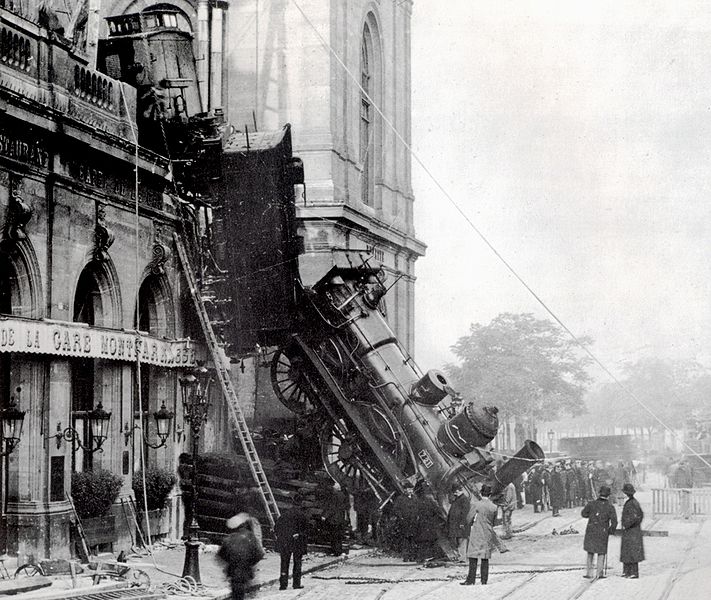 February 12, 2016 at 3:32 pm in reply to: UC Irvine for Rams training camp? or (update) Cal Lutheran? #38888znModerator
 February 12, 2016 at 8:28 am in reply to: Browns indicate they'll cut Johnny Manziel March 9 when league year opens #38876znModerator
 znModerator
nice fade. wish we coulda seen more fron him his rookie season.
I suspect that given the time they have under the new CBA, which limits practices, getting both Foles and Mannion up to speed was a tall order.
znModeratorReport: NFL VP tried to outbid Stan Kroenke for Los Angeles stadium land
By John Breech | CBSSports.com
February 11, 2016A big reason that the Rams earned the right to move to Los Angeles this season is because owner Stan Kroenke had almost unlimited resources: He had the land, he had the money and most importantly, he’s an experienced real estate developer who knew exactly what to do with those two things.
As it turns out, the NFL almost threw a huge wrench into Kroenke’s plan without even knowing it.
The Rams’ new stadium will be built on a 60-acre parcel of land in Inglewood, California, that Kroenke purchased in January 2014. However, he almost didn’t end up with the land because someone else wanted it.
According to ESPN.com, the land was sold in a blind auction that Kroenke ended up winning with a $90 million bid. The most interesting tidbit is that one of the people Kroenke beat out for the land was Eric Grubman, an executive vice president for the NFL.
Grubman’s not just any executive vice president. In August 2014, the league made him the point man on “stadium development, the return of a team presence to the Los Angeles area, the league’s strategic investment fund, and other key strategic initiatives.”
Before that, Grubman’s official title was President of Business Ventures, according to Bloomberg.
Since it was a blind auction, Kroenke didn’t know he was bidding against an NFL VP and the NFL VP didn’t know he was bidding against Kroenke. If Grubman’s bid had won, it’s possible the Los Angeles landscape would be completely different.
If the NFL had owned the 60 acres in Inglewood, it would’ve had complete control of the relocation process. Instead, it turned into a sideshow in cities like Oakland, San Diego and St. Louis.
Grubman would later help Kroenke’s cause. In December 2015, the NFL executive went on radio in St. Louis and bashed the city’s stadium plan, which called for $150 million in public funds and had just been approved by the city.
In the end, Kroenke got everything he wanted: He got the land, he got relocation approval and now he’s building a multibillion-dollar stadium that will likely host Super Bowls and NFL Drafts for years to come.
znModeratorLA Rams Throwback Tribute
Los Angeles Rams
The past meets present as the Rams are headed back to Los Angeles.February 11, 2016 at 6:18 pm in reply to: Rams & qbs in free agency (from RG3 to possibly Fitzpatrick) #38862znModeratorMagic Johnson tries to recruit Peyton Manning to be a Ram
by Nick Wagoner
EARTH CITY, Mo. — Forget the weather and the lifestyle, the Los Angeles Rams’ best recruiting tool might be a little bit of Magic.
On Wednesday night’s edition of “The Tonight Show starring Jimmy Fallon,” legendary Laker Magic Johnson attempted to pitch Denver Broncos quarterback Peyton Manning on becoming a member of the Rams in 2016.
“I tried to talk somebody out of retirement and come to the Rams,” Johnson said, pointing to Manning and laughing. “I said, ‘Man, if you play again, come to the Rams.’ I was working on him backstage. I will even chip in some money.”
Manning began blushing and admitted that he was getting embarrassed by the proposal. Johnson then began extolling the virtues of playing in Los Angeles and reiterated his desire to see Manning become a Ram.
“We are so excited,” Johnson said. “The first day they announced it, it was like 45,000 fans signed up for season tickets and I was the first in line. I used to be a season ticket holder for the Rams back when they were there as well as the Raiders. I want to cheer for him, if he doesn’t retire, as a Ram. I have got my recruiting hat on right now.”
Manning offered no real response other than a little bit of laughter. ESPN’s Adam Schefter reported last week that the Rams had internally discussed attempting to acquire Manning should he decide to keep playing and the Broncos part ways with him. The Rams, of course, cannot publicly comment on their interest in a player on another team.
Johnson clearly has no such restrictions.
February 11, 2016 at 6:11 pm in reply to: StanK's international GREED has upset his British fans too #38850znModeratorArsenal to play Chivas in an exhibition game in LA https://t.co/KBptidbmlH
— L.A. Daily News (@ladailynews) February 11, 2016
znModerator.
Note: the 1st of the 2 articles in this post refers to a long piece in ESPN that reveals a lot of details behind the relocation vote. That ESPN article is in the previous post in this thread.
===
ESPN Story Details Ownership Squabbles As Stan Kroenke And Jerry Jones Strongarm Rams To Los Angeles
http://www.turfshowtimes.com/2016/2/11/10967456/los-angeles-rams-st-louis-espn%5B/quote%5D
The devil is in the details.
You can’t really get beyond hyperbole when talking about NFL owners. They’re a crass, uncaring bunch on the whole.
But an ESPN report out today from Seth Wickersham and Don Van Natta, Jr., exposes just how crass Stan Kroenke was, enabled by Dallas Cowboys owner Jerry Jones and NFL exec Eric Grubman, in his push to move the Rams:
At Mastro’s, the two men met to determine whether they might have a shared vision for Los Angeles. Kroenke was enthusiastic about a 60-acre tract of land in Inglewood, nestled between the Forum and the soon-to-be-closed Hollywood Park racetrack. Earlier in the year, Kroenke had driven around the site at 5:30 a.m. and raved about its potential to Rams chief operating officer Kevin Demoff and to Jones. Spanos, though, was cool on the Inglewood location, citing concerns about parking and traffic.
Still, both men, and their associates, saw the convivial dinner as a promising first step toward a potential partnership. They agreed to be in touch.
But after the dinner, Spanos called Kroenke several times. Kroenke never returned any of the calls.
Despite Spanos’ reservations, the Inglewood land — owned at the time by Wal-Mart, the family business of Kroenke’s wife, Ann Walton Kroenke — still intrigued Kroenke. At the time, it was being sold in a blind auction. Without any warning to Spanos, a company set up by Kroenke, Pincay RE LLC, offered $90 million, outbidding everyone — including NFL executive Eric Grubman, who later would become the league’s point man on the relocation process. Nobody knew whether Grubman had bid on his own or on behalf of the league or some other buyer. But Kroenke’s purchase — and his later deal for an adjacent 238 acres — was a precursor of what would become the dominant theme of the NFL’s return to Los Angeles:
Stan Kroenke would not be stopped.
The whole thing’s worth your time. It’s nothing that we didn’t allude to here at TST throughout the entire process. It was a fight between the collectivists (or as the report deems them the “old money” owners) against the individualists (“new money”).
For all Kroenke’s conniving and Jerry Jones’ Yosemite Sam efforts, it wasn’t ever as smooth or as direct as it should have been. And that falls on NFL Commissioner Roger Goodell, who the story points out numerous times is hardly seen as a decent authority figure to the owners.
In the end, it doesn’t change anything. But it does life the lid on the innerworkings of the process and shows just how dysfunctional the NFL really is.
====
Inside the Rams relocation: A tale of intrigue, power plays and power players
Jim Thomas
A story in ESPN The Magazine & Outside The Lines, titled The Wow Factor, provides rich behind-the scenes details of the NFL relocation vote that ended up with the Rams leaving St. Louis for owner Stan Kroenke’s Inglewood stadium project in Los Angeles.
To a large degree, the article reinforces — and embellishes — months worth of reporting by the Post-Dispatch, particularly the work of reporter David Hunn.
And it does nothing to dispel the notion that:
1. The NFL steered the Rams to Los Angeles.
2. League executive Eric Grubman was pro-Inglewood and pro-Kroenke.
3. Dallas Cowboys owner Jerry Jones was a major player in getting the Rams to Los Angeles — and out of St. Louis.
4. Old guard owners such as Jerry Richardson and Michael Bidwill lost a high stakes power-play to the new guard/new wave group.
Post-Dispatch football writer Jim Thomas isolates some highlights of the ESPN report and offers his comments:
“YOU DID IT FOR THE MONEY”
ESPN The Magazine: During a Dec. 2 meeting in Irving, Texas, Arizona Cardinals owner Michael Bidwill argued that the NFL doesn’t exist just to make rich owners richer. Owners needed to consider what would be best for the league. Jerry Jones cut him off. “When you guys moved the team from St. Louis to Phoenix — it wasn’t about the money?” As Bidwill tried to answer, Jones moved in for the kill: “You did it for the money.” This seemed to halt the Carson momentum.
Thomas’ take: Bidwill was a strong advocate of Carson and St. Louis throughout the process. He worked with Dave Peacock of the St. Louis task force trying to lobby neutral votes into the Carson camp and away from Stan Kroenke’s Inglewood plan. At a gathering of St. Louis football Cardinals alumni the night before the Cardinals-Rams game Dec. 6 at the Edward Jones Dome, he even told the group he was working for St. Louis. But Jones’ comments at the owners’ meetings apparently cut into his effectiveness.
SECRET MEETING
ESPN, The Magazine: San Diego Chargers owner Dean Spanos and Kroenke met at Mastro’s Steakhouse in Beverly Hills on Aug. 27, 2013 to discuss Los Angeles. Kroenke was enthusiastic about a 60-acre tract of land in Inglewood. After the dinner the two men agreed to stay in touch. but Kroenke never got back to Spanos. Kroenke purchased the land for $90 million, outbidding NFL executive Eric Grubman, who would become the league’s point man on relocation. Nobody knew whether Grubman had bid on his own or on behalf of the league or some other buyer.
Thomas: On Oct. 2,, 2015, the Post-Dispatch reported that Spanos had approached Kroenke in 2013 about the Inglewood site, and the possibility of working together to build a stadium in Los Angeles. But Kroenke never got back to Spanos, and much to the chagrin of Spanos purchased the land himself. One interesting difference in the two stories, both sourced anonymously: in the P-D story, sources said Kroenke didn’t know the Inglewood plot was for sale when he first met with Spanos. In any event, the move illustrated that Kroenke would stop at nothing to get what he wanted in LA, even if it meant alienating Spanos. After pulling off his end run for the initial Inglewood plot, Kroenke later told Spanos that, hey, he never lied to him during the initial purchase process. Maybe. But he never got back to him either.
THE GRUBMAN FACTOR
ESPN, The Magazine: On several occasions in the article, reference is made of suspicions by some owners and executives that Grubman worked for Kroenke and Inglewood, and thus against Spanos, Carson, and St. Louis. When Kroenke unveiled his Inglewood stadium plans on Jan. 5, 2015, it included a plan to fast-track the entitlement process — overcoming legal hurdles that often take years to clear. The Spanos camp had designed this creative entitlement method, based on a landmark California Supreme Court decision a few months earlier. The Spanos camp had presented this process to Grubman earlier; now Kroenke had it and was using it. The Spanos camp suspected that Grubman had alerted Kroenke to the method, which the Kroenke camp denied.
Thomas: There are a couple of other examples in the article of Grubman apparently favoring Kroenke and Inglewood, including a moment in the Aug. 11, 2015 owners meeting in Chicago where Grubman appeared to speak on Kroenke’s behalf. Things reached the point at the fateful owners meeting Jan. 12 in Houston that a rumor circulated that Grubman would end up with a high-ranking executive position with the Rams in Los Angeles in exchange for his help in getting the Inglewood project approved.
We will have more on Grubman in Saturday’s Post-Dispatch.
IGER JOINS CARSON
ESPN The Magazine Carolina owner Jerry Richardson met with and corresponded with Disney CEO Bob Iger on several occasions in the late summer early fall of 2015. When it became apparent that Iger favored Carson over Inglewood, Richardson paired him up with Spanos and Raiders owner Mark Davis. Commissioner Roger Goodell, who privately preferred the Inglewood site but pledged to remain neutral, thought the addition of Iger with Carson might be a potential “game-changer” for Carson.
Thomas: Iger obviously didn’t prove to be a “game-changer.” His presentation on Jan. 12 in Houston on behalf of Carson wasn’t nearly as impressive as the Inglewood presentation by Rams executive vice president Kevin Demoff. Not even the power of Disney could save the Rams in St. Louis.
BATTLE OF THE JERRYS
ESPN The Magazine: While Jerry Jones worked the phones and spoke bluntly at league meetings on behalf of Kroenke and Inglewood, Jerry Richardson worked on behalf of Spanos, Carson, and St. Louis. Richardson took to flying his private jet around the country — it was referred to as the Jerry Tour in league circles. Richardson said the league would not only regret leaving St. Louis, but would set a bad precedent by turning away from more than $400 million in public funds for the St. Louis stadium. But Richardon’s hard-charging style offended some owners. “He bullied people,” according to a team executive.
Thomas: The Post-Dispatch was also told, possibly by the same source, that Richardson “bullied people” in his tour. Richardson showed his hand at league committee meetings Nov. 11, 2015 in New York when he said he was pro-Carson and pro-St. Louis. Richardson had long been pro-St. Louis, engaging St. Louis Rams fans who had attended the Chicago owners meetings that August and giving them a thumbs-up sign. Richardson represented the league’s old guard, a group that dominated membership on the six-member Los Angeles Opportunities committee. But as the Houston vote ultimately showed, the new wave group of owners won this relocation battle over the old guard. In the end, in resounding fashion.
FINAL HOURS
ESPN The Magazine; Two factors that put Kroenke’s Inglewood project over the top surfaced at the Houston meeting. For one, the decision to go to a secret ballot. For another, a modified version of a Jerry Jones proposal that would pair the Chargers with the Rams in Inglewood. The latter surprised the Spanos group; in their minds it was an acknowledgement that the league was endorsing a Chargers-Rams solution in Inglewood.
Thomas: One of the key unanswered questions in the entire process was how and why the league decided on a secret ballot for the Houston votes, and the article doesn’t really address that issue. Secret ballots are a very rare occurrence in league matters. But several owners who apparently told Spanos to his face that they were in his corner voted the other way once the votes were secret.
znModeratorTHE WOW FACTOR
Few could have guessed that the league’s return would become so bloody, bitter and, most of all, emblematic of how power in the NFL truly works.BY SETH WICKERSHAM AND DON VAN NATTA JR.
On West Pico Boulevard in Los Angeles, an overgrown tree obscures a whitewashed, two-story building sandwiched between a radio station and a studio lot. Inside, it’s a time warp. The battered carpet is blue, and the rippled wallpaper is bubbling, peeling off. Behind glass is a showcase of dull trophies and yellowed photos from another era. Everything is labeled “Los Angeles Rams.” That team, of course, left LA, its home for nearly half a century, for St. Louis after the 1994 season. But on most days since, this nondescript office has remained open, staffed by two people: John Shaw, the former team president who engineered the franchise’s flight from Anaheim to St. Louis, and his secretary. They work in this nearly invisible team outpost, as if the Rams never left.
One NFL owner called the meeting a “s— show.” A “nightmare,” another said. Yet another described it as “the most contentious and polarizing” in decades. On Dec. 2 at the Four Seasons in Irving, Texas, the owners-only meeting had a single agenda item: Which team or teams should be allowed to relocate to Los Angeles?
The inability of America’s most popular sport to occupy the nation’s second-largest market since the Rams and Raiders left after the 1994 season had become a running joke. In the past two decades, at least 20 Los Angeles stadium proposals had been designed and junked. An expansion team had been awarded to LA in 1999 but then, mired in red tape, sent to Houston to become the Texans. Many clubs had used the threat of moving to Los Angeles as leverage to build new, publicly financed stadiums. But now, the idea of at least one franchise relocating to LA wasn’t just a fanciful notion. It was real.
One proposal was for Stan Kroenke, owner of the St. Louis Rams, to build the world’s most expensive stadium, a $2.7 billion, 80,000-seat roofed venue in Inglewood, just east of Los Angeles International Airport. The other proposal was for the San Diego Chargers and Oakland Raiders, owned by Dean Spanos and Mark Davis, to share a $1.8 billion, 65,000-seat open-air stadium in Carson, a city about 12 miles south of Los Angeles.
Most owners meetings are boring. Some members doze. Groupthink often prevails. Not this time. For hours, the owners argued and traded barbs. New York Jets owner Woody Johnson spoke in support of Kroenke four times, to the annoyance of others waiting to be heard just once. Miami Dolphins owner Stephen Ross joked that the league should hold an auction for the right to relocate, though some owners thought he was serious. Carolina Panthers owner Jerry Richardson argued that Spanos, a beloved owner who for more than a decade had tried to build a new stadium in San Diego, deserved the market.
Others insisted that Kroenke had the land and the money not just to build a spectacular football venue rivaling Cowboys owner Jerry Jones’ AT&T Stadium in Arlington, Texas, but to return to Los Angeles with a transcendent “football campus,” as an owner later put it, with a shopping mall, movie theater, office complex and luxury apartments. The project, to be mostly paid in full by Kroenke, had the “wow factor,” Jones liked to say.
The dueling proposals did not only represent the NFL’s most recent, best opportunity to return to Los Angeles. They had also become the centerpiece of a chaotic power struggle among the league’s 32 owners, between the so-called new-money group, with members who all supported Inglewood, and the old guard, most of whom favored Carson. Going into the meeting, most believed Carson had more votes. But one moment, many would later recall, seemed to halt its momentum. Michael Bidwill, president of the Cardinals and a Carson supporter, argued that the NFL doesn’t exist just to make rich owners richer. Owners needed to consider what would be best for the league, and …
Jones cut him off: “When you guys moved the team from St. Louis to Phoenix — it wasn’t about the money?”
As Bidwill tried to answer, Jones moved in for the kill: “You did it for the money.”
TWO YEARS EARLIER, on Aug. 27, 2013, Kroenke and Spanos met for a private dinner at Mastro’s Steakhouse in Beverly Hills. At a corner table, the two talked cordially — a quiet beginning to a 29-month saga that would end on Jan. 12 of this year in a Houston hotel. Back then, neither man could have guessed that the league’s return to Los Angeles would become so bloody, bitter and, most of all, emblematic of how power in the NFL truly works. In contentious closed-door meetings in Los Angeles, Chicago, Dallas, New York and, finally, Houston, owners belittled, undercut — even bullied — each other in ways never before witnessed, according to interviews with more than two dozen owners, league officials, team executives, lawyers and staffers involved in the relocation efforts, many of whom requested anonymity due to the sensitivity of the negotiations.
The split between owners had as much to do with personal loyalties as it did the appeal of the two stadium proposals. The ruthlessness of Kroenke was fixed in sharp relief against the abidance of Spanos. The savvy of Jones, who led the new-money Inglewood supporters, clashed with the brute force of Richardson, leader of the old-money Carson backers. Bob Iger, chairman and CEO of The Walt Disney Company — which owns ESPN — was enlisted to run the Carson project, with the hope that his star power could offset Kroenke’s money. It wasn’t enough. In the end, no owner would feel more pain than Spanos, the league loyalist who did everything his peers asked of him — only to be forced to work out a face-saving partnership with the man who had beaten him to LA, a process that likely won’t be resolved until 2017.
If you want to do it right, you have to step up.”
– Jerry Jones, endorsing Stan Kroenke’s visionSpanos and Kroenke had long targeted Los Angeles as the best, most attractive option for relocation of their respective teams. Their peers viewed them as being on opposite sides of the ownership spectrum. Now 68 years old, Kroenke — tall and thin with a thick mustache — was a largely quiet partner who rarely attended owners meetings and had little patience for the league’s glacial-paced relocation process. He has made much of his estimated net worth of $7.6 billion in real estate and bought several sports teams, including the Avalanche and the Nuggets. After his 2011 majority stake purchase of the English Premier League team Arsenal, Kroenke had pined for the larger international presence that other owners envisioned for the NFL’s global future.
With thinning brown hair and rimmed glasses, Spanos was deeply involved in league matters, “loyal to a fault,” in the words of a close friend. Now 65, he ran the team owned by his 92-year-old father, Alex Spanos. The NFL was his primary business, even if many owners wondered whether he possessed the sharp elbows of his father.
At Mastro’s, the two men met to determine whether they might have a shared vision for Los Angeles. Kroenke was enthusiastic about a 60-acre tract of land in Inglewood, nestled between the Forum and the soon-to-be-closed Hollywood Park racetrack. Earlier in the year, Kroenke had driven around the site at 5:30 a.m. and raved about its potential to Rams chief operating officer Kevin Demoff and to Jones. Spanos, though, was cool on the Inglewood location, citing concerns about parking and traffic.
Still, both men, and their associates, saw the convivial dinner as a promising first step toward a potential partnership. They agreed to be in touch.
But after the dinner, Spanos called Kroenke several times. Kroenke never returned any of the calls.
Despite Spanos’ reservations, the Inglewood land — owned at the time by Wal-Mart, the family business of Kroenke’s wife, Ann Walton Kroenke — still intrigued Kroenke. At the time, it was being sold in a blind auction. Without any warning to Spanos, a company set up by Kroenke, Pincay RE LLC, offered $90 million, outbidding everyone — including NFL executive Eric Grubman, who later would become the league’s point man on the relocation process. Nobody knew whether Grubman had bid on his own or on behalf of the league or some other buyer. But Kroenke’s purchase — and his later deal for an adjacent 238 acres — was a precursor of what would become the dominant theme of the NFL’s return to Los Angeles:
Stan Kroenke would not be stopped.
NOBODY KNEW IT at the time, but the league office had already lost control of the Los Angeles relocation process. Commissioner Roger Goodell’s mishandling of the Ray Rice domestic violence discipline in the summer and autumn of 2014 distracted him from executing the league’s longtime goal of returning to LA and severely weakened his standing in ownership circles. Meetings about LA that were scheduled for September were pushed to November. The distractions also created a power vacuum that Grubman — and other owners — eagerly filled.
Spanos reacted to Kroenke’s Inglewood purchase by proposing to buy a 168-acre landfill lot in Carson. He and his team had designed a creative development method, based on a landmark California Supreme Court decision a few months earlier, that would expedite the arduous process of entitling a stadium to a city council vote, overcoming legal hurdles that often take years to clear. At a meeting in Los Angeles in mid-November 2014, the Chargers leaders presented their plan to Grubman, who some owners and executives suspected favored Kroenke and Inglewood.
Both proposals were rolling forward. And then, all of a sudden, they weren’t. Later in November, several owners who would serve on the league’s LA committee told Kroenke no team would be moving for the 2015 season — owing, in part, to Goodell’s weakened leadership. In mid-December, on the eve of an important Carson City Council stadium meeting, Art Rooney II of the Steelers delivered the same message to Spanos, telling him to “stand down.” Spanos complied.
But Kroenke, who was well-versed in relocation politics after he had helped move the Rams to St. Louis as a minority owner after the 1994 season, told a few owners that he would play one more season in St. Louis but would exercise his right to relocate in 2015 — “when the window is open,” he told associates. Some took Kroenke’s declaration as a veiled threat to sue if anyone tried to block him; others understood that he had paid a fortune for the land and wanted to move forward. Jerry Jones, who once played himself on an episode of Entourage brokering the NFL’s return to LA, implored Kroenke to “just go” and not wait for the league’s sluggish bureaucracy.
And so on Jan. 5, 2015, Kroenke unveiled plans to build his Inglewood stadium, all but announcing a move to Los Angeles. Spanos and his associates not only were furious that Kroenke had beaten them out of the gate but were also deeply suspicious of Kroenke’s plan to fast-track the entitlement process. It was the exact process they’d presented to Grubman. The Chargers suspected that Grubman had alerted the Rams to it; the Rams insisted that their own California-based development company knew about it.
Either way, it didn’t matter. Carson was behind.
STAY IN THE GAME. If we’re not in the game, we get nothing. Stay in the game.
That’s what the Chargers executives kept telling each other. Kroenke had land, money and, most of all, the shrewdness required to relocate. He was willing to sacrifice his relationship with Rams fans and with the state in which he was raised — something that Spanos, for all of his fights with San Diego politicians, seemed reluctant to do. Spanos needed help. So Richardson suggested that he partner with Mark Davis on the Carson project. For years, the Chargers and Raiders, both of whom play in baseball venues built in the 1960s, had failed to persuade their communities to help offset the costs of new football-only stadiums. If two teams moved together, Richardson said, it would help solve the league’s “California dilemma,” as owners called it.
Most owners liked the eccentric Davis, now 60, even if they knew him only as the quiet guy with the bowl cut who had pushed his father Al’s wheelchair through hotel lobbies at league meetings. Still, many wondered whether Davis, who never had an official job with the Raiders until he assumed control of the team after his father’s death in 2011, was up to the challenge of shepherding a stadium project alone. He had turned down many offers to partner with the 49ers at Levi’s Stadium in Santa Clara, and for years, the Davis family had resisted offers to buy the team and move it south. During one such lunch meeting in 2010, two Los Angeles businessmen pitched a lowball offer to Al Davis, who started laughing. “F— you,” he told them. “Get the hell out of here.” And he went back to eating his lunch.
So on Feb. 19, 2015, six weeks after Kroenke’s Inglewood announcement, the Raiders and Chargers proposed their Carson project, a football-only venue, unlike the epicenter planned for Inglewood, and financed mostly by Goldman Sachs. Looking back now, some around the league wish that Goodell had locked the three owners in a room and forced them to cut a deal right then, avoiding the battles and hurt feelings that would unfold. Instead, Goodell allowed the NFL’s messy form of democracy to run its course, appearing strangely detached in meetings. He said almost nothing while Grubman, who, like Goodell, declined to comment for this story, appeared to be too close to Kroenke; some involved in the process said they had expected Grubman to be strictly neutral. The disjointed process was leading to discontent among owners, at a time when, with football’s long-term future a constant topic of debate, solidarity was needed.
The stage was now set for a showdown. On Aug. 11, 2015, the league’s owners convened at the Hyatt Regency, in a Chicago suburb, for a special LA meeting. For the first time, both sides presented their proposals.
When you guys moved the team from St. Louis to Phoenix — it wasn’t about the money?” As Bidwill tried to answer, Jones moved in for the kill: “You did it for the money.”
– Jerry Jones to Michael Bidwill, president of the Arizona Cardinals
The Carson team went first. During its presentation, Grubman paced in the back of the conference room, drinking coffee.
The Rams contingent went next. Grubman moved to the front of the room and took a seat at the commissioner’s table. The presenters showed off a model of their football oasis, and Mark Davis stared at it in awe.
Saints owner Tom Benson posed the first question about Inglewood, asking why owners should defray the costs of the extra real estate developments — up to $200 million in league loans available for new stadiums — that would benefit only Kroenke. But before Kroenke and Demoff could say a word, Grubman jumped in to answer the question, explaining that Benson misunderstood the amount of money the league would contribute.
The pro-Carson owners couldn’t believe that a league official appeared to be speaking on behalf of the Rams’ proposal. That moment, along with persistent rumors that Grubman wanted to work for Kroenke in Los Angeles, cemented in the minds of some owners that he was an agent for Inglewood.
Later in the meeting, Bears chairman George McCaskey asked whether Kroenke would be willing to share the stadium with a second team. Kroenke reminded the owners of a 2012 memo from Goodell that mandated that any LA stadium be built to house two teams. Kroenke said he could quickly draw up a lease if necessary.
Some of the owners on the NFL’s six-person Committee on Los Angeles Opportunities — Richardson, Rooney, John Mara of the Giants, Robert Kraft of the Patriots, Clark Hunt of the Chiefs and Bob McNair of the Texans, most of whom were considered the old guard and supported Carson — were offended. Spanos’ family had always put the league first, and now Kroenke had declared that if it were necessary to take on a second team, the Chargers would be relegated to a tenant, junior-partner status. Kroenke considered his invitation to be sincere. He had extended a hand as far as he could, given the agreement between Spanos and Davis for Carson.
Before the meeting ended, Jones, as would be his habit, took control. He delivered a rollicking, profanity-laced eight-minute endorsement of Kroenke’s monumental vision, saying in his Arkansas drawl that whichever owner returned to Los Angeles, he needed to have “big balls.”
It was awkward and hilarious. Everyone, including Kroenke, tried not to laugh. But it was also a welcomed sentiment for the new-money owners such as Dan Snyder of the Redskins and Jeffrey Lurie of the Eagles, who backed Inglewood. “If you want to do it right,” Jones continued, “you have to step up.”
With a final vote scheduled for Jan. 12, 2016, in Houston, only five months away, the Carson supporters knew they were in trouble. Making matters worse, Spanos and Davis had argued with each other about Carson earlier that day in front of other owners. Still, Jones sensed Spanos had enough support to prevent Kroenke from going to Los Angeles alone. After the meeting, Jones approached Spanos on the tarmac where a handful of owners had parked their planes.
“I want you in LA with Stan,” Jones told Spanos.
Spanos was noncommittal. He had no interest in partnering with Kroenke.
Meanwhile, a few old-guard owners had another idea to help their friend. If Carson was going to succeed, the project needed a star.
BY THE NUMBERS
INGLEWOOD
HKS Inc.
Boss Stan Kroenke, Rams owner, net worth $7.6 billion
Capacity 80,000
Planned Completion Date 2019
Cost $2.7 billion, privately financed
Total Area 298 acres
Focal Points and Perks Will be part of a mixed-use development complex, including a 6,000-seat performance venue, a 300-room hotel, 890,000 square feet of retail space, 2,500 residential units, 25 acres of parks and space for the NFL Network.SHORTLY BEFORE THE Chicago meetings, Bob Iger received a call from Jerry Richardson. The Panthers’ owner wanted to meet the Disney CEO, but Richardson didn’t identify the topic — only that the sit-down should be conducted under strict secrecy. An Iger confidant suggested that Richardson was inquiring about his interest in perhaps replacing the wounded Goodell, but Iger suspected otherwise.
After all, a year earlier both Goodell and Kraft had asked Iger whether he’d be interested in getting involved in a team that could move to LA, tapping into his local expertise and gravitas. The topic came up again in April when Iger ran into Mark Davis at a Clippers game, a meeting that led to a few discussions about Iger buying a share of the Raiders. And so when Iger and Richardson met on Aug. 5 for two hours in Iger’s office in Burbank, Richardson asked Iger about the market. One team or two? Carson or Inglewood? They agreed to stay in touch.
Over the next few days, Iger researched the Carson site online, noting its proximity to a cross-section of freeways. Richardson and Iger met two more times, talked often on the phone and traded email. Iger liked the fact that Carson would be an open-air stadium, unlike the roofed one Kroenke wanted to build. He also preferred parking lots rather than the garages proposed at Inglewood that would limit tailgating and make game-day traffic a mess. “This is great,” Iger told Richardson. It was exactly what Richardson wanted to hear. So he asked whether Iger would be willing to talk with Spanos and Davis about it.
In early October, Iger met with Spanos at the Shutters hotel in Santa Monica. A month later, Disney’s board of directors approved Iger’s involvement. On Nov. 11, it was announced that Iger had become the nonexecutive chairman of Carson Holdings, the joint venture between the Chargers and Raiders, with an option to become a minority owner of one of the franchises after the stadium was completed.
Goodell, who privately preferred the Inglewood site but had pledged to remain neutral, told a friend that Iger’s involvement was a potential “game changer” for Carson. Having helped negotiate billions of dollars of rights contracts with the NFL, Iger and some of the owners were acquaintances. He knew how the league worked. Many owners who had considered Kroenke to be a Los Angeles lock worried that now he might lose.
BY THE NUMBERS
CARSON
Manica
Boss Alex Spanos, Dean Spanos and family, Chargers owners, net worth $1.689 billion, and Raiders owner Mark Davis, net worth $500 million. Disney chairman and CEO Bob Iger, who oversaw the project.
Capacity 65,000
Planned Completion Date 2019 (but won’t be built now)
Cost $1.8 billion, privately financed
Total Area 168 acresFocal Points and Perks 850,000 square feet for commercial, entertainment and other uses, a farmers market and a 350-room hotel.
OWNERS AND EXECUTIVES say the following weeks were among the wildest they had seen. They called and texted each other daily with sales pitches, demands and gossip. Almost nothing was out of bounds. Some Carson supporters weighed ways to try to jam up Kroenke, such as forcing him to pay the entire $550 million relocation fee up front while giving Spanos and Davis a payment plan. Undecided owners considered the price of their vote, whether it was changing their division and conference alignment, horse-trading a vote for a promise of future support for an ownership succession plan or a new stadium of their own. Others were convinced that some owners didn’t even know where Carson and Inglewood were located. “Owners were all over the place,” one team executive says.
By most estimates, Carson had managed to cobble together 18 votes, shy of the 24 required for relocation. The Rams moving alone to Inglewood had only about seven votes. Many owners thought Kroenke was hell-bent on trying to reach nine, just enough to prevent the Carson project from reaching 24 votes and keeping him in the game. The silent majority preferred the Inglewood site but liked Spanos better than Kroenke. Most owners wanted to avoid a Raiders return to Los Angeles, owing to Al Davis’ burned bridges and the co-opting of the team apparel by gangs, concerns so deep that some wouldn’t even consider Carson. “It’s hard to get owners to move,” Iger says now. “Each one is a boss in his own right.”
And so the battle for Los Angeles became a battle between Richardson and Jones, two Jerrys with dueling powers of persuasion. Jones mostly worked the phones, trying to broker a partnership for the Rams and Chargers in Inglewood. On Nov. 27, Kroenke wrote a letter pledging to allow a partner, though it would not extend to the stadium’s design or the surrounding development. It was a major concession, encouraged by Jones after calculating that Kroenke likely wasn’t going to get 24 votes on his own. Spanos and Davis still refused to consider it, but Jones continued to push for support, convinced that the membership silently preferred it.
Richardson flew his private plane to visit several owners. Everyone around the league called it the Jerry Tour. He insisted that Carson was the better site and that the league not only would regret leaving St. Louis for a second time but would set an awful precedent by turning away the estimated $477 million in public funds for a new stadium that the state of Missouri was poised to offer. At times, Richardson’s hard-charging style, delivered with a threatening tone and citing favors he had done for them, offended some owners. “He bullied people,” a team executive says. “Some were turned off by his forcefulness.”
It was clear that the owners were playing by their own rules — and, as a league insider working with all three teams later said, “They make up the rules as they go.” A news report said that the league would pledge an extra $100 million to help St. Louis finance a new $1.1 billion riverfront stadium — a move that McNair, the Texans’ owner and a Carson supporter, predicted would prevent the Rams from meeting the league’s relocation guidelines. But days later, Goodell wrote a letter saying that the $100 million would not be available. And the night before St. Louis voted on the stadium package, Grubman called in to the show of local radio host Bernie Miklasz to describe St. Louis’ new stadium proposal as “suboptimal” and say that Kroenke was “going to keep his options open.” It seemed to validate what many had long suspected: He wanted the Rams to move.
It was chaos. The spectacle of NFL leaders undercutting St. Louis’ attempt to keep the Rams, and the uncertainty in San Diego and Oakland, was becoming another public-relations disaster. Goodell privately expressed frustration about all three owners — if they were elite, they wouldn’t be trying to relocate in the first place, he told a friend — but in the end, the commissioner supported their efforts to leave. A few days after all three teams filed for relocation, Goodell issued a 147-page report that called the efforts of all three markets to keep their respective teams “unsatisfactory and inadequate.” It was an official green light for all of them to move, knowing that at least one team would be forced to crawl back home.
Soon news broke that Kroenke would build a stadium in Inglewood no matter how the owners voted, a charge the mayor of Inglewood denied but some around the league believed to be true. Many Kroenke supporters were furious that he would risk alienating owners so close to a vote. “There it is,” said one executive of a pro-Inglewood team. “A big middle finger to the league.”
All three teams privately vowed to abide by the membership’s vote, and each of the three owners had to sign an agreement pledging not to sue if his relocation proposal was rejected. But by then the LA derby had become an open war, beyond anyone’s control. Before a late-season AFC game, two owners met in a luxury box and wondered how the LA vote would turn out in Houston. “I don’t know,” one owner told the other. “Stan is more interested in blocking Dean than he is in finding 24 votes.”
znModeratorSt. Louis Rams fans send 26 orders of poop to owner Stan Kroenke
By Alex Butler | Jan. 16, 2016
“But Wednesday, the move became official. St. Louis podcaster Kelly Manno followed the news by following through on a peculiar promise.
Manno said on her podcast ‘the Kelly Manno Show’ Monday that she would be sending team owner Stan Kroenke a pile of poop.
“St. Louis is pissed off,” Manno said on her podcast. “And here’s one thing that I have learned about St. Louis through this whole debacle. St. Louis is like having a crazy relative that you can talk bad about — but nobody else can talk bad about them, or you’ll kill them. We can trash it all day long, but when Kroenke trashes it, you’re getting poop.”
“I don’t even have that much of a dog in the fight, because I’m not that big a football fan, but I still thought we should send Stan Kroenke some poop,” Manno said on the podcast.
Manno made the delivery possible with an order from I Poop You, a “professional poop delivery service. For that special someone.”
Manno had no trouble raising money for the order, according to the Riverfront Times. She even had a GoFundMe account, before it was shutdown forcing her to go to PayPal.
Guillermo, who works for the company, told Manno that the company has a variety of cow, pig, horse and chicken poop. The website features options such as: “Cow Chocolate Pudding, Horse Spring-Rolls, Oink-Oink Turds, Chicken Delights, Goat Bites, and Reindeer Droppings.”
Manno and other donors were able to purchase 26 orders of poop for $250.
znModeratorThe Fred Roggin Show
Thursday, February 4th
Fred talked about the Dodgers and their terrible deal with Time Warner Cable. Fred talked about the Clippers loss to the fledgling Timberwolves last night. Fred discussed how he likes Dean Spanos’ new public approach about the Chargers working out a deal in San Diego. Les Snead: Fred and Les talked about moves the Rams might make this offseason and the expectation LA football fans will have for their new team.
Snead Interview Starts at 22:00
znModeratorwho gives a crap about Archie and Eli’s “expressions”?
You kids these days and your feigned cynicism.
I can tell this whole issue is eating you up. It’s so palpable I can feel it through the computer screen. It’s all you can think about.
It’s not too hard to sense that.
 znModerator
Good to see Mack and Waterfield posting. Join us more often.
I think Nader was a well-known demonized bad guy, and Sanders an unknown quantity.
Plus of course Sanders is a democratic party candidate, and Nader a 3rd party outside (ie. I refer to the way the party system works, I am not choosing sides).
znModeratorthe one thing i don’t worry about is their ability to develop defensive backs.
They have in the wings:
Roberson, Gaines, Joyner
Griffith
Alexander
McDonald isn’t up for FA but Barron, McCleod, Jenkins, and Johnson are.
Here’s another thread on this: http://theramshuddle.com/topic/wagoner-free-agents-in-secondary-will-shape-rams-offseason/
February 10, 2016 at 3:28 pm in reply to: Wagoner: Free agents in secondary will shape Rams' offseason #38817znModeratorPro Football Focus Ranks Rams’ Trumaine Johnson, Janoris Jenkins As #5 And #6 CBs In Free Agency
The Rams’ two starting cornerbacks have expiring contracts. It may not even be up to the Rams to whether or not they can keep both…
There might not be a more interesting angle to the Rams’ free agency dealings this year than how they approach the cornerback duo of Janoris Jenkins and Trumaine Johnson.
Both selected in the 2012 NFL Draft, the first under Head Coach Jeff Fisher and General Manager Les Snead, the two headline the group of Rams with expiring contracts this offseason. It of course sets up a hypothetical issue of having to pick one or the other.
Now it’s entirely true that the Rams could manage to re-sign both, but there is a fair question to ask if it’s worth the money to do so with Lamarcus Joyner and E.J. Gaines on the roster as well. And if the Rams were to look at the value and decide to only keep one, it’s going to be a very tough decision.
The toughness of which is reinforced with Pro Football Focus’ rankings of the cornerbacks who might be hitting the free agent market in a month. In those rankings, Tru comes in at #5 while Janoris is the next CB listed at #6.
Here’s what they had to say about Tru:
Johnson is the lesser known of two free agent cornerbacks for the Rams, but he had his best season as a starter and ranked 19th at his position with an 82.2 overall player grade. Johnson allowed a 55.0 passer rating when targeted, second to only Norman this season among corners. He still needs to prove that he can sustain that level of play for more than one season, but the arrow seems to be pointing up for Johnson.
And for ClampSeason:
We’ve come to expect big plays when quarterbacks target Janoris Jenkins, but those could be either good plays made by Jenkins, or big plays that he has allowed. Over his four-year career, Jenkins has allowed five or more touchdowns in every season (22 total), and missed 56 tackles in 60 games. However, Jenkins has also had 13 or more combined interceptions and pass defenses in three of his four seasons. He has improved over time, and is coming off his highest-graded season in coverage, where he ranked 30th among cornerbacks. Jenkins will make some impactful plays on defense, but he has shown over the last few years that he is susceptible to giving them up, as well.
It’s a tough call to make, and could certainly be one the Rams have to in the coming offseason. Of course depending on the suitors as both are unrestricted free agents, there may be thirstier teams out there who make offers far beyond what the Rams would even consider. That might make it easier for Snisher to just remove one from calculation.
Otherwise, the Rams could well be facing a terribly difficult Sophie’s Choice this year.
znModeratorMy impression–
it was dull and Demoff didn’t say anything.
He mentioned the uniforms, but they obviously intended to target any change for then they move to their own stadium.
He said the toss off line “we have a lot of work to do at qb” and I noticed around that a lot of people tried to read a lot into that. It means nothing that we didn’t already know: they have Keenum starting in the meanwhile, Foles and Mannion competing, and they will look at the draft and free agency. That line about a lot of work to do just simply did not change or add anything to that basic common knowledge we all already have of what they will be doing. It didn’t add anything, it didn’t subtract anything, it dropped no hints, it did nothing–it was a bland nothing statement.
Mark Twain: “Persons attempting to find a motive in this narrative will be prosecuted; persons attempting to find a moral in it will be banished; persons attempting to find a plot in it will be shot.”
znModeratorThats kinda
what Martz seemed to do — the “lets just do
what WE do best” approach…The difference is, Martz set it up so the Rams would not have readable tendencies.
Worked like this. The way they called passing plays combined different routes. So the players only had to know the routes–not the plays per se. That meant he could install up to a 100 plays per game, with each player just knowing what they individually had to do. This allowed him to vary the plays endlessly.
When Saunders was the OC in KC, he did the same thing, and talked about it at length.
So Carolina was just running the same pass plays, and therefore showed tendencies. They counted on execution. Martz and Saunders would make it so there were no tendencies…they focused on the playcalling, not the execution (because you can’t practice 100 plays per week).
They also both relied on sight adjustments so that the play would change depending on what the defense did.
This is something about Saunders and how they worked that:
http://www.washingtonpost.com/wp-dyn/content/article/2006/01/20/AR2006012001673.html
In terms of play calling, Redskins fans will recognize traits of the Saunders offense, an example being personnel groupings that feature Gibbs staples such as two-tight end sets and three-receiver formations with pass patterns coming out of bunch alignments (a combination of tight ends and/or wide receivers lined up in a “bunch” on one side of the formation).
One key difference is that while Gibbs veered toward a more conservative, ground-oriented approach when he left San Diego to take over the Redskins in 1981, Saunders’s philosophy begins with aggressively pushing the ball downfield and then mixing the pass and run to keep defenses off-balance.
Gibbs sees virtue in running a play until the defense stops it, but Saunders preaches unpredictability. With that in mind, the Chiefs often ran out of the shotgun formation and passed out of traditional under-center formations, and would often run on third and five or longer and pass on second and short. Saunders almost never called the same play out of the same formation twice in the same game — or even in a string of games.
Perhaps more than any team in football, the Chiefs used pre-snap shifting and motion by players to create mismatches, particularly for Gonzalez, who always draws extra attention from linebackers and safeties. It wasn’t unusual for the Chiefs to be snapping the football as the defense still adjusted to the last shift or motion.
And Green almost never changed plays at the line of scrimmage. Saunders’s philosophy is that any play he calls should work against any defense because of the options within the play. Saunders would call a play from the coaches’ box, it would be relayed to Green from the sideline and Green would call it in the huddle. Like all veteran quarterbacks, Green sometimes would have liked to have had the option to change a play, but one major bonus of the system was that the Chiefs were rarely hit with delay-of-game penalties.
Saunders’s unpredictable play-calling style was epitomized by a 40-34 victory over Green Bay at Lambeau Field during the 2003 season. On the first possession of overtime, Saunders ran Holmes nine consecutive plays and then, after the Chiefs missed a field goal but got the ball back on a fumble recovery near midfield, Green dropped back and hit wide receiver Eddie Kennison for the winning touchdown.
-
AuthorPosts