
Forum Replies Created
-
AuthorPosts
-
August 25, 2017 at 8:41 pm in reply to: with Phillips there’s substance behind the hype… & more Phillips articles #73262
 znModerator
Overall philosophy seems to be totally different. Williams was high risk high reward. Wades defense seems to be more of a “cover all the bases” type defense. I actually hated Williams defense.
The best defense we had in the last ten years was Jeff Fishers defense. The year Greg Williams got suspended and Fisher was basically acting d coordinator.
I am in the awkward position of disagreeing with everyone here today.

Williams was bend don’t break. He also had a top redzone defense, with the exception of last year. And a top 3rd down defense. It was never high risk. Not really.
I loved GW’s defense. I really did. Best defense we have seen from the Rams since 99.
But as I said, WP is on another level–from everyone. No matter who the Rams coordinator was before, and pretend it could be ANYONE (ie anyone active today), I would be saying that.
…
August 25, 2017 at 8:31 pm in reply to: with Phillips there’s substance behind the hype… & more Phillips articles #73260znModeratorwell it seems to me that this coaching staff is more about mutual respect. rather than just do what i say. if you learn the concepts i teach you and you put in the work i will put my faith in you. and i will empower you to be great on the field.
maybe that sounds a little cheesy but i could see it working.
See I don’t buy that. I saw nothing wrong with the coaching that came before. I too like what I hear about WP’s ability to teach, but I don’t like it at GW’s expense.
I just think that WP is that much better than EVERYONE else. He’s mastered teaching defense at a level that exceeds EVERYONE. Including every single Rams defensive coordinator you can name, no matter how good.
And it’s not just his teaching, it’s WP’s schemes. A subject we have barely touched on. WP is also a master of disguising what he’s doing. He’s a kind of defensive coordinator version of Martz back there.
I personally am never going to put that in a way that downplays or slights or diminishes what came before.
If you got Dickerson after Jackson I would be saying the same kind of thing. Yes ED is a hall of famer but there was nothing wrong with SJ.
..
August 25, 2017 at 7:22 pm in reply to: with Phillips there’s substance behind the hype… & more Phillips articles #73257znModeratorThis discussion leads me to Declare An Opinion.
I liked Wms. He fielded the best Rams defense since 99 and 2001. His player development was sometimes remarkable. So for example, from 2012 to 2014, the Rams acquired 5 starting DBs: McLeon, Jenkins, Tru, Joyner, Alexander. The highest they spent for any of them was a 2nd. There’s talk now of Michael Jordan coming through (I liked him last year too). But either way, developing 5 DBs in 3 years is just tremendous. Between 2001 and 2011, they hit on TWO (Bartell and Atogwe).
BUT.
Yes Wms is good but Wade is Hall of Fame.
It;s like the difference between Steven Jackson and Dickerson.
August 25, 2017 at 3:03 pm in reply to: with Phillips there’s substance behind the hype… & more Phillips articles #73242znModeratorWade Phillips brings quick-fix wizardry to Los Angeles Rams’ D
Gregg Rosenthal
Bum Phillips loved to watch his son work. Near the end of a life spanning football’s explosive growth, the legendary leader of the “Love ya Blue” Houston Oilers would regularly show up to Texans practice, wife by his side, to see Wade Phillips coordinate Houston’s defense.
“Wade was 65 years old at the time,” Los Angeles Rams linebacker Connor Barwin said in an interview this summer, recalling the image of his days playing for Phillips in Houston. “It was so cool to watch his parents come watch him coach. You just saw that love between them, that respect, that love for the game all in one.”
Now 70 years old and ready to embark on his 40th NFL season after joining the 10th pro organization of his career, the Rams’ newest defensive coordinator wears that love of sport as conspicuously as his late father once wore a 10-gallon hat. Phillips emerged as the preeminent quick-fix defensive coach of the last quarter-century by honoring his father’s principles even when they cut against the NFL norms of the day. When a team needs a defensive boost, they call Phillips, and he delivers every time.
Phillips and Barwin are more than just coach and player — the two men regularly grabbed meals together even when Barwin was playing with the Eagles and Phillips was coaching elsewhere. In this era of free agency, cold professionalism and emotion-free press conferences, Phillips believes that coaches and players can be friends. He believes that yelling at players for mistakes amounts to “bitching” and not coaching. He believes that too many staffs overcoach players in an effort to make them all the same. The Son of Bum identifies with players who don’t follow all his orders, knowing well that a little independent thinking goes a long way.
“You don’t want players that do exactly what you say because they have no initiative themselves,” Phillips told me. “You get some guys who are great young men that want to do everything you say, but they get carried away with that. When you need to make a play, you need to have the initiative to say, ‘Hey, Coach told me to do this, but the ball’s right there. I got to make the play.’ ”
Like so much of Phillips’ football philosophy, this sounds deceptively straightforward. Rams players extol Phillips’ ability to simplify concepts and teach with clarity so they can learn fast and play even faster. Introduction to Wade Phillips 101 is a defensive self-help course with proven results that rival those of any defensive coach of his lifetime. In Los Angeles, he takes over a defense that had a better reputation than results over the last four seasons, failing to ever finish in the top 10 in points allowed and bottoming out last season, ranking 23rd in that category. Phillips’ track record is one reason why Rams fans should expect this defense — and the 2017 team as a whole — to escape the quicksand of the Jeff Fisher era.
* * * * *
Phillips has been in this position before. He’s made a career of taking over underperforming defenses and instantly turning them around. From 1981 to his January hire by Rams coach Sean McVay, Phillips has been named defensive coordinator or head coach 12 different times. Each of the nine most recent postings leading up to the Rams job resulted in a trip to the playoffs during his first season in the new role. Every single defense Phillips inherited from 1989 on improved in points allowed and yards allowed after he took over, usually in dramatic fashion.
Phillips believes his secret weapon is the “teaching progression” he’s developed over the years to build a defense. He stresses that players learn common terminology across position groups so they can communicate better. Most coaches meticulously plan out each day installing a defense, adhering to a strict schedule. Phillips teaches his players until they get it right.
“When we teach it, we do the same thing over and over and over and over,” Phillips said. “Like the same coverage — I’ll do it three or four or five days in a row. And when they get it, I’ll go to the next one. It may take two days or it may take five days, but when I feel like they’ve got it, then we’ll go to the next step.”
The Texas native’s pet peeve: self-important coaches who stand at the podium after games and blame losses on players’ mistakes. Phillips believes that is a way to deflect blame from the coaches who should have taught the players how to avoid those mistakes. His system attempts to eliminate ambiguity.
“He keeps it black and white,” Rams defensive tackle Michael Brockers explained. “Everything has its category, so you can’t mess it up. Whatever you hear, that’s your name called, you gotta go. It’s so simple that you can catch on real quick.”
“Scheme-wise, man, it’s simple,” Rams safety Maurice Alexander said. “It’s just one word, and you just have to play after that.”
Simplifying the arcane and often esoteric nature of football coaching is in Phillips’ blood. Former Alabama coach Bear Bryant — who hired Bum at Texas A&M in 1958 and later offered Wade a football scholarship — credited Bum with creating the universally used numbering system which tells defensive linemen where to line up based on their assigned numbers, like the “1 technique” or “5 technique.” Before Bum came along, players were forced to remember code words that varied from team to team.
Like Bum before him, Wade coaches how he speaks: with a common-sense approach. That approach speaks to Wade’s quest for his players to hit the field with an uncluttered mind. Rams inside linebacker Alec Ogletree, who will help make the team’s defensive calls this season, stressed how most coaches value their scheme above all. Phillips values understanding.
In the Rams practices I watched during minicamp and training camp, defenders were one step ahead of the offense, taking aggressive paths to the ball. Phillips notes that offenses are so complicated in the modern NFL that no defense is that simple. His goal is to provide a solid base for players to adjust to what they see. Linebacker Mark Barron said the ability to change plays on the fly is one of the biggest differences he’s noticed after playing under former Rams coordinator Gregg Williams for three seasons. Multiple players expressed that communication is improved and more integral in Phillips’ defense, which counts on them to exercise their freedom. Ogletree noted the defense was creating more turnovers than it had in previous offseasons.
“It’s not all about X’s and O’s,” Phillips explained. “It’s about the players themselves, what they can do. You can draw up a lot of things, a lot of defenses; I can draw up a lot of coverages, and they might be good, but it depends on the players you have.”
* * * * *
Bum Phillips believed that evaluating players is what set his son apart, according to Wade’s colorful autobiography, “Son of Bum.” In Wade’s words, “If a guy can do something well, you better find a way to let him do it.”
Phillips changes the mold, not the player. That’s why he doesn’t mind when a pass rusher occasionally ignores “containing” a quarterback in the pocket in order to go inside and make a sack. It’s why Phillips didn’t mind Texans defensive end J.J. Watt running around blocks when Phillips coached him as a rookie, because Watt proved he could make up ground to finish plays. Phillips prizes results over orthodoxy.
“He can look at guys after a couple weeks or months with them and know what their football intellect is and how far he can take people and when he needs to back it down for them,” Barwin observed. “That’s what I mean when I say he puts guys in situations to be successful. If a guy can’t handle different switches and calls, Wade is not going to put them in those positions.”
Instead, Phillips specializes at getting his best players into advantageous one-on-ones. NFL Network’s Daniel Jeremiah relayed a story of his scouting days with the Ravens, when he was tasked with putting together a reel of then-Chargers outside linebacker Shawne Merriman’s 17-sack 2006 season. After watching the film, Ravens scouts realized that a great number of the sacks should have been credited to Phillips — the Chargers’ defensive coordinator that season — for finding a way to isolate his best pass rusher on opposing running backs.
With the Rams, Phillips will look for ways to take standout defensive tackle Aaron Donald’s play to another level, once Donald’s contract stalemate is over. Phillips couldn’t contain his excitement about veteran defensive end Robert Quinn, whose tremendous quickness off the ball reminded Phillips of a young DeMarcus Ware, coached by Phillips in Dallas and later in Denver.
“He does a great job of putting his players in good matchup situations, almost like you try to from an offensive standpoint. He finds a way to get his elite rushers in some good situations,” Rams coach Sean McVay said when asked what it’s like to face off against Phillips every day in practice.
McVay’s face lights up when he talks about Phillips’ ability to teach and how lucky the Rams are to have him. McVay called Phillips back in January to see if he wanted to work for a coach 39 years younger than him should McVay earn the Rams’ top job. Phillips was out of a gig following his dominant two-year run as Broncos defense coordinator, despite the Super Bowl ring he earned after the 2015 season. After a strong reference from Phillips’ son, Wes, who coached under McVay in Washington, Phillips figured he had nothing to lose. He couldn’t help but laugh, snapping his fingers when remarking that he didn’t necessarily expect McVay to get a job “just like that” at 30 years old (McVay turned 31 shortly after being hired).
With four decades of NFL coaching under his belt, Phillips says that being around his players keeps him young. Whether it’s bopping his head on his VersaClimber to the latest Drake album, clowning around on his epic Twitter account or “always carrying himself with swag,” according to Barron, Phillips connects with his guys.
I asked Phillips if he thought his father, were he still coaching, would also listen to Drake.
“Well, he started from the bottom,” Phillips deadpanned.
Now Wade’s in Los Angeles, with the Rams at the bottom, perhaps the final reclamation project for the best defensive coordinator of his era. History says the team won’t stay there for long.
znModeratorBut I think it’s clear that “stability” is desired because it helps profits
No. I don’t think that is “clear” at all.
Without fuel the entire economy collapses at the ordinary, everyday level. That “deep need” is far more powerful than any worrying about “profits.”
The USA could nationalize all oil companies and still be in the same ideological boat when it comes to the “stability” imperatives.
What I want to do is get out of the old simpler narratives with conpirators in them and look at how complex and different this really is.
There is no direct profit in Afghanistan. The costs outweigh any direct benefits. And no one who is into sustaining the policy is sitting around thinking about “profits.”
Plus of course one of the things driving all this are the fears that come from the symptoms of tumultuous post-coloniality. Ignore those fears or try to act counter to them and you end up in trouble or swimming upstream. That has nothing to do with “profits” either.
We left a purely economic world a while back. Trying to frame it in those terms, IMO, will always lead to answers that are cut short and simply do not account for things.
Some made arguments like that during Vietnam too. It’s the arms companies that foster this, it was said, for money. I always thought that had 2 problems. One is that it makes the people directly responsible for policy these crudely manipulated puppets dominated by conspirators. And no theory of that kind will ever hold up. The other is that that view just simply does not account for the strangely irrational force and power of ideological imperatives. That is, “monolithic communism” was this weird nightmare that created reality for people in power. That had nothing to do with the arms industry. Again they could have nationalized the arms industry and the same ideological imperatives would still be there.
…
August 25, 2017 at 10:48 am in reply to: Goff already notices a difference with Rams' new O-line #73223znModeratorRockRam wrote:
The 2 areas I have carefully focus on using Gamepass is the Oline and the QB. And both are looking very encouraging. Goff is decisive, accurate and consistent; the Oline is actually really good for pass pro, and just OK for run blocking but a big step ahead of last year. The left side especially looks locked down. The right side is the weaker side but that’s to be expected. You have very good vets on the Left, and young guys on the Right. But they’re looking like a real NFL quality Oline so far.
When you break down the 1st string Oline even in game 1 against the Boys, it did very well. There was one glaring error by Brown that got Gurley stuffed, but that’s about it. Against Oakland they were downright dominant. Sure Mack got the sack but it wasn’t on the oline. Everett and Higbee were double teaming Mack and he split them and made the play.
I’m saying right now that this starting Oline is so far superior to anything we’ve seen around here in years and that is encouraging. We also have better depth than some think. Eldrencamp has impressed me. Eldrencamp has done well at all 3 spots they’ve lined him up: both Guard spots and Center. And Blythe has had one bad outing and one good one. Blythe greatly improved from week 1 to week 2. Sullivan is just really good (I didn’t realize he was that good) and Saffold looks better than I’ve seen him in a long time.
The Left side is darn tough; and Brown and Hav are starting to get it together. I don’t see the right side as problematic at all. People keep knocking it, but when I watch every play in slomo I just don’t see it. They have done just fine and against the Raiders they were better than against the Boys. The right side seems to be getting measured by one missed assignment by Brown that got Gurley clobbered behind the line. The right side is an issue of technique and experience; they are not physically overmatched against anyone. The big thing is that Brown is coming off the ball quicker and that makes such a huge difference. Hav and Brown are handling stunts so much better too. Dude is the dancing bear; big guy who can move better than you think.
If they can just stay reasonably healthy, they are going to be a solid “B” oline at worst.
I think Williams has the possibility of developing into a starter; if not on the left then on the right. I liked him last year (he certainly wasn’t ready yet but he had excellent flashes). But he has good feet and moves pretty well. I suspect if we can get two good years out of Whit, Williams just might be ready to take over in 2019. He couldn’t have a better teacher than Kromer, or a better example and mentor than Whit who sees himself as a mentor and a coach on the field (in fact, apparently McVay has nicknamed Whit “coach”). If Williams has it in him, he is being given a golden opportunity to develop into an NFL starting LOT.
BTW: Murphy looks FAR more comfortable on the right side. He looks positively baffled and overmatched on the left.
I’m still concerned by TE blocking; frankly they’ve looked like crap. The only guy I’d trust blocking right now is Harkey.
August 25, 2017 at 10:28 am in reply to: Goff: Dallas pre-season game to end of the pre-season #73220znModeratorGoff, Wentz, Dak: What each worked on to thrive in Year 2
Dan GrazianoILADELPHIA — They don’t throw you a parade for having a strong rookie season as an NFL quarterback; they give you more work.
Carson Wentz returned from an offseason in California with a trimmed down delivery and a variety of other mechanical tweaks, and his Philadelphia Eagles coaches knew what they needed to do. Last season was fun and established Wentz as the quarterback around whom the Eagles believe they can build their team. But this season is about the next steps in that construction project.
The next great sack artist? Where top rookie pass-rushers stand
Just how rare is it for rookies to get double-digit sacks? It has happened only six times in the past 10 years, including last season. Top pick Myles Garrett might be the best bet in 2017, but there’s buzz elsewhere.Graziano: What I learned on 11-team NFL training camp road trip
In 13 days, Dan Graziano watched 14 NFL practices in eight states, recorded 67 interviews, checked into and out of 10 hotels and racked up 2,128 miles on his rental car.And that means drudgery. It means pulling one play out of the playbook and running it against five, six, seven different coverages, then pulling another play out of the playbook and doing the same thing. Good play, kid, but that was against Cover 1. Let’s see it against Cover 2. Cover 4. Zero Blitz. 1 Blitz. Over and over and over and over. OK, next play. Same thing.
“By no means have we got it figured out yet,” Eagles coach Doug Pederson said after a training camp practice earlier this month. “Last year, it was about just kind of getting his feet wet, understanding our offense, the terminology, kind of getting used to each other. And now, all that’s kind of behind us and it’s about, ‘Let’s peel the onion back one more time.’ Let’s talk about situations. Let’s talk about third-and-1s and third-and-7s and -9s and first and second down, red zone situations. Let’s dive into that now and hone in and see those incremental increases that you see from young quarterbacks, and just keep kind of drilling down in those areas. That’s the biggest thing going into Year 2.”
It’s Year 2 for Wentz in Philly, and for Dak Prescott in Dallas and Jared Goff in Los Angeles. Three second-year starting quarterbacks with three very different stories so far. The common thread is that each of their stories is just beginning. And whether their 2016 season was as inconclusive as Goff’s or as brilliantly successful as Prescott’s, these are all still young players with a lot of work to do before we know how their careers will turn out.
“We’re still learning and we’re still growing and he’s still developing and still working on a lot of things,” Pederson said of Wentz. “But I think that’s now where it takes time. I grew up in the true West Coast system with [Mike] Holmgren and Coach [Andy] Reid, and it’s a three-, four-year process. Brett Favre was constantly learning, every year, even the older he got. I have a phrase: Don’t get bored with completions. It makes us better. So that’s what we’re working on. That’s what we’re trying to get to — to where it all becomes second nature for all of us, really.”
So let’s start there, in Philadelphia, and take a deeper look at three very different second-year quarterback situations and what each tried to do this offseason to improve:
Carson Wentz, Philadelphia Eagles
Pick in 2016 draft: No. 2
A year ago at this time, Wentz was the No. 3 quarterback on the Eagles’ depth chart behind Sam Bradford and Chase Daniel. The team had moved up to No. 2 overall in the draft to select him, but it wanted to be patient while it had better options, and Bradford the veteran was supposed to be the starter. That all changed when Minnesota’s Teddy Bridgewater tore up his knee and a Vikings team with Super Bowl aspirations offered a first-round pick for Bradford. The Eagles tore up their quarterback plan, looked at the progress Wentz had made through the summer, and decided to roll with the rookie.
“Yeah, it was definitely tough in OTAs and in training camp,” Wentz recalled. “I was walking a fine line a lot, you know, when I was with the [third team] — kind of had to know when to make my comments and different things. So that was definitely hard, I’m not going to lie. But then, once I was the starter, there was no looking back. And I think, in that time, even though maybe I wasn’t asserting myself as a leader vocally as much, you can still go out and work your tail off, show everybody how you care about people and just how you approach the game. I think that builds a lot of respect among your teammates.”
That valuable behind-the-scenes groundwork laid, Wentz started the on-field portion of his career ablaze. He completed 64.7 percent of his passes with five touchdowns and no interceptions while the Eagles outscored opponents 92-27 en route to a 3-0 start. Wentz was the talk of the league before Prescott was.
It got messier from there, of course. There were predictably miserable days against teams like the Giants and Seahawks interspersed with more encouraging moments such as a victory over the Falcons. Wentz ended up 25th in passer rating, 26th in Total QBR and 29th in yards per attempt with 16 touchdown passes against 14 interceptions. Work to do, for sure, and he went out to California to drill specifics.
“A lot of it was footwork — proper footwork, proper weight distribution, which leads to better efficiency with just throwing motion and everything,” Wentz said. “So I worked on those things — no mass overhauls by any means, but I definitely feel more efficient with my throwing.”
Dak Prescott, Dallas Cowboys
Pick in 2016 draft: No. 135
If you’re going to build on your promise, the first step is realizing that you have to. The Eagles’ 2016 record and the downturn his own performance took after the hot September start were enough to prove to Wentz and his coaches that not everything got figured out in one rookie season. Out in Frisco, Texas, however, the story is a little bit different.
You needed eclipse glasses to watch Prescott and the Dallas Cowboys in 2016. With the help of fellow stud rookie Ezekiel Elliott and a star-studded offensive line in front of him, Prescott delivered a rookie season for the ages. He was third in the NFL in Total QBR behind Matt Ryan and Tom Brady, fourth in yards per attempt, fourth in completion percentage, and threw 23 touchdown passes against only four interceptions. The Cowboys went 13-3 before getting caught under the Aaron Rodgers steamroller in the playoffs, and Prescott was named NFL Offensive Rookie of the Year.
So what do you do to sow improvement in a player who had so much success? You focus on the failures.
“You look at how people might study you,” Cowboys offensive coordinator Scott Linehan said in a phone interview Tuesday. “We sit him down and we show him, ‘This is something someone might try on you, because someone else had success with it.’ The Giants, for example. They’re going to look at some of the stuff they did and feel good about it, especially the second game we played them.”
Which is why Linehan has made Prescott study that second Giants game — a 10-7 loss in New Jersey on Dec. 11 that was easily Prescott’s worst game of the season. He was 17-of-37 passing for 165 yards with one touchdown and two interceptions. (Remember, he threw only two other interceptions in the entire regular season.) Prescott’s QBR for that game was 14.8. His next lowest single-game QBR was 50.6, and that came in a meaningless season finale in which he played only two series.
So Prescott has had to watch that second Giants game over and over, and while doing so he has been asked to imagine the way opposing defensive coordinators are watching it, looking for clues about how to attack him. When training camp opened last year, Prescott was a fourth-round pick sitting behind Tony Romo and Kellen Moore on the Cowboys’ depth chart. It wasn’t until Aug. 25 of last year that Romo hurt his back in a preseason game against the Seahawks and Prescott took over.
He’s not sneaking up on anyone this time.
“We feel like everything was kind of day-to-day last year, the way it all unfolded,” Linehan said. “So it’s a little bit of, ‘OK, take a breath, step back and look at what you were doing this time last year.’ Last year, Dak was the No. 3 quarterback until the third preseason game. Now, you’ve got to carry your team as a starter.”
So it goes beyond just that Giants game. Anyone who had any kind of success against Prescott in any situation gets studied. Anyone who stopped him on a given drive with something he might see again. He played Washington twice, and now a few of that team’s coaches (including last season’s defensive coordinator) are with the Rams. The Cowboys play the Rams on Oct. 1. In advance of that game, they’ll watch tape to see what Washington tried to do against Prescott last season. Mix that level of study with the work he was already doing to make sure Year 1 wasn’t a fluke.
“Mechanics, he’s certainly worked on those. That’s one of the best things he’s done,” Linehan said. “Footwork, timing, all of those things — he’s head-and-shoulders above where he was when he got into the league.”
For Prescott, it’s about knowing how they’re going to come after you.
Jared Goff, Los Angeles Rams
Pick in 2016 draft: No. 1
Prescott was the 135th pick in the 2016 draft. Goff was the first. Their rookie seasons couldn’t have been much more different. Prescott started from Week 1, never looked back and won awards. Goff had to wait until Week 11 to wrest the Rams’ starting quarterback job from Case Keenum. He played in seven games, lost them all, and posted a 22.2 Total QBR that ranked just behind that of Arizona backup Drew Stanton and just ahead of Cleveland wide receiver Terrelle Pryor.
Goff’s best game from a QBR standpoint was his first, and his next best was his second game. Of his five touchdown passes for the season, three came in one game against a Saints defense that allowed more points than any other team in the league outside of San Francisco. Yes, one of the other two touchdown passes came against San Francisco.
Four games into Goff’s tenure as starter, the Rams fired coach Jeff Fisher. After the season ended, they also let go of offensive coordinator Rob Boras, passing game coordinator Mike Groh and quarterbacks coach Chris Weinke.
To replace Fisher, the Rams hired 31-year-old former Washington offensive coordinator Sean McVay, who helped make Kirk Cousins a star in his last stop but has no connection to Goff. McVay and his staff had nothing to do with drafting Goff. Washington wasn’t evaluating quarterbacks before the 2016 draft, and neither were the Atlanta Falcons, for whom new Rams offensive coordinator Matt LaFleur was working at the time.
So yeah, if you want to say Goff is starting from scratch in Year 2, no one’s going to tell you you’re nuts.
“I don’t ever want to say starting from scratch, because he obviously learned a lot from that last staff,” LaFleur said. “But yeah, anytime a quarterback has to learn a new system, new terminology, how you’re asked to execute fundamentals, there is a learning curve there.”
The key with Goff, the Rams believe, is the strength of the group around him. Adding veteran offensive linemen Andrew Whitworth and John Sullivan, drafting wide receiver Cooper Kupp, signing free-agent wideout Robert Woods and, most recently, trading for wideout Sammy Watkins should help put Goff in a position to maximize what he can do well at this point in his career and minimize the areas where he struggles. The Rams are likely to lean heavily on a run game that features 2015 first-round pick Todd Gurley, but that assumes he and the linemen have picked up the zone blocking scheme McVay & Co. brought with them and installed this summer.
“I don’t want to say you treat him like a rookie, but I think anytime you’re in the first year of a system, especially with a younger player, you almost have to,” LaFleur said. “It sounds terrible, but that’s what it is — just knowing you’re in the developmental phase of a young player’s career.”
In the meantime, though, the Rams will be trying to win games. Goff has abilities they believe can help them do that. LaFleur called him a “natural thrower with pretty good accuracy,” and the team has been happy with some of the decision-making they’ve seen from Goff so far in this year’s preseason game action, including a 16-for-20 passing performance against Oakland in Week 2. But fundamentally, Goff is entering Year 2 without the benefit of the same kind of Year 1 those other two guys had. And as a result, expectations have to be more modest.
“I think he’s definitely improving,” LaFleur said. “He’s got a much better understanding of what we’re trying to accomplish and what the expectations are for him. He’s just got a much better understanding of football.”
That’s a good place to start. And when you look at these three second-year quarterbacks, the one who was drafted the earliest is the one who’s still the least removed from the starting line.
August 25, 2017 at 10:22 am in reply to: Goff already notices a difference with Rams' new O-line #73219znModeratorLets hope we don’t suffer injuries, especially at Center. If we do, we are screwed. Depth is a concern. Watching Austin Blythe was a nightmare. I pray he gets cut, and we get someone that knows how to play a little better than him. Blythe is atrocious.
I’ve seen good grades on Eldrenkamp from various line watcher types.
And…Blythe had one botched play. That does not mean he played poorly. It may mean that as often happens with linemen, one bad play gets magnified in people’s minds and overshadows everything else. That is, I have seen no report that Blythe played badly. Only that he had the one bad snap.
….
August 25, 2017 at 10:18 am in reply to: Goff already notices a difference with Rams' new O-line #73218znModeratorThrough the first two preseason games, Pro Football Focus has the Rams’ first-team offensive line allowing just three pressures on 109 pass-blocking attempts.
I wonder if someone could make sense of that stat.
I figure they must be counting snaps per lineman. But 5 doesn’t divide into 109. So that must mean that on the 25 pass attempts (counting the sack), instead of 125 snaps (5 linemen x 25 attempts), they’re missing 16, which must mean a starting lineman missed 16 snaps.
Otherwise, to me anyway, the number “109” makes no sense.
znModeratorI will make a stab at answering my own question. What goes on now is played out with different kinds of motives than the past. Now, in the post-colonial era when it’s no longer possible to directly and explicitly argue that there are superior and inferior races, and there is a general acknowledgement in principle anyway of the universality of human rights and of a people’s right to self-determination, you can’t just do the old British empire thing of spotting a resource and then competing to possess it on the ground.
So the USA does the next thing, which is to dominate the resources through military alliances. This means that ideologically they act in the name of what they call “stability.” Of course “stability” is as free-floating and unfixed a word as any you can think of in the political landscape. But it more or less amounts to being this–the region in question is not openly “unfriendly” or hostile.
Stability takes on an ideological imperative of its own, just as anti-communism did in the cold war. One reason Vietnam happened, for example, was because the american political system had people competing to distance themselves from being “soft on communism.” That competition had a force in its own right that just determined things. So for example, people in power or in the public eye or who supported people in power and so on were stuck with the “monolithic communism” view of world geo-politics. Any gain for anyone anywhere allied with “communism” was therefore directly tied to Soviet gains in the world. From that perspective you had to “stop it from spreading.” Vietnam couldn’t be seen as an independent entity in that view–and TO SEE IT as an independent entity in that view was to fall into the death spiral of being “soft on the Soviets.” You had to fight, or perish politically–the american world was dominated by the ideological imperatives of “don’t be soft on communism.” In fact leadership always pre-selected people who simply thought that way. You couldn’t enter public life without competing at that game.
Now, “stability” has much the same ideological power. That means what you dominate is alliances. You have to be “containing” Iran and bolstering the Saudis. This leads to the idea that you can CREATE allies out of unstable places like Iraq or Afghanistan. Go in and replace hostile regimes with pro-western, alliance regimes.
This also leads to things like the USA being involved in funding the war in Yemen. The Saudis see Yemen as being in danger of becoming an Iranian proxy/ally, and they will quite simple fight to prevent that, and the nature of our alliance in the name of “stability” doesn’t give us any latitude—you support the Saudis or risk losing them, and/or put them in a position where they see US as the main alliance that keeps them from being encircled by pro-Iranian interests.
It’s indirectly economic. So, the whole point of “stability” is to protect the flow of a resource that is crucial to the economy. But then that means doing what you can to spread “stability.” Iran is hopeless, they can only be contained, but Afghanistan presents a possible “stable regime allied with us” if we stick around to preserve it. That is Afghanistan is seen as contestable, Iran isn’t, and you contest where you can. All in the hopes of “maintaining stability.”
I would argue that the “stability” motifs ideologically dominate thinking to the point where the problem is that those motifs dictate actions. It’s as much purely ideological as it is crudely materially economic, and if anything, probably more so.
What energizes the “stability” ideology is the public fear of “terrorism.” Now looked at historically, with a colder eye, “terrorism”–both the kind we support (Saudis in Yemen) and the kind we fear (Muslims shooting up american night clubs) are both just symptoms of one very significant development—the tumultuous effects of post-colonialism. The post-colonial world is dominated by former colonized places trying to figure out just exactly who and what they are as nations and peoples, with wildly extreme ways of presumably settling that. So basically, for centuries, europeans drew arbitrary borders around the world, and then left and said “okay you;re a country now.” What might not have been a country or nation state in ordinary organic history becomes one arbitrarily. So who is the power over these divided places, and where does each place stand in a world still dominated by the more subtle effects of first world power? Institutions emerge to answer that–military, civil/democratic, religious. And then there are minorities and often majorities trapped in those power lines. They resist the religious, political, ethnic, military and so on dominator. They too develop ideological imperatives that go beyond simple obvious goal achievement. The Iraqi shiites want to dominate formerly sunni Iraq. ISIL goes into power vacuums and wants to establish a sunni caliphate. Kurds want a Kurdistan.
We walk around in that mess trying to establish (our idea of) “stability.”
That’s what I mean when I say that to me, ideological notions (eg. “stability”) dominate things far more than any crudely direct economic interests. The economic interests are far more INDIRECT (is oil coming from “stable” places? etc.)
Anyway, that’s just some ideas tossed into the ring.
…
znModerator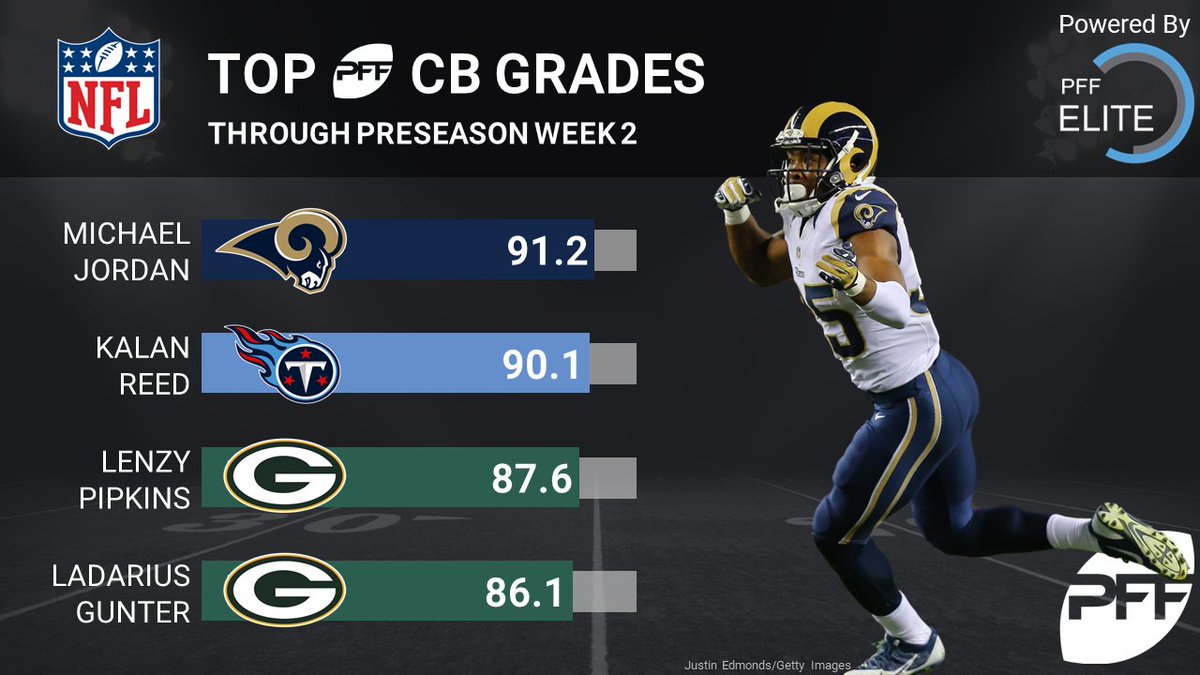 znModerator
Yes, I agree we need to always update for present circumstances. I see my own analysis as including those updates.
I disagree. I see the white people used arms to conquer a nation state argument as being completely irrelevant to the more murky interests and concerns of today. Especially since the founding of the USA was no different from the emergence of any nation or land or peoples before, ever. The Franks were a germanic people who conquered a Roman possession. The Saxons were a germanic people who conquered a Roman possession, and they then later had to fight actual Vikings plus former vikings in the form of the Normans who had conquered a part of France long before. Back before they were Roman possessions they were Celtic but the Celts had to conquer those territories from others before that. There’s nothing new–nor interesting, IMO–in that process. As I said there’s not a corner of the earth that does not have a history like that.
It’s not relevant to an understanding of global conflict that is taking place in a post-cold war and post-colonial environment, where direct possession of the land is just not a factor. In the case of Afghanistan, it’s not even possession of resources. The whole thing is something else. What though? And that’s the interesting question.
….
znModeratorFrom my readings, yes, the British Empire also subsidized private profit and the nation as a whole, back home, did not benefit nearly as much as capitalist interests.
That really has nothing to do with my point.
Overall the national economy benefitted.
Now, with Afghanistan, that is simply not true. No private profit equals or surpasses the expenditure. Plus in old empire, there was an outlet for the population to become settler s and administrators, to the point where there was a general economic benefit. It overbalanced anything that was spent at the governmental level to obtain and secure possessions. In fact there was no point in doing it otherwise.
That is simply not the case with Afghanistan, and not even a little bit.
THEREFORE the explanation for this can’t be the same as the explanation for the old situation.
We;re talking way past each other BT. Either I;m not clear enough or you;’re just missing my points.
znModeratorI listened to Keyshawn Johnson on the Ram’s hating Morning Show on the Ram’s Station, ESPN LA…
Here’s the podcast: http://www.espn.com/espnradio/losangeles/podcast/archive?id=12474070
Polian starts at 29:30
So far I would say the above transcript is from memory and is not quite right. It gets things a little out of order.
They begin by asking Polian if he believes that scheme is better for him this year v. last year. Polian says, you really can’t tell until about 6 games in. He looks more comfortable than he did last year. He looked so uncomfortable and so lost last year. He looks better. The scheme better suits his talents. He can get it out quickly. He’s pretty accurate. He’s big and athletic and that helps. Against San Diego we’ll get a little bit of what they’re going to look like but with a new team and a new coach and a lot of different personnel we’ll see what we have after 6 weeks (ie. of regular season games). Right now he would say the arrow is clearly up,
They ask, since you drafted Jim Kelly, Kerry Collins, Peyton Manning, where do you put Goff as a #1 overall pick? Coming out of college, would he be in line with those guys? [strange question since neither Kelly nor Collins were #1 overall picks, but, whatever]
Polian: no he would not have simply because in that day and age those guys played a lot of football [ie. meaning in college before being drafted]. Ironically the only question with those guys was Jim Kelly because he had injured his shoulder and didn’t get a lot of play time his senior year. Other than that it wouldn’t be comparable. I mean this is a young man–and it’s not his fault, it;s just the way the game is today–who essentially played one year at Cal and came out [his memory of Goff’s college career is obviously way off]. It’s different world now. It really isn’t comparable.
What are Goff’s skills, why did the Rams take him, how can the Rams best use those skills.
Polian: Good arm, accuracy, 3 was ability to [? didn;t hear the word] plays. [I think it was basically save plays, ie. improvise?]. But it was in an offense that was diametrically opposed to what occurs in the NFL. I compare it to the one and dones in basketball. Players who are picked early without much seasoning and you don’t know what they are. You don’t have any body of work that tells you whether he will or will not be a pro player. What people look for in qbs now is physical qualities. He had a conversation with Wade Philips about this a while back. Phillips said, here’s what we face. College quarterbacks do not call plays, they do not call protections, they’re never in a huddle, they never talk to their teammates because everything is signaled in from the sideline, and then they never take a snap from center and drop back and have to read a defense on the run. So that’s the story. Is it any wonder these kids struggle in the pros? There’s more to it than arm strength but a lot of times that’s all teams have to go on.
Donald still holding out, how would you handle that if you were in their front office?
He;’s clearly the best player at his position in the league so you need to find a contract situation that works. Maybe the agent is trying to create leverage that doesn’t exist otherwise…you never know what an agent wants until you are in a negotiation with them. If you allow that every other agent will try it.
Kaepernick will sign when a qb goes down and if he takes the field all the politics stuff will die down. It will then all be based on how did he perform.
znModeratorI listened to Keyshawn Johnson on the Ram’s hating Morning Show on the Ram’s Station, ESPN LA…
Here’s the podcast: http://www.espn.com/espnradio/losangeles/podcast/archive?id=12474070
Polian starts at 29:30. I recommend going straight to 29:30.
znModeratorMy view is that calling something a “nation-state” is a good way to sanitize history
I wish you wouldn’t frame things that way. My own view is to always prefer analysis, and one of my complaints about the present left–speaking from inside as a virtually lifelong member of the left–is that it sometimes gets into PC “whose the more pure” kinds of in-fighting.
So no one is “sanitizing” history here. We are however debating the ways in which historical narratives are framed, and what their relative value might be. My claim is that the narratives for the past don’t fit the present.
Not looking for lectures or offering any. Just putting hard pressure on analytic concepts. Which to me is always one of the best things about leftist discussion. Discussion being the goal.
..
znModeratorAnd, again, capitalists most definitely profit from our endless war in Afghanistan.
Balance that against net loss of military expenditure and aid and so on then ask why it’s happening. There was no such thing in the old British empire as net overall national loss and economic drain against some profit just for some (that did not balance the loss). The entire thing was economically viable in a thousand ways. So you have to ask, what kind of ideological notions are at work to make this situation, the present, seem justifiable to people.
The old explanation does not hold up.
Any more than it did with Vietnam. (I actually debated people in high school who said Vietnam was about oil.)
The old narratives are not working BT. Time for better ones. And I was saying that during Vietnam.
znModeratorI have fond memories of having a sore groin. Course, his was probably because of a different reason.
Well did you factor in the risk of potentially setting it back a couple weeks, being mindful of taking the smart road with it, and having already gotten in good work, holding out for a week.
znModeratorSo, your “it’s messy” is very true. But that’s been a constant throughout the history of empires.
Then I am not yet communicating and we;re not on the same page, because you;’re not responding to what I mean, which I take to be my fault in not being clear.
On this?
I think sometimes people just look at the map and see the United State stretching from sea to shining sea, and think, “This can’t be an empire. It fits so naturally between oceans.” But as you well know, we wouldn’t have been able to push west and south (or try in the north) without massive military power
I have to admit to not caring about it. There is not a single square inch of earth that isn’t now occupied by people who took it from someone else who in turn had taken it from someone else and so on.
To me it doesn’t factor into the analysis of what is going on now. Well, to correct that, the history of slavery and its aftermaths has a direct bearing on today’s living history, but mostly because of the narratives still being told about it and what that allows to continue in terms of racial conflict.
But no I don’t use the word empire like you do even remotely. Reading yet another book about it won’t change that either. The USA is a nation state and just as Gaul and the Celts, then the Romans, and the Franks, and so on eventually became France, it arose from conflict and conquest. The terms of that are so different now this century that I just look at that past with the cold indifferent eye of an historian.
The USA does not profit from Afghanistan. Therefore the analysis has to catch up with the reality. Whatever the deal is, and so far no one in this thread is approaching what I would call a decent analysis of it (that;s both us and the readings we’re posting), it needs to be thought in terms that are more real.
You explain Afghanistan in different terms than you explain yet one more conquest of land in the world (old USA history). The thing has changed. Analysis has to keep up.
znModeratorSo, your “it’s messy” is very true. But that’s been a constant throughout the history of empires.
Then I am not yet communicating and we;re not on the same page, because you;’re not responding to what I mean, which I take to be my fault in not being clear.
…
znModeratorWTF? We’re not paying him to have a groin. Wasn’t he told this when he was hired??
(On WR Cooper Kupp’s status)
“He had a little tweak and we’re going to be smart with Cooper, so we’re going to hold him out this week. I think he’s gotten a lot of work in these first two preseason games and to really push it, where now you have a chance of setting somebody back, where you’re getting a little sore. He’s got a sore groin, is what it is and at the risk of potentially setting him back a couple weeks, being mindful of, especially that receiver position, we’re going to take the smart road with him. I think he has gotten that good work, so we’re going to hold him out for this week.”znModerator.@KevinHart4real racing a Ram in the 40-yard dash? 👀
That's one way to end practice. Thanks for coming out today! #WhatTheFit pic.twitter.com/4tzzmTkRW5
— Los Angeles Rams (@RamsNFL) August 24, 2017
"I ain't never let go of nothing in my life, coach!" –@KevinHart4real 😂😂😂 pic.twitter.com/AuJj3OpdJH
— Los Angeles Rams (@RamsNFL) August 24, 2017
==
Whitworth with the 5-foot-4 Hart who is looking incredibly short.
 znModerator
Practice Report: Special Visitors Stop by Ahead of Week 3
Kristen Lago
The Rams wrapped up a non-padded practice on Thursday morning as the team gears up for Week 3 of the preseason. Today’s session was the Rams last before they kick off at the Coliseum on Saturday night.
A LIGHT-HARTED PRACTICE
Thursday’s practice saw the addition of two extra “players” on the field, when comedian Kevin Hart and actor Scott Eastwood stopped by to join in on the workout.
While having Hart and Eastwood on field two days before a gameday may have seemed like a distraction to some coaches, Rams head coach Sean McVay said their presence did not affect the “team’s ability to get what we wanted” out of the day. Plus, the duo added some energy.
“We all know what a great entertainer he is, so it was fun to have those guys around,” McVay said. “It ended up being a positive thing for us…it also loosened things up a bit in the environment. It’s always good to remember that while we want to be structured and we’re always mindful of that, you can still have fun.”
Hart and Eastwood made their rounds in the early portions of practice, participating in every position group’s individual drills, from the wide receivers to the defensive linemen. Hart also spent some time attempting to field punts and finished up practice racing wide receiver K.D. Cannon in a 40-yard dash. Unfortunately for the comedian, he could not catch any of the punts, nor could he beat Cannon in the race.
That’s one way to end practice.
Gotta catch those, @KevinHart4real! #WhatTheFit pic.twitter.com/qPfUYpDUlU
— Los Angeles Rams (@RamsNFL) August 24, 2017
And while Hart and Eastwood may not have been the best football players out on field today, running back Todd Gurley said he hopes having them at practice will open everyone’s eyes to the difficulties of playing the game.
“If I ever see him on Twitter talking stuff about a football player — he can’t even catch a punt,” Gurley said with a laugh. “So, he definitely can’t say anything else about a football player.”
“It works both ways. You let us do our job and we’ll let you do your job,” he added. “But, it was pretty cool just having him out there, funny — one of the funniest guys in the game right now. We were all excited to have him out there, for sure.”
Los Angeles Rams @RamsNFL
Gotta catch those, @KevinHart4real! #WhatTheFitWHO WILL WE SEE ON SATURDAY?
The easier question to answer may be who won’t we see on Saturday?
Cornerback Kayvon Webster and linebacker Robert Quinn returned to the field for Thursday’s session, but their status has not been determined for this week’s game. McVay said he will meet with Director of Sports Science and Performance Reggie Scott later on Thursday to decide on whether or not both defensive starters will play in their first preseason game of the season.
In Tuesday’s press conference, McVay said linebacker Mark Barron will not participate on Saturday and on Thursday he confirmed cornerback Nickell Robey-Coleman will also be held out of Week 3.
Wide receiver Cooper Kuppis another player who will be sidelined for this weekend’s matchup against the Chargers. Though the young receiver has shined in his first two preseason games, he “had a little tweak” this week in his groin that will keep him out.
“We’re going to be smart with Cooper, so we’re going to hold him out this week,” McVay said after practice, adding Kupp has gotten a lot of work in the first two exhibitions. “At the risk of potentially setting him back a couple weeks, being mindful of especially that receiver position, we’re going to take the smart road with him.”
GURLEY TALKS PRESEASON
After practice Gurley addressed the media to discuss his thoughts on the preseason as a whole. Last year, the running back totaled just four carries in the entire preseason. However, Gurley has seen an increased workload this time around, rushing for 38 yards and a touchdown in eight carries last Saturday alone.
“It’s been going pretty good,” Gurley said. “Obviously got a chance to play in the first two games. Last game we came back as an offense and were able to score two touchdowns. It was just about going out there and improving each day and every game….It’s just fun seeing guys out there making plays and everybody having fun.”
This weekend will likely be the last time Gurley will play in preseason action, as the majority of starters are expected to be held out in Week 4. In his absence, running backs like Justin Davis and Aaron Green are expected to carry the bulk of the load. After practice Gurley was asked about his relationship with the rest of the running backs group, and the Georgia product emphasized the open communication between them.
“If I don’t do something right and they see it, I expect them to tell me and vice versa, just communicate and help each other out,” he said. “If I see a look in the game and obviously when you’re running the ball, you don’t see things that people on the sidelines see. So, just go to those guys and help those guys out.
znModeratorBut we’ve been an empire from the moment we added new “states” beyond the original thirteen.
I think it’s a messy situation and deserves an analysis, which would not be easy, that fully accounts for its messiness.
Going by modern, 17th-19th century versions, empires are extensions of commerce and don’t justify themselves much if they are expensive and not profitable. So leaving out the Romans and Chinese and the Mongols and the Persians and so on, looking at modern versions, they grab land and resources, and come along with various justifications having to do with progress, Christianity, and modernity and so on. But they turn a profit.
That does not describe Afghanistan. Among many other things it does not describe.
So to me there’s something too crude and simple to the notion that this is an empire. If it is it’s a completely different thing and the whole concept of “empire” has to be re-thought accordingly.
Another example is Nicaragua in the 80s. There was no profit in it. It was driven by something else. Or Saudi Arabia. Old versions of empire, if you craved a resource (oil) you just took it on the ground. Went in, took it. Like the Ottomans. That does not describe the american/saudi (complicated) neo-alliance.
So to me the key is ideological motives, not crude simple easy to understand ordinary “they profit and therefore act this way” views.
And when you enter into ideological motives, you are at the level of fears and wishes and so on. Not material gain. You’re inside people’s eyes seeing how they see the world.
August 24, 2017 at 3:49 pm in reply to: Goff: Dallas pre-season game to end of the pre-season #73169znModeratorPeter King breaks down one play that should have Rams fans breathing a little easier about former No. 1 overall pick Jared Goff
znModeratorMcVay says WR Cooper Kupp has a minor groin injury and will not play this week vs. Chargers.
— Myles Simmons (@MylesASimmons) August 24, 2017
==
Cooper Kupp is about to take the NFL regular season by storm. BOLD PREDICTION: He catches more passes than Sammy Watkins this season.
— Brad Evans (@YahooNoise) August 20, 2017
==
znModeratorSee this right here is one reason why i use the term “deep state.” To me, this is a big part of why I think we are dealing with something ‘different’ than at any time in the past:
“…In 2010, almost a decade into this secret war with its voracious appetite for information, the Washington Post reported that the national security state had swelled into a “fourth branch” of the federal government — with 854,000 vetted officials, 263 security organizations, and over 3,000 intelligence units, issuing 50,000 special reports every year.
Though stunning, these statistics only skimmed the visible surface of what had become history’s largest and most lethal clandestine apparatus. According to classified documents that Edward Snowden leaked in 2013, the nation’s 16 intelligence agencies alone had 107,035 employees and a combined “black budget” of $52.6 billion, the equivalent of 10% percent of the vast defense budget…”w
vI know you like the term and I know you know I don’t. Here’s why. Does “deep state” just mean intel people? Cause if it does, why not just say intel. If it doesn’t just mean intel people then what mechanism is at work making all the longterm employees at the State Dept, in intel, in the pentagon, and so on, come out uniformly thinking the same? Because if fact often those groups are at odds.
I think it’s just a muddled term. If you mean intel agencies are full of people who have been there a while and have particular policy perspectives and agendas, okay.
If you mean US foreign policy has tended certain directions without a lot of mainstream scrutiny, okay. That’s true.
It originally was used to discuss countries which were basically directly ruled by the military in spite of thin outward facades seemingly indicating otherwise. It then got applied to the USA by (in my mind, weak) analogy. I think a hard look at the US situation means, it;s not like that. It’s much messier than that.
None of which is an argument against you using it as a term, obviously. So you can just take this as cantankerous mutterings.
Meanwhile yes that was an interesting read. As a sign though of just how messy things are, he’s around to tell his story and there;s still a chance to shine scrutiny on that kind of covert war issue and make it known and maybe end it. It’s just factual historical reality that we are that messy in the USA.
The ideological side of it is that people believed things like that kept us safe from “communism” so they let it all happen with a shrug.
…
znModeratorLouis Riddick @LRiddickESPN
Unless the absolute bottom falls out on Goff (injuries/execution), he’s going to be comeback player of the year. Call me crazy. Don’t care.It is shameful the difference in offensive design/efficiency between current #Rams scheme and ’16 scheme.
Ryan Kartje@Ryan_Kartje
#Rams backup RB Lance Dunbar will open the season on PUP, begging the question: How did he pass his physical when the Rams signed him?Austin did partake in some running back drills during camp, FWIW
J.B. Long @JB_Long
Curious to see how defenses start to combat [Kupp]. Can’t load up on Sammy, Kupp, AND Woods, though.August 24, 2017 at 12:50 pm in reply to: black holes, gravitational waves, n other stuff like that #73161znModeratorSupernova déjà vu, all over again
When astronomers saw a star explode they knew – thanks to Einstein – that they could watch it again a year later. Katie Mack explains.https://cosmosmagazine.com/space/supernova-deja-vu-all-over-again
In late 2015, the Hubble Space Telescope turned toward a distant galaxy to watch the explosive demise of a doomed star. Supernova Refsdal was a replay, having already been seen and measured a year before. But between here and there was a region of space so crowded and mangled with galaxies, the exploding star’s light rays flowed through it like a river over rapids, twisting and bending along multiple paths. Hubble was watching another angle on the same explosion, from light rays that took the scenic route.
That light can split and bend is a familiar concept. Every time we look through a lens, see a reflection off glass, or watch the dance of sunlight underwater, we are watching light being bent or split by the matter through which it flows. In space, as long as it doesn’t run into anything, such as a galaxy, there’s no matter for light to flow through: it should travel in straight lines, unimpeded.
But thanks to Einstein we know it doesn’t. He hypothesised that when there’s matter nearby, empty space itself can bend, stretch and compress, carrying light beams along with it. In fact, this phenomenon of gravitational lensing was one of the first pieces of evidence to support Einstein’s general relativity theory.
He recast gravity, not as a force but as a consequence of the distortion of space by massive objects such as stars or galaxies.
Imagine placing a bowling ball on the middle of a trampoline, and then rolling a tennis ball past it. The tennis ball won’t travel in a straight line, but will instead circle around or fall into the dent in the centre. This new picture of gravity explained why a planet orbits a star. It also predicted that light can’t pass by a massive object in a straight line. The path of light through curved space would bend, too.
The first time gravitational lensing was observed, it rocked the scientific world. Einstein’s theory predicted that stars in the same part of the sky as the sun would appear to be shifted from their true positions, as the light passing by the sun would be curved around by its distortion of space.
During the next total solar eclipse, when the moon blocked out the sun’s light, astronomers were able to see the background stars and measure the difference, exactly as predicted, between the stars’ charted positions and where they appeared. A famous New York Times headline proclaimed “Lights All Askew in the Heavens.” Einstein became an overnight sensation and our understanding of the nature of space and time changed forever.
SOMETIMES THAT DISTORTION CAN BE SO EXTREME AND COMPLEX THAT WE SEE MULTIPLE IMAGES OF THE SAME GALAXY, AS IF LOOKING THROUGH WARPED, UNEVEN GLASS.
These days, astronomers can use gravitational lensing to magnify distant galaxies, helping us see and study the far reaches of the Universe. In some cases, it can help us measure the shape of space itself on the largest scales. It can also map out invisible dark matter: anything that has mass distorts space and bends the light behind it, giving away its presence.
Sometimes that distortion can be so extreme and complex that we see multiple images of the same galaxy, as if looking through warped, uneven glass. Light originally travelling off to one side might be pulled through a strongly curved part of space to reach us from another angle. Because a curved path is longer than a direct one, there can be a delay between two images of the same distant light source.
When astronomers discovered Supernova Refsdal, they knew to be ready for a replay, because they saw another image of the host galaxy, but in that one the supernova had yet to go off. It involved a fortuitous alignment: the very distant host galaxy, where the supernova occurred, and a giant cluster of galaxies in between. The combined gravity of an entire cluster turned space into a distorting lens between the supernova’s host and us, making the host appear to be in several places behind it.
After the combined gravity of the cluster split the image, a single galaxy acted as another lens, splitting one of the resulting mirages four more times. When the original supernova was seen in 2014, it was seen there, in quadruplicate, framing the interloper galaxy like a cross. In another part of the cluster, because the light had taken a longer route, the doomed star was still intact. Astronomers calculated the light travelling on that path would take about a year more. And then they saw the explosion, again, right on time.
August 24, 2017 at 12:09 pm in reply to: black holes, gravitational waves, n other stuff like that #73160znModeratorScientists May Have Spotted a New Kind of Gravitational Wave
Rumors are swirling that the LIGO observatory has finally spotted gravitational waves from colliding neutron stars.http://www.popularmechanics.com/space/deep-space/news/a27916/new-kind-of-gravitational-wave/
New Scientist is reporting that LIGO may have spotted gravitational waves from a brand new kind of source: neutron stars.
Neutron stars are similar to black holes in that they’re both formed from the remnants of exploding stars, but neutron stars are smaller and less massive. Instead of collapsing into an infinitely small point, neutron stars instead collapse a sun-sized star into a sphere only a few miles wide. Neutron stars are some of the densest objects in the universe.
Colliding neutron stars give out similar signals as colliding black holes, but they’re smaller and harder to find. LIGO has long been searching for signals from neutron stars, but until now they’ve been unsuccessful.
According to New Scientist, there’s a good chance LIGO is about to announce the discovery of gravitational waves from neutron stars by the end of the week.
===
Exclusive: We may have detected a new kind of gravitational wave
Have we detected a new flavour of gravitational wave? Speculation is swelling that researchers have spotted the subtle warping of the fabric of space resulting from the cataclysmic collision of two neutron stars.
Now optical telescopes – including the Hubble Space Telescope – are scrambling to point at the source of the possible wave: an elliptical galaxy hundreds of millions of light years away.
Gravitational waves are markers of the most violent events in our universe, generated when dense objects such as black holes or neutron stars crash together with tremendous energy. Two experiments – LIGO in the US and VIRGO in Europe – set out to detect minuscule changes in the path of laser beams caused by passing gravitational waves.
LIGO has discovered three gravitational wave sources to date, all of them colliding black holes. The two observatories have been coordinating data collection since November, increasing their sensitivity. That collaboration may be about to pay off.
Neutron stars
Over the weekend, astronomer J. Craig Wheeler of the University of Texas at Austin launched speculation over a potential new LIGO detection by tweeting: “New LIGO. Source with optical counterpart. Blow your sox off!”By optical counterpart, he probably means that astronomers could observe light emitted by the gravitational wave source. This suggests the source is neutron stars as, unlike black holes, they can be seen in visible wavelengths. LIGO researchers have long-anticipated this possibility, setting up partnerships with optical observatories to rapidly follow-up on potential signals prior to formally announcing a discovery.
LIGO spokesperson David Shoemaker dodged confirming or denying the rumours, saying only “A very exciting O2 Observing run is drawing to a close August 25. We look forward to posting a top-level update at that time.”
Speculation is focused on NGC 4993, a galaxy about 130 million light years away in the Hydra constellation. Within it, a pair of neutron stars are entwined in a deadly dance. While astronomers are staying silent on whether they are engaged in optical follow-ups to a potential gravitational wave detection, last night the Hubble Space Telescope turned its focus to a binary neutron star merger within the galaxy. A publicly available image of this merger was later deleted.
If LIGO and VIRGO really have picked up the gravitational waves of colliding neutron stars, it might explain why collaborator Andy Howell mused earlier in the week, “Tonight is one of those nights where watching the astronomical observations roll in is better than any story any human has ever told.”
-
AuthorPosts