Forum Replies Created
-
AuthorPosts
-
 nittany ramModerator
As much a tackle as a block. He gets his arms around the defender’s waist.
nittany ramModeratorLots of contradicting reports from camp. Funny how people look at the same thing but see something totally different.
For example, misone says Saffold stalemates Donald and Brochers with ease. Says he only saw him get beat in practice once and that was on the first day. However others have said that Donald routinely beats Saffold.
And I think jimi said that he thought Gurley looks much closer to 100% than misone intimates.
This isn’t a big deal. Just think it’s interesting how people develop different perceptions even though they’re viewing the same data. Player evaluation ain’t an exact science by any stretch.
nittany ramModeratorAll of the voices that I associate with my formative years as a football fan are fading away.
Cosell, Summerall, Meredith, Stram, Cope, Gifford….
I miss those times.
nittany ramModeratorMy wife and I saw it too. I agree with you. Good summer fun.
I got to hand it to him – despite being sort of a walking joke with the Scientology stuff and the bizarre public behavior, Tom Cruise makes enjoyable movies.
August 2, 2015 at 7:38 pm in reply to: Brady to be suspended…which will happen…when? a May-July saga #27953nittany ramModerator August 2, 2015 at 12:37 pm in reply to: The real miracle of acupuncture – that anyone still believes in it… #27945nittany ramModerator
Medicine is not science. It’s an art. Too much is unknown about the human body. People are different in how they respond to issues of environment, nutrition, sleep or pain among other things too. The problem I have with blanket assertions applied to human health is that there are almost always outliers that defy the orthodoxy. It is these outliers which present an opportunity for far greater insight into the true processes involved in a condition via research.
I know people who have benefitted from acupuncture therapy for low back pain. They swear by it. They’ve been on the pain medications and have lived in that fog for years before trying acupuncture. I would question whether this study thoroughly explored all possible avenues before making a blanket statement against acupuncture. All possible avenues can be claimed but passing time can give greater insight debunking past studies.
While I would be loathe to let a chiropractor turn me into a human pretzel to treat an ailment I know people who have benefitted from chiropractic treatment. I know I’d rather try acupuncture first and drugs and surgery last.
Well, the premise of original article in this thread that says acupuncture is a sham isn’t based on a single study. It’s an article based on the literally thousands of studies that debunk acupuncture. What your friends experience when they have acupuncture is most likely a placebo effect. See the second article posted in this thread.
The problem is, even though the placebo effect may have given them some pain relief, nothing has changed for them medically. The underlying condition that caused the pain is still there.
nittany ramModeratorJuly 30, 2015 at 8:20 pm in reply to: The real miracle of acupuncture – that anyone still believes in it… #27781nittany ramModeratorhttps://www.sciencebasedmedicine.org/placebo-by-conditioning/
Science-Based Medicine
About SBM Reference Links Recent Comments
ArticlesPlacebo by Conditioning
Posted by Steven Novella on July 29, 2015 45 Comments
power-of-placebo-effectTruly understanding placebo effects (note the plural) is critical to science-based medicine. Misconceptions about placebo effects are perhaps the common problem I encounter among otherwise-scientific professionals and science communicators.The persistence of these misconceptions is due partly to the fact that false beliefs about placebos, namely that “the” placebo effect is mainly an expectation mind-over-matter effect, is deeply embedded in the culture. It is further exacerbated by recent attempts by CAM proponents to promote placebo-medicine, as their preferred treatments are increasingly being demonstrated to be nothing but placebos.
One idea that proponents of placebo medicine have tried to put forth is that you can have a placebo effect without deception. The study most often pointed to in order to support this claim is Ted Kaptchuk’s irritable bowel syndrome study. However, this study was flawed in that it told participants that placebos can heal, so it wasn’t exactly without deception.
The role of conditioning
A recent study published in the Journal of Pain focuses on conditioning as a component of placebo effects. The study design is interesting, but I have doubts about its applicability to the clinical setting.
The researchers used a heat model of pain applied to the forearm. They did various runs where participants reported their pain level in response to different temperatures. Their forearms were treated first either with a control cream (petroleum jelly) or a placebo cream (petroleum jelly plus blue food coloring). They were told the placebo cream contained a powerful analgesic that would block pain. The cream was then removed, and a hot stimulus applied.
When subjects were treated with the placebo cream they believed to be active, they were then tested, without their knowledge, with a warm but not painfully hot stimulus. This was meant to convince them that the placebo cream worked. (So again, the protocol used active deception to achieve its ends.)
One group of subjects experienced a single set of runs in this fashion. Another group experienced four sets of runs spread out over different days. Then finally came the test – all test subjects were told about the deception, that the placebo cream was inactive and in fact identical to the petroleum jelly except for the dye. They were then given another run with the control and placebo cream.
The researchers found that in the group that had the long run (four-day series) subjects still experienced reduced pain sensations with the placebo cream, but not the control cream. There was no difference for the short run (single day, single series) subjects. There were controls in place to rule out simple habituation to the stimulus as a factor.
What did we learn about managing pain clinically?
If we take the results of the study at face value, what do we learn? The study does not establish that you can have placebos without deception. The method used in this study depends explicitly on deception.
What the study does potentially show is that conditioning can play a role in placebo effects. This idea is nothing new, as conditioning has been on the list of placebo effects for years (certainly since I have been writing about placebo effects). The study does demonstrate that conditioning alone, without expectation of benefit, is sufficient to produce at least a temporary effect for a subjective symptom (pain, in this case). This is entirely unsurprising, but it’s good to have an experimental verification.
Conditioning probably plays a significant role in many placebo rituals, such as acupuncture, or even non-placebo treatments such as taking medication or getting a valid medical procedure. The process of the treatment becomes associated in our minds with feeling better, and so experiencing the process makes us feel better. Perhaps the conditioned stimulus triggers the release of endorphins, for example.
The main limitation is that the conditioning in this case required a contrived situation, in which patients were deceived by receiving a non-painful stimulus they were told would be painful. They therefore attributed the lack of pain to the placebo analgesic. How would we apply this in the real world?
I suppose one way to accomplish a similar effect is to give the patient a real analgesic along with an associated placebo treatment. Then after sufficient time for conditioning to take place, give the placebo treatment without the analgesic. According to this study, however, you will have to secretly give them a real analgesic, an ethically dubious practice.
There are other ways to shift from active treatment to placebo, but they were not the subject of this study. Follow up studies that attempt to remove all deception would be interesting.
Conclusion – What do we know about placebos?
Taken together, the scientific literature on placebos indicates that it is a complex assortment of various effects. These include conditioning, as well as reporting bias, statistical effects such as regression to the mean, confounding factors, observation bias, and other effects. Expectation of benefit is only one element, and is not necessary by itself.
Often the absence of expectation is used by the naïve public to argue that placebo effects are ruled out, but this is not true. For example, it is frequently argued that babies and animals cannot have placebo effects because they cannot have expectation, but there are many other sources of apparent placebo effects, as this study partly demonstrates.
We further know that placebo effects are only measurable for subjective outcomes. Placebo effects won’t cure cancer or make you live longer. They may cause you to report less pain or nausea, however. Whether you are actually experiencing less pain or just reporting less pain is unclear. Placebo effects are also short lived.
The ultimate question is whether or not placebo effects are clinically valuable and whether attempts to provoke them are worthwhile. My position is that they are of severely limited value, and are not worth compromising the relationship with the patient by incorporating deception into the treatment. It is certainly not worth instilling in the patient false and pseudoscientific ideas about health and medicine.
Any placebo effects worth having can be achieved with legitimate treatments given without deception to fully informed patients.
July 30, 2015 at 5:02 pm in reply to: Brady to be suspended…which will happen…when? a May-July saga #27773nittany ramModerator
-
This reply was modified 11 years, 2 months ago by
 nittany ram.
nittany ramModeratorI don’t buy what he’s saying and I’m not sure he should even be in the league. He probably should have been banned for life.
In the video up there (the one with the cheerleaders)
he says: “its a great game, but its a production business…”Its a rather sinister moment in his speech. Ya haf to actually
hear it, and pause for a moment to really get what he’s saying.w
v“Kill the head”. That’s the substance of his motivational talk to his players. He even tells them not to get off the pile without taking a shot at Gore’s head. That won’t go down with “Win one for the Gipper” as one of the great all-time motivational speeches, but who knows, that sort of rhetoric may have worked well at the time. Given the attention finally being paid to the many former NFL players dying in their 50’s from the effects of concussion syndrome, hopefully that isn’t true anymore. I’d like to think that a bright, thoughtful player like Chris Long would get up and walk out of a meeting where that sort of rhetoric was being spewed.
I think the Bounty-Gate thing was a significant Turning Point in NFL History.
It was a really important break from the past. I think before BountyGate, it was
ok to still be “old school.” Or at least a lot of players were still arguing in favor
of old school football. It was ok to say things like “everybody does it” etc.But Bounty-Gate was the turning point where a new era ‘officially’ explicitly, began,
I think. You simply can NOT play the game the way the Deacons and Atkinsons and Lamberts
used to play.Greg Williams changed history with those speeches, I’d say. All that hoopla
kinda clarified the new game in town. Yes? No?w
vI agree. The game is changing and will continue to change. It will move further away from the game we grew up with. Bounty Gate, the revelations about concussion syndrome, Ray Rice punching his wife in the elevator, even the Patriots cheating…all these things alter the course that the NFL takes because of their concern about the public’s perception. And if real changes are made, that’s a good thing.
One thing though…I wouldn’t necessarily lump what GW did with the “old school” style of football played by Deacon Jones and Jack Lambert. I think premeditated planning to hurt a specific player goes way beyond that. I’m sure Lambert didn’t shed a tear if he knocked another player out of the game. He may have even wanted to do that. I could be wrong but I bet he never tried to accomplish that by purposely targeting the player’s ACL.
nittany ramModeratorI don’t buy what he’s saying and I’m not sure he should even be in the league. He probably should have been banned for life.
In the video up there (the one with the cheerleaders)
he says: “its a great game, but its a production business…”Its a rather sinister moment in his speech. Ya haf to actually
hear it, and pause for a moment to really get what he’s saying.w
v“Kill the head”. That’s the substance of his motivational talk to his players. He even tells them not to get off the pile without taking a shot at Gore’s head. That won’t go down with “Win one for the Gipper” as one of the great all-time motivational speeches, but who knows, that sort of rhetoric may have worked well at the time. Given the attention finally being paid to the many former NFL players dying in their 50’s from the effects of concussion syndrome, hopefully that isn’t true anymore. I’d like to think that a bright, thoughtful player like Chris Long would get up and walk out of a meeting where that sort of rhetoric was being spewed.
nittany ramModeratorI don’t buy what he’s saying and I’m not sure he should even be in the league. He probably should have been banned for life.
nittany ramModeratorCool, we need new antibiotics. Antibiotic resistance is becoming a huge concern. There was a time that when someone had an infection caused by E. coli (probably the most common gram negative human pathogen) that they didn’t even bother to do sensitivity tests because they were sensitive to everything. Now we see more and more resistant strains all the time. We recently isolated a strain from a patient’s blood that was resistant to every antibiotic in our formulary with the exception of one.
nittany ramModeratorSorry but it still doesn’t make any sense. Especially since a mask is used. Everyone has a skull and it isn’t a choice. A mask to hide a skull?
It’s not literal. It’s metaphorical. If flesh is a mask to hide a skull, that means many things…including (among others) that beauty is only a mask hiding our vulnerability and mortality.
Huh? Flesh is skin which covers a skull. Do not need a mask.
You’re thinking too literally about what the skull and flesh represent. You have to soften the strict and specific definitions of skin, flesh, skull, etc. This sculpture wasn’t meant to be a supplement to a Grey’s Anatomy text. It’s not about the literal meaning of those things. Here’s one interpretation. The skull represents our inner self with all of its ugliness (and mortality and vulnerability as zn said). There are many metaphors that work with the skull. And skulls all look the same. It’s the mask of flesh that gives us a face and therefore the illusion of being different or unique. But inside we all look the same and none of us can escape what we truly are inside.
nittany ramModeratorWhy is flesh only missing from the head and neck?
IMO? it;s a “mask” trope. Also it allows for greater contrast. The world of luxuriant beauty, v. skull, plus mask = more contrast. Not the same if it’s just an entire skeleton.
Yeah. I think the sculptor is saying we try to hide the ugliness of our true selves from others and/or what we see is illusion – the reality is hidden, etc…there are a dozen variations of this theme the sculpture could depict.
nittany ramModeratorCast
Trevor Howard as Lord Cardigan
Vanessa Redgrave as Clarissa
John Gielgud as Lord Raglan
Harry Andrews as Lord Lucan
Mark Burns as Captain Morris
Jill Bennett as Mrs. Fanny Duberly
David Hemmings as Captain Nolan
Peter Bowles as Captain Duberly
Mark Dignam as General Airey
Leo Britt as General Scarlett
Howard Marion-Crawford as Sir George Brown
T. P. McKenna as William Howard Russell
Mark Burns as Captain Morris
Corin Redgrave as Featherstonehaugh
Alan Dobie as Mogg
Ben Aris as Maxse
Norman Rossington as Sergeant Major Corbett
Willoughby Goddard as Squire
Georges Douking as St. Arnaudand introducing Benny Hill as the incorrigible Corporal Fred Scuttle.
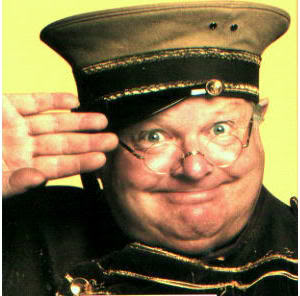
Wow, talk about an allstar cast. You bet I’ll watch it!
-
This reply was modified 11 years, 3 months ago by nittany ram.
nittany ramModeratorUp until last year JL put up some impressive stats, but last year his stats–Passes defensed, Ints, and Stuffs–were clearly subpar. I believe the games showed that, too. To me, JL is a guy the Rams have to try to upgrade if they want a top 5 defense. Doesn’t a top defense need a talented guy manning the middle of a defense? I wonder if JL is just too average.
Could that be due to being in a new defense? Could Williams ask his MLB to do different things than what we’re used to seeing?
I don’t have a clue, I’m just throwing that out there.
JL certainly isn’t spectacular, but MLB isn’t a position of need in my book.
-
This reply was modified 11 years, 3 months ago by nittany ram.
July 17, 2015 at 10:10 am in reply to: Who is the player, other than QB, Rams can least afford to lose.? #27339nittany ramModeratorTre Gurley.
nittany ramModeratornittany ramModeratorObviously the Roman army was one of the greatest of all time, but it would lose miserably to any army from a more recent era…even North Korea
Why don’t you just become a Rams fan if you love North Korea so much.
Or. Something like that. (?)
I will when and only when our Glorious Leader tells me to.
nittany ramModeratorYeah I don;t think so either. The 85 Bears D would have been worse to play against than the 99 Bux were. Incredibly hard to block.
Nah, the average offensive tackle in 1985 weighed 284 lbs. By 1999 that number grew to 309 lbs. The vaunted Bears front seven would have been neutralized by an o-line that was much larger than any they would have faced. Of course the Rams defense would have easily handled the Bears offense. It was pretty pedestrian for their own era so I’d give them little hope against a Rams defense that was bigger and quicker than them.
Now, if you asked me which team was better, then I would say the 85 Bears. But that’s a different comparison. When you compare teams from different time periods, you have to measure them by the impact they had during their respective eras. Few if any teams have been as dominant as those 85 Bears. I would say the 99 Rams are among the best teams of all time, but they aren’t quite in the 85 Bears strata. But which team would win if they played? I think the 99 Rams would win comfortably.
Here’s an extreme, over-the-top example to make my point – which army was better, the army of the Roman Republic in 49 BC or the current army of North Korea? Obviously the Roman army was one of the greatest of all time, but it would lose miserably to any army from a more recent era…even North Korea 😉
-
This reply was modified 11 years, 3 months ago by nittany ram.
-
This reply was modified 11 years, 3 months ago by nittany ram.
July 7, 2015 at 11:47 am in reply to: vid: blast from the Past — Everett's Debut vs Pats 1986 #27028nittany ramModeratorOk I just want Nick Foles to play as well in his debut with the Rams as Jim Everett did and I want him to play that well in every single game after that. Is that too much to ask?
nittany ramModeratorThat is the cover. The real goal is to remove the flag altogether everywhere. Pressure on retailers to not carry the flag. Extends even to the Dukes of Hazard franchise depiction of the car the General Lee. Efforts to disinter Confederate generals from cemeteries. Defacing confederate monuments. Removing the flag from book cover dust jackets. Hitler would be proud.
Well, there’s no unified goal. There isn’t a single monolithic movement against all things Confederacy. There are many sides and many points of view with this issue. It certainly is a delicate situation. I can see why southerners would want to honor their dead ancestors through memorials. But their deaths came about in defense of an indefensible institution. Can we blame the Mayor of Memphis for wanting to remove a monument to Nathan Bedford Forrest – a man who fought to defend slavery, who was a proponent of harsh treatment of slaves and who helped establish the KKK? Afterall, no one would be upset if Jewish people would ask for the removal of a monument to Dr. Mengele from their town square. And that’s the crux. People who look back on the Confederacy with pride refuse to see the inherent evil in the “Lost Cause”.
States rights is a defensible institution. Many a yankee fortune was made from the slave trade. Sherman’s March to the sea was an inherent evil in the Won Cause? That moral high ground looks quite flat.
Even if the north had no moral high ground that doesn’t make the Confederate desire to preserve the institution of slavery more defensible. And “states rights” was mainly just a postwar dodge to make the southern cause more palatable. The root cause of the war was slavery.
http://www.salon.com/2013/03/16/the_south_still_lies_about_the_civil_war/
Excerpted from “The New Mind of the South”
In the course of our conversation, Yacine Kout mentioned something else—an incident that had happened the previous spring at Eastern Randolph High School just outside Asheboro. On Cinco de Mayo, the annual celebration of Mexico’s defeat of French forces at the Battle of Puebla in 1862, a lot of Hispanic students brought Mexican flags to school. The next day, Kout said, white students brought Confederate flags to school as a message: This is our heritage.The Civil War is like a mountain range that guards all roads into the South: you can’t go there without encountering it. Specifically, you can’t go there without addressing a question that may seem as if it shouldn’t even be a question—to wit: what caused the war? One hundred and fifty years after the event, Americans—at least the vast majority who toil outside academia—still can’t agree. Evidence of this crops up all the time, often in the form of a legal dispute over a display of the Confederate flag. (As I write, there are two such cases pending—one in Oregon and the other in Florida, making this an average news week.) Another common forum is the classroom. But it’s not always about the Stars and Bars. In 2010, for instance, Texas school officials made the news by insisting that Jefferson Davis’s inaugural address be given equal prominence with Abraham Lincoln’s in that state’s social studies curriculum. The following year, Virginia school officials were chagrined to learn that one of their state-adopted textbooks was teaching fourth graders that thousands of loyal slaves took up arms for the confederacy.
At the bottom of all of these is one basic question: was the Civil War about slavery, or states’ rights?
Popular opinion favors the latter theory. In the spring of 2011, in recognition of the 150th anniversary of the start of the Civil War, pollsters at the Pew Research Center asked: “What is your impression of the main cause of the Civil War?” Thirty-eight percent of the respondents said the main cause was the South’s defense of an economic system based on slavery, while nearly half—48 percent—said the nation sacrificed some 650,000 of its fathers, sons, and brothers over a difference of interpretation in constitutional law. White non-Southerners believed this in roughly the same proportion as white Southerners, which was interesting; even more fascinating was the fact that 39 percent of the black respondents, many of them presumably the descendants of slaves, did, too.
We pause here to note that wars are complex events whose causes can never be adequately summed up in a phrase, that they can start out as one thing and evolve into another, and that what people think they are fighting for isn’t always the cause history will record. Yet, as Lincoln noted in his second inaugural address, there was never any doubt that the billions of dollars in property represented by the South’s roughly four million slaves was somehow at the root of everything, and on this point scholars who don’t agree about much of anything else have long found common ground. “No respected historian has argued for decades that the Civil War was fought over tariffs, that abolitionists were mere hypocrites, or that only constitutional concerns drove secessionists,” writes University of Virginia historian Edward Ayers. Yet there’s a vast chasm between this long-established scholarly consensus and the views of millions of presumably educated Americans, who hold to a theory that relegates slavery to, at best, incidental status. How did this happen?
One reason boils down to simple convenience—for white people, that is. In his 2002 book “Race and Reunion,” Yale historian David Blight describes a national fervor for “reconciliation” that began in the 1880s and lasted through the end of World War I, fueled in large part by the South’s desire to attract industry, Northern investors’ desire to make money, and the desire of white people everywhere to push “the Negro question” aside. In the process, the real causes of the war were swept under the rug, the better to facilitate economic partnerships and sentimental reunions of Civil War veterans.
But an equally important reason was a vigorous, sustained effort by Southerners to literally rewrite history—and among the most ardent revisionists were a group of respectable white Southern matrons known as the United Daughters of the Confederacy.
The UDC sounds like one of those genteel ladies’ organizations that would have quietly passed into oblivion about the time women ditched their girdles and entered the labor market, but they are still around—a group of about twenty thousand ladies dedicated to various educational and historical preservation causes. Since 1955, the UDC has recruited next-generation members through a young persons’ auxiliary called the Children of the Confederacy, which does similar kinds of work. Blight was surprised when I told him in an e-mail that as part of my research I planned to visit the 2008 C of C convention in Fredericksburg, Virginia. “I knew there used to be such an [auxiliary] organization decades ago but did not know that it still exists,” he replied. “Amazing. How I would like to be a fly on the wall there.”
The significance of the UDC lies not in its present-day clout, which is negligible, but in its lasting contributions to history— both for good and for ill. From its inception in 1894 up through the 1960s, the UDC was the South’s premier social and philanthropic organization, an exclusive social club where the wives, sisters, and daughters of the South’s ruling white elite gathered to “revere the memory of those heroes in gray and to honor that unswerving devotion to principle which has made the confederate soldier the most majestic in history,” as cofounder Caroline Meriwether Goodlett grandly put it. At first, the UDC provided financial assistance and housing to veterans and their widows, offering a vital public service at a time when for all practical purposes most local and state governments in the South were nonfunctional and/or broke. Later, as the veteran population aged, the UDC built homes that allowed indigent veterans and their widows to live out their days with some measure of dignity. Long before there was such a thing as the National Park Service, the UDC played a crucial role in preserving priceless historic sites, war cemeteries, and battlefields across the South. At the same time, it embarked on a spree of monument building: most of those confederate monuments you can still find in hundreds of courthouse squares in small towns across the South were put there by the local UDC chapter during the early 1900s. In its way, the UDC groomed a generation of Southern women for participation in the political process: presidents attended its national convocations, and its voice was heard in the corridors of the U.S. Capitol.
But the UDC’s most important and lasting contribution was in shaping the public perceptions of the war, an effort that was begun shortly after the war by a Confederate veterans’ group called the United Confederate Veterans (which later became the Sons of Confederate Veterans—also still around, and thirty thousand members strong). The central article of faith in this effort was that the South had not fought to preserve slavery, and that this false accusation was an effort to smear the reputation of the South’s gallant leaders. In the early years of the twentieth century the main spokesperson for this point of view was a formidable Athens, Georgia, school principal named Mildred Lewis Rutherford (or Miss Milly, as she is known to UDC members), who traveled the South speaking, organizing essay contests, and soliciting oral histories of the war from veterans, seeking the vindication of the lost cause “with a political fervor that would rival the ministry of propaganda in any 20th century dictatorship,” Blight writes.
Miss Milly’s burning passion was ensuring that Southern youngsters learned the “correct” version of what the war was all about and why it had happened—a version carefully vetted to exclude “lies” and “distortions” perpetrated by anti-Southern textbook authors. To that end, in 1920 she wrote a book entitled “The Truths of History”—a compendium of cherry-picked facts, friendly opinions, and quotes taken out of context, sprinkled with nuggets of information history books have often found convenient to ignore. Among other things, “The Truths of History” asserts that Abraham Lincoln was a mediocre intellect, that the South’s interest in expanding slavery to Western states was its benevolent desire to acquire territory for the slaves it planned to free, and that the Ku Klux Klan was a peaceful group whose only goal was maintaining public order. One of Rutherford’s “authorities” on slavery was British writer William Makepeace Thackeray, who visited Richmond on a tour of the Southern states during the 1850s and sent home a buoyant description of the slaves who attended him: “So free, so happy! I saw them dressed on Sunday in their Sunday best—far better dressed than English tenants of the working class are in their holiday attire.”
But presenting the “correct” version of history was only half the battle; the other half was preventing “incorrect” versions from ever infiltrating Southern schools. Before the Civil War, education was strictly a private and/or local affair. After the Civil War, it became a subject of federal interest. The first federal agency devoted to education was authorized by President Ulysses S. Grant in 1867, and Congress passed several laws in the 1870s aimed at establishing a national education system. White Southerners reacted to all this with a renewed determination to prevent outsiders from maligning the reputation of their gallant fighting men by writing textbooks especially for Southern students. One postwar author was none other than Alexander Stephens, former vice president of the Confederacy, whose portrayal of the war sounds remarkably like the version you hear from many Southerners and political conservatives today: it was a noble but doomed effort on the part of the South to preserve self-government against federal intrusion, and it had little to do with slavery. (This was the same Alexander Stephens who had proclaimed in 1861 that slavery was the “cornerstone” of Southern society and “the immediate cause of the late rupture and present revolution.”)
As the UDC gained in political clout, its members lobbied legislatures in Texas, Mississippi, North and South Carolina, and Florida to ban the purchase of textbooks that portrayed the South in anything less than heroic terms, or that contradicted any of the lost cause’s basic assertions. Its reach extended not just to public schools but to tenured academia—a little-known chapter of its propaganda effort is detailed by James Cobb in his 2005 book “Away Down South: A History of Southern Identity.” Cobb recounts how in 1911, for instance, University of Florida history professor Enoch Banks wrote an essay for the New York Independent suggesting that slavery was the cause of secession; Banks was forced by the ensuing public outcry to resign. Perhaps Banks should have seen that coming: seven years earlier, William E. Dodd, a history professor at Virginia’s Randolph-Macon College, had complained that to merely suggest the confederacy might not have been a noble enterprise led by lofty-minded statesmen “is to invite not only criticism but enforced resignation.” Dodd himself would later migrate to the University of Chicago, where he established a Northern outpost for Southerners who were interested in a serious examination of Southern history. Such scholarship was not encouraged back home: the first postwar society of Southern historians was created in 1869 for the explicit purpose of vindicating the confederate cause.
The fear of losing one’s job worked to keep most dissenters in line, but if that failed, self-appointed censors in the community were always on the lookout. In 1913, for instance, the sons of confederate Veterans succeeded in banning from the University of Texas history curriculum a book that they felt offered an excessively New England slant on recent history. The UDC industriously compiled lists of textbooks used in schools across the South, sorting them into one of three categories: texts written by Northerners and blatantly unfair to the South; texts that were “apparently fair” but were still suspect because they were written by Northerners; and works by Southern writers. Outside academia, the New South creed, popularized by Atlanta newspaper editor Henry Grady in an effort to spur economic development, also reinforced this new orthodoxy. A big part of Grady’s canny public relations was to pay extravagant homage to the imagined splendor of the antebellum South, and to portray the New South as a revival of that genius instead of what it really was: the rise of a whole new class of plutocrats.
If all of this wasn’t enough to stifle all public debate and intellectual inquiry in the decades after the war, other prevailing conditions might have finished the job: the widespread poverty of those decades, the rise of Jim Crow and the need to maintain the belief in white supremacy, a pervasive religious mindset that put a higher value on faith than on reason. There were more thoughtful voices, of course—in Atlanta, W. E. B. Du Bois was writing brilliantly about the black experience and reconstruction. But the racism of his day postponed his wider influence to a later era. For all but the rich and/or socially elite this was the South that H. L. Mencken lampooned as “a stupendous region of worn-out farms, shoddy cities and paralyzed cerebrums”—far more concerned with the next meal than with intellectual inquiry. Among white Southerners, rich or poor, the universally accepted history was the version that would later find fame in Margaret Mitchell’s 1936 novel “Gone With the Wind”—a book that sold millions, was translated into twenty-seven languages, and has probably had a more lasting influence on public perceptions about the South to this day than any other single work. It’s no wonder that the so-called Southern renaissance of the 1930s happened outside academia, in the field of fiction; as Cobb points out, the people least interested in understanding Southern history at that time were Southern historians, and Blight agrees. “It would have been impossible to grow up in the South from 1890 to World War I and not have heard or read [the lost cause version of history] many times over as the common sense of white Southern self-understanding.”
I would quibble with that last part; the era when this was “the common sense of white Southern self-understanding” lasted at least until 1960, very conservatively speaking, and its legacy thrives to this day. In an era when any assertion of “fact” is met by noisy counterassertions of competing “facts,” it’s hard to grasp how completely this warped version of history was accepted as gospel in the South, as silly to dispute as the law of gravity. Former New York Times correspondent John Herbers is an old man now, living in retirement in Bethesda, Maryland, with his wife, Betty. but when he was growing up in Mississippi in the 1930s and 1940s, “the lost cause was one of the main themes my grandmother used to talk about: ‘slavery was nothing to do with the Civil War—we had a cotton economy and [the North] wanted to dominate us.’ It was an undisputed topic.” At the time, he accepted this version, as children do; today, he is struck by the vigilance with which adults in his world implanted this story in the minds of their children. “They pushed themselves to believe that,” he said. “If [the war] had anything to do with slavery, they had no ground to stand on.”
Claude Sitton, another Southerner who covered the civil rights movement for the New York Times, remembers participating in a yearly essay contest sponsored by the UDC when he was a high school student in Rockdale County, Georgia, in the early 1950s. I did not encounter the UDC essay contests when I was a student in public schools in the 1960s, but the things I heard from my mother could have come straight from Miss Milly’s approved textbooks. History books were unfair to the South, she told me, so I was not to believe anti-Southern things I might read in them, and she was vigilant about correcting me if she heard me use the term “the Civil War” in conversation. To call it a Civil War was to concede that secession was impossible and/or unconstitutional—something no self-respecting Southerner should ever do. “The proper name,” she would say, “is The War Between the States.” Her reminder to me was nothing out of the ordinary; millions of Southern schoolchildren of my generation had absorbed such messages, as had several generations before us. “As late as the 1970s, neither textbooks nor curricula veered far from lost cause interpretations, especially in the Deep South,” writes historian Karen L. Cox—and in his book on the civil rights era in Mississippi, historian John Dittmer concluded that the lost cause version of post-Civil War reconstruction in the South still held sway among the vast majority of whites in that state as recently as the early 1990s.
Die-hard defenders of some version of the Lost Cause today say that the South has always been the victim of “political correctness” in school textbooks, and that this continues to this day. The truth is just the opposite: for decades, publishers of school textbooks went out of their way not to offend delicate Southern sensibilities in their treatment of the Civil War. One longtime publishing executive told me that when he got into the business in the 1960s, it was common to see two different versions of school history textbooks—one for in the Deep South and one for everywhere else, “and the difference was how you treated the Civil War.” By the mid-twentieth century, even textbooks that did not repeat the UDC party line still tiptoed carefully through the minefield. Take this passage, for example, from a widely used 1943 high school history textbook, which depicts a slave-holding South of stately mansions and benevolent slave owners: “The confederates . . . believed they were fighting for the democratic principle of freedom to manage their own affairs, just as the thirteen colonies had fought in the Revolutionary War.” The same textbook describes the Ku Klux Klan as a group that “sometimes” resorted to violence in its effort to retake local governments from the hands of incompetent former slaves. A 1965 textbook used in Alabama public schools taught another key point of the lost cause creed—that slavery was a benign institution: “In one respect, the slave was almost always better off than free laborers, white or black, of the same period [because] the slave received the best medical care which the times could offer.”
ADVERTISEMENT
Publishers don’t offer a special “Southern” version of history anymore; these days, they cater to individual state educational standards, though some states—like California and Texas—have a disproportionate national influence on what those standards are. The problem today, the former publishing executive told me, is that “with so many state standards, the books have become in the last ten years longer, blander, more visual, certainly—and more inclusive. There’s so much to cover.” The result is like light beer: better tasting, less filling. With no space to truth-squad a 150-year-old public relations campaign, today’s texts simply strive not to offend; they don’t perpetrate the lost cause myth, but they don’t do much to correct it, either. Take this passage from a text widely used in public high schools today, which neatly splits the difference between the “states’ rights” and the “slavery” camps: “For the South, the primary aim of the war was to win recognition as an independent nation. Independence would allow Southerners to preserve their traditional way of life—a way of life that included slavery.” That’s a way of putting it even Miss Milly might have been able to live with.
“I grew up in a cocoon,” Herbers says today, recalling his childhood and the version of history he absorbed. It’s an apt metaphor for what happened to any Southerner born before about 1970, and to a good many of those born since. Although the field of Southern history underwent a revolution at the university level in the 1940s and 1950s, the version ordinary Southerners knew in 1970 and even later had not changed appreciably since 1900. Perhaps 1970 sounds like a long time ago, but in educational terms it’s not: 1970 was when a lot of people who are still teaching today learned what they know, and what they’ve passed on to their students. James Loewen, a sociologist and author of “Lies My Teacher Told Me,” has said that when he speaks to public school educators across the country today, somewhere between 60 and 75 percent say that the Civil War was fought over the issue of states’ rights. Whether the group he’s speaking to is predominately white, predominately black, or racially diverse, the percentage stays roughly the same.
The Southern version of history also prevailed for decades at Civil War battle sites, thanks to the fact that Congress appropriated money for the National Park Service, and Southerners in Congress had their hands on the purse strings. It wasn’t until the 1990s that the Park Service—under pressure from the academic community and a few members of Congress—made it a priority to revamp its exhibits to “interpret [the Civil War] and the causes of the war based on current scholarship,” said Dwight Pitcaithley, a professor of history at New Mexico State University who was chief historian of the Park Service from 1995 to 2005. In December 2008, Pitcaithley gave a talk to public school educators in Mississippi, and used as part of his presentation this quote from the Mississippi Declaration of Secession: “Our cause is thoroughly identified with the institution of slavery, the greatest material interest of the world.” That sentence is now prominently displayed on the wall of the National Park Service visitors’ center in Corinth, Mississippi, near the site of the battle of Shiloh. Pitcaithley took a picture of the display and used it in his presentation. After his talk, he was chatting with a thirty-four-year-old black school principal who had grown up in Mississippi, attended its public schools, and received his university education there. “I asked him if he’d ever seen that
and he said no—he’d never even heard of that.”
All of which explains both how that dubious assertion that thousands of slaves fought in defense of the Confederacy came to be included in that Virginia textbook back in 2010, and how the error came to light. As it turns out, the textbook’s author took her information from the Sons of Confederate Veterans’ website; the error was discovered when a history professor at the College of William and Mary happened to come across it while browsing through a copy of one of her fourth grade daughter’s schoolbooks. Had that not happened, who knows how long the book would have been in use? To this day, it’s possible to stir up a hornet’s nest among ordinary Southerners by asserting that slavery was a primary cause of the Civil War; at the least, it will earn a native Southerner the accusation of having signed over his brain to those Ivy League intellectual snobs who despise all things Southern. The conviction that the South went to war primarily to defend the concept of states’ rights “is in [Southerners’] families, in their churches, in their schools, in their political structure,” Pitcaithley said. “They’ve been taught that over generations. It so embedded that—as you have found—if you suggest otherwise they look at you like you’ve put your pants on your head.”
From “The New Mind of the South” by Tracy Thompson. Copyright 2013 by Tracy Thompson. Reprinted by permission of Simon & Schuster Inc.
MORE TRACY THOMPSON.
nittany ramModeratorMerry Huddlemas.
nittany ramModeratorThat is the cover. The real goal is to remove the flag altogether everywhere. Pressure on retailers to not carry the flag. Extends even to the Dukes of Hazard franchise depiction of the car the General Lee. Efforts to disinter Confederate generals from cemeteries. Defacing confederate monuments. Removing the flag from book cover dust jackets. Hitler would be proud.
Well, there’s no unified goal. There isn’t a single monolithic movement against all things Confederacy. There are many sides and many points of view with this issue. It certainly is a delicate situation. I can see why southerners would want to honor their dead ancestors through memorials. But their deaths came about in defense of an indefensible institution. Can we blame the Mayor of Memphis for wanting to remove a monument to Nathan Bedford Forrest – a man who fought to defend slavery, who was a proponent of harsh treatment of slaves and who helped establish the KKK? Afterall, no one would be upset if Jewish people would ask for the removal of a monument to Dr. Mengele from their town square. And that’s the crux. People who look back on the Confederacy with pride refuse to see the inherent evil in the “Lost Cause”.
nittany ramModeratorHope things work out ok.
nittany ramModeratorThis is the culprit:

Collecting stickers for the book with a friend. He was a Vikes fan so I was a somewhat fan cause I didn’t know any better. Then I got the Rams stickers and fell in love with the horns. Bought Pro Football preview mags. Taped the players to my wall and was hooked. Rams were my team.
I still have that book and thanks to my dad and his friends it’s completely full.
June 28, 2015 at 2:54 pm in reply to: The Top 10 Greatest NFL Offensive Linemen of All Time #26847nittany ramModeratorIf they broke that down by position and then did a top 10 (or even top 5) list for each position you would see the names of many former Rams players. Not just Orlando Pace.
-
This reply was modified 11 years, 3 months ago by nittany ram.
nittany ramModeratorI don’t believe there is much “misguided” pride.
I’m pretty sure that is sophistry.
I’m pretty confident that nobody – NOBODY – is oblivious to the racist quality of that flag, even if they don’t endorse it whole-heartedly. I will allow that it is possible that some people care much more about the Southern Pride thing. But I do not believe that they are ignorant of how it offends descendants of slaves, and lots of other people, too.
I agree. By misguided pride I didn’t mean they didn’t know of the flag’s racist connotation. They know it offends African Americans and others but they don’t care. They are dismissive of the African American experience and the atrocities committed in the name of that flag. That’s why they are insensitve.
By ‘misguided pride’ I was refering to what usually happens in war. The rich land owners didn’t want to lose their way of life so they enlisted poor whites (most of whom owned no land and could have never even afforded to own a slave) to bravely spill their blood in defense of their pocketbooks. So this whole southern pride in the stars and bars is misguided. What that flag really represents is poor white farmers fighting and dying over issues that had no bearing on their everyday lives. Win or lose those soldiers lives weren’t going to be any different. They were simply the pawns of the rich southern plantation owners.
nittany ramModeratorJust so many WV. One that stands out is because it was one of my first memories. 1949 in the rain-Coliseum-Rams playing the Eagles for the NFL Championship. Pouring, pouring rain. Mom was afraid I would die soaking wet. So she kept giving me a flask with bourbon-I think Jim Beam-so I would stay warm. On the Eagle side of the Coliseum. Rams could not do anything in the mud but the Eagles HOF fullback Steve Van Buren could. Eagles 14-Rams 0.
Another: was at the 51 NFL Championship game against the Browns in the Coliseum. Van Brocklin to Fears -71 yards for winning TD. We (mom and I again) were on the 20 yd line Ram side right where Van Brocklin let the pass go.
Lucky enough to be at most if not all the significant Ram games at the Coliseum when they were there including the Tony Guillory blocked punt and Gabriel to Casey in the corner!
Was there when Marchetti tore off Les Richter’s helmet and beat him over the head with it. Directly in front of where I was sitting. Terrible scene.
Lots more including the initial game played in St. Louis at Edward Jones. The real story there is staying in a bed and breakfast in East St. Louis-that’s right East St. Louis if you catch my drift.
Very cool. I envy you your memories.
-
This reply was modified 11 years, 2 months ago by
-
AuthorPosts