
-
Search Results
-
Topic: JT chat, 11/10
Rams chat with Jim Thomas
http://sports.live.stltoday.com/Event/Rams_chat_with_Jim_Thomas_f12090b610c8?Page=4
do you believe Bailey or Watts will ever play for the Rams again?
by bjf 2:00 PMBelieve Bailey will be back in December. Not so sure on Watts, who is out for rest of year.
by jthomas 2:01 PMI didn’t think the QB trade look very good this weekend, you?
by Don 2:03 PMNo. Not this weekend. But it’s still way too early to judge. It’s interest thought, both teams are 4-4. The passer rating for Foles and Bradford are nearly identical.
by jthomas 2:04 PMJim – Do you think – as widely reported – that the relocation guidelines are essentially worthless?
by McGarrett 2:05 PMIn terms of a lawsuit, yes. Grubman has made that very clear throughout this entire process. That they’re just guildelines, not rules, not law. And that in the end it’s all up to a vote of the owners.
by jthomas 2:06 PMHow many games before Welker out with a concussion?
by Don 2:06 PMVegas probably already has an over/under on it. Obviously, you wish the guy good health.
by jthomas 2:07 PMShould we expect Welker to play this Sunday?
by David 2:07 PMToo early to tell. Let’s see what he does in practice this week.
by jthomas 2:07 PMFrustrating to see third and long only to see the ball thrown well short of the stick. Why do they do this?
by LB 2:07 PMIt is irritating to see that.
by jthomas 2:08 PMIt looks like the Rams may have missed Havenstein this past weekend. Is he expected back against Chicago?
by Craig 2:08 PMThink so. Fisher said he expects him to return to practice sometime this week.
by jthomas 2:08 PMHey Jim!
What was the report back on Maurice Alexanders game?
Looked to me like a willing hitter…but problems in coverage?
Looked like Bridgewaters walk in was a result of Maruice’s going after James L’s guy?
Actually looked like that kind of thing happened a couple of times.
Did he do alright for a first start?
by Michael Quesada 2:09 PMAlexander wasn’t perfect. But Fisher was pleased. He said if the Rams had won the game Alexander would’ve gotten a game ball.
by jthomas 2:10 PMVery nice of the Rams to have Vinny B, the LA writer, in their booth the past couple of Sundays. How nice of Kevin and StanK.
by John 2:10 PMSaw him in the press box. Not aware that he was in the Rams’ suite. Don’t really care. In 1994, I was in the Rams’ suite several times with John Shaw.
by jthomas 2:11 PMI think the Vikes showed how one dimensional the Rams are. The Rams put themselves in the hole from the git go by going for two. Then their inability to generate even one first down in OT was telling. How do they correct these shortcomings??
by LB 2:12 PMWell, that’s the question isn’t it. They simply have to develop the passing game and do better on third down. I don’t have a magic answer for you. But it doesn’t figure to get any better this week against Chicago which is ranked 9th in total defense and 3rd in passing defense.
by jthomas 2:13 PMcan you comment on Greg Robinsons play 1 1/2 years into his Rams career?
by Greg in Raleigh 2:13 PMSure. He’s been an effective run blocker, and at times has shown the makings of a dominant overall left tackle. But as Fisher has mentioned, he has been inconsistent. Too often on passing downs, he lunges toward the pass-rusher and gets off-balance, instead of just staying patient and “catching” the pass-rusher. But I think he has the potential to be a very good LT. Even the great Orlando Pace didn’t make his first Pro Bowl until his third season in the league
by jthomas 2:17 PMGreat game by the D on Sunday taking out the 3rd QB this year. Which QB is next on Gregg William’s hitlist?
by Vince Ferragmo 2:18 PMI don’t think they’re keeping score.
by jthomas 2:18 PMAs in golf, I see a changing of the guard. P. Manning, Brees, etc are fading, Newton, Mariota, etc are taking over. Agree?
by Don 2:18 PMWell, there’s no doubt Manning is near the end. And obviously Brees and Brady are closer to the end of their careers than the beginning. I like Mariota, but I’m not ready to say he’s the next big thing midway through his rookie season.
by jthomas 2:19 PMWhat do you think of the Welker get and will he make a contribution on and off the field, Does he have any thing left
by mdk 2:19 PMI don’t know if he has anything left. We’ll see. but if he does, he can certainly help that awful third-down conversion rate.
by jthomas 2:20 PMWhat happens to Welker once Bailey returns from his suspension?
by BP 2:20 PMWe’ll see.
by jthomas 2:21 PMGood Day Jim, The 2 year signing of Foles before the season, not looking like the best idea, your opinion ?
by OzyRamsFan 2:21 PMIt was surprising to me at the time that the Rams decided to extend his contract without seeing him throw one pass in a Rams uniform even during the preseason.
by jthomas 2:22 PMDo you think the passing of the stadium financing really helps anything? I’m skeptical that it’s all for show.
by Rk 2:22 PMI do think it will help. St. Louis’ only chance to keep the Rams is if it has the best financing plan possible.
by jthomas 2:23 PMWhat is there about drug policy that players don’t understand that it is violated so often?
by LB 2:23 PMI know. Youth.
by jthomas 2:24 PMIt looked to me like Barnes was overpowered repeatedly by their DT’s, do you agree?
by Tom 2:24 PMThere’s no doubt he had his hands full with Linval Joseph. But a lot of O-linemen do.
by jthomas 2:25 PMHi Jim. I’m tired of hearing Fish’s excuses. (2 point play in first quarter) Has he ever admitted making ANY mistakes for play calling or schemes or anything else?
by Cutman 2:25 PMHe has, but it doesn’t happen all that often.
by jthomas 2:25 PMDo you think it’s ok to cheer the signing of Welker given his concussion history? Plenty have reservations about Rams giving him another chance to hurt himself permanently.
by U.K. Ram 2:26 PMIt’s up to you whether you cheer or not. Keep in mind, Welker has done this voluntarily. No one dragged him to Rams Park and put a pen in his hands. Obviously, you hope for good health.
by jthomas 2:28 PMWhat are the chances more likely to happen we finish 6-0 in the NFC West or we sneak into the Wildcard?
by Dwayne 2:28 PMWell, the playoff chances would’ve been better with a win in Minnesota. It’s difficult for me to see the Rams sweeping their final 3 division games. I’m thinking 4-2 or 5-1 in the division. Chicago, Detroit, Baltimore, Tampa Bay, and San Francisco all look like winnable games. That would get you to 9 victories.
by jthomas 2:30 PMHow much blame would you place for poor offensive output on the OC?
by Steve 2:30 PMNone. It’s all Schotty’s fault. Don’t we all agree on this?
by jthomas 2:30 PMWere the Rams looking at other receivers that you know of and who would have you liked to see them sign
by mdk 2:30 PMThey also had Hakeem Nicks and Vincent Brown in for tryouts. Hard to say who else would be a better option than Welker. At this point in the season, there’s usually a reason why you’re unemployed.
by jthomas 2:31 PMGa. jim if i was the rams i wouldve traded for Johnny Football fisher offense thrive with a mobile QB your thoughts…
by roc 2:32 PMNo.
by jthomas 2:32 PMJumping ahead, who’s you pick to play in the SB?
by Don 2:32 PMRight now it’s all Carolina and New England.
by jthomas 2:32 PMThat was a hell of a game. Again too many penalties. Killed a great chance to pin them deep in 4th. Was that you that pressed fish about how he can correct this problem? What a BS response!!
by Cutman 2:32 PMThere are usually only about 5 reporters at his Monday press conferences, so it may have been me.
by jthomas 2:33 PMIs this the year we draft another wr in the 1st round?
by Sam Bradford 2:33 PMDepends on what happens with all the pending free agents the Rams still have unsigned. If Jenkins, Johnson, McLeod and Barron all go, it just may be a DB.
by jthomas 2:34 PMSo, you won’t admit, I’m better than Nick?
by Sam Bradford 2:34 PMSam, I was happy for you Monday night. That was a great throw to Jordan Matthews for the game-winner. Best of luck. And it would be great to see a Philly-St. Louis playoff game.
by jthomas 2:35 PMWhat do you think will come out of the meetings in NY tomorrow? If so, hopefully something positive for STL
by Rams 2:35 PMNo votes and no decisions are supposed to be made. But I think the owners will see that St. Louis is way ahead of the other home markets, for whatever that’s worth. We’re talking 17 owners from the 3 committees if all are on hand. So they will really get an understanding of what’s going on in St. Louis.
by jthomas 2:37 PMHas StanK always had bodyguard’s watch over him while he tinkles or just this year?
by tinkle 2:37 PMIn such situations, I’m told it’s league policy to have security with owners. No, I’m not kidding.
by jthomas 2:38 PMOne thing I found funny was Fisher expressing how great of a loss Stedman Bailey will be on offense. Now, he is great special teams player, but offense? Do you think the rams should’ve made a move to sign a WR even if Bailey didn’t get suspended?
by Cole 2:38 PMWell, Bailey’s has had his moments _ obviously just not as many as everyone would like. But it’s not like Fisher acted as if the Rams just lost Isaac Bruce for a month.
by jthomas 2:40 PMDid he wash his hands?
by Gerald Reynolds 2:40 PMI was watching the game, not the restroom on Sunday.
by jthomas 2:40 PMWhy NOT leave Reynolds at LG?
by LA Champ 2:40 PMFisher felt more comfortable with Reynolds at RT vs. Minny, particularly since he had played there against the Vikings last year while with Detroit.
by jthomas 2:41 PMOther than Havenstien, Brown and G-rob how many new starters do you see on the OLine next season?
by Dwayne 2:41 PMRhaney may have a chance to beat out Barnes in 2016; and I don’t think we can say with certainty at this point if Saffold will be back.
by jthomas 2:42 PMWas the phone call you received from Stan K’s security detail asking for the IP addresses of those posting questions about his restroom behavior?
by Dr. Feelgood 2:51 PMOK, I’m back. Sorry. (It was a Wes Welker-related call.)
by jthomas 2:52 PMAt this point who do you think can offer more Welker or Givens? It’s a shame we gave up our deep threat for a late draft pick right.
by Dwayne 2:52 PMI’m not going to disagree with you. Obviously, at the time the Rams traded Givens they probably didn’t know the suspension was coming.
by jthomas 2:53 PMJim this is Bailey second suspension why is it only 4 games and why is he still on he team guy is a non focttor
by Ty 2:53 PMThe first suspension was for PEDs, not for substance abuse.
by jthomas 2:54 PMRams finish 8-8, with wins over Chicago, Tampa, Detroit and at San Fran. Prove me wrong. It’s an average team at best, with a crappy head coach who hasn’t been to the playoffs in a long long time. Time for a new coach, and of course a new city.
by mzipprich 2:54 PMCould very well end up at 8-8.
by jthomas 2:54 PMOh, I thought it was Stan.
by ramsfan 2:54 PMNope. 🙂
by jthomas 2:55 PMJim, is there a legitimate possible that the Rams can resign both Trumaine Johnson and Janoris Jenkins?
by Garrett 2:55 PMYes. They’ve got cap room.
by jthomas 2:55 PMThanks for the Rams chat Jim. I hope Welker plays well, has no health issues. What I liked about it is he has performed at a high level, been on winning teams and had playoff experience, maybe he can bring more leadership to the WRs? I know folks said Britt was being vocal early in the season but as a group they don’t seem to have energy, focus. Agree?
by Uncle Leo 2:55 PMOh, I think the WR group has energy. Not sure if the focus is always there.
by jthomas 2:56 PMJenkins is going to chase big money and I don’t think the Rams will pay.
by Uncle Leo 2:56 PMQuite possible.
by jthomas 2:56 PMHi Jim, So Steven Jackson is fantastic but teams are stacking the box against him because Kyle Boller cant deliver consistent NFL production and anyway Donnie Avery and Randy McMichael cant get open or hang onto balls. Wait…what?
by Sacramento Ram 2:56 PMAm I dreaming this?
by jthomas 2:56 PMAfter watching the Bears win on the road and holding rivers in check how can we possibly be favored by 7.5?
by Cutman 2:57 PMFox is a good coach, and the Bears have been a tough out lately.
by jthomas 2:57 PMJim help me make sense of how Foles can throw 27 touchdowns in one season. All while only giving up 2 pick? I just can’t see it.
by Cutman 2:57 PMI don’t think anyone is seeing it right now.
by jthomas 2:58 PMRams are at the point where their first draft class in 2012 are coming up for free agency, which one of the mainstay veterans are in trouble (Long, Cook, Saffold)?
by Garrett 2:58 PMThey all could be.
by jthomas 2:58 PMI know Jeff Fisher does not need me to stick up for him but pretty hilarious to hear Rodney Harrison call out Jeff Fisher! One of the dirtiest players to ever play in the NFL. What a clown that guy is! I can’t stand to watch the NBC pregame with him on it.
by NJRamsFan 2:58 PMIt is pretty amazing. I’m surprised that someone among the NBC group of “talent” working the game didn’t give Harrison a little reality check. Something along the lines of “Really, Rodney? You weren’t exactly an angel out there.”
by jthomas 2:59 PMWhy is there such a big deal about the hit on the Vikings QB? Must be something about Minnesota since they were whining about the totally legal hits I was giving out last year in the playoffs. Say hi to Rutherford for me.
by Steve Ott 3:00 PMFrom reading the Minnesota coverage, you would’ve have thought Bridgewater was bludgeoned with a sharp instrument and will never recover. I’m sure the Rams would’ve been upset if something had happened to Foles. But I’ve seen a lot of far dirtier plays. Joyner was wrong, he felt terrible about it, and he will be fined.
by jthomas 3:03 PMIs it crazy to say the Rams have a formula to win the NFC? They have an elite defense, good STs, a transcendent RB (Gurley), a big play wide out (Austin). Not much different than Seattle, but the QB is the difference. If Foles is even average, this team has a legitimate formula in place to run the table and go to the Super Bowl, no? Great D, run the ball, and big play ability
by Garrett 3:03 PMI agree, if the rams were even average in the passing game they’d have a real chance.
by jthomas 3:04 PMThanks Jim, Say the Rams fall short of the playoffs this season at 8-8 or 9-7 and they make the playoffs in 2016. Does Fisher get his contract renewd or no?
by Dwayne 3:04 PMProbably. But you’re asking the wrong guy.
by jthomas 3:05 PMApathy is setting in for me. Same Old story: Inconsistent QB play, questionable coaching decisions, never ending penalties, playing down to opponent and one more unexpected loss we are again starring at 8-8. When is this going to end JT?
by Mark D 3:05 PM“Again starting at 8-8?” Rams haven’t stared at 8-8 since 2006. That’s nearly a decade ago. But I feel your pain.
by jthomas 3:06 PMI remember people when Jim Everett was criticized for having happy. Do you think Foles is coming down with a case of the same thing? Granted he has been hit pretty hard this year, and his accuracy has seemed to suffer as a result…
by DJM34 3:06 PMWith the exception of the Green Bay game, I don’t think Foles has been hit all that hard this year.
by jthomas 3:07 PMRhetorical question: Has Brian Quick done enough to earn his next contract?
by Craig 3:07 PMProbably not in St. Louis.
by jthomas 3:07 PMWhat a true shame that the Rams are so unbalanced and that the defense is having to keep them in games. Fisher and the FO have failed to build a competent O-line that can consistently open lanes for TG and protect a QB that is already exhibiting signs of pocket PTSD.
by John 3:09 PMI don’t think we can blame the line _ and just the line _ for all this. Granted the Rams aren’t throwing as much as most teams, but Foles has been sacked 12 times in 8 games. That’s tied for the sixth-lowest total in the league.
by jthomas 3:11 PMdoes the organization believe that the teams passing games problems are with the qb or the wrs?
by bjf 3:11 PMThey think it’s a global solution. QB, receivers, blockers all have to play better. Coaches have to coach better.
by jthomas 3:12 PMJim, can someone tell Zimmer to get off his perch, did he not see the “cheap shot” that Joseph took on Foles when he threw his elbow into the neck and chin of Foles, last time I checked they don’t throw personal fouls/unnecessary roughness penalties on a team for playing within the rules and playing clean…secondly, after 8 games, how would you rate Foles, to me he looks like nothing more than a very good back up QB, I would not even rate his play as a “quality starter” let alone a franchise QB like he’s being paid, could the rams be in the FA market at the end of the year and go after someone like, say, Sam Bradford………
by T.J 3:12 PMFirst off, there’s a little too much “pure as the driven snow” stuff coming from the Vikings, that’s for sure. As for Foles, he’s being paid well but he’s not being paid like a franchise QB. There’s no doubt the Rams need better play from the position.
by jthomas 3:14 PMAndrew Donnal had a brutal day against Linval Joseph. Based on preseason games, it seemed to the uneducated that leaving Garrett Reynolds at LG and playing Darrell Williams at RT was a safer place to go. Boudreau seems to like to play versatility to ensure best 5 in lineup each game. Was the starting lineup what you expected or did that give you pause as it did me at gametime? It clearly wasn’t working, why stay with it?
by Touareg 3:15 PMI was not surprised at all. The combination they opened the game with was one they had used much of the week. Donnal indeed had some tough moments, but what makes you think Darrell Williams would’ve played better?
by jthomas 3:16 PMWho should I blame for the poor QB play, OL, OC, WR, Foles or schotty? Our TE’s are below average as well, I guess there is plenty of balme to go around
by Greg in Raleigh 3:17 PMBlame them all.
by jthomas 3:17 PMRegarding a prediction on Gurley leading the NFL in rushing this year, do we still have to pump the brakes or can we now step on the gas?
by David 3:17 PMI would say you can go 5 to 10 miles above the speed limit at this point. The Vikings did contain him and I’m sure teams will continue to load the box and dare the Rams to beat them with the pass.
by jthomas 3:19 PMHey Jim I’m one of the few guys that wish we would have kept Sam in your opinion are we a better team with a healthy Bradford.
by Randy 3:19 PMI think so. But we all know the health issue was a big if.
by jthomas 3:19 PMany word when Long will be back, ogletree?
by Greg in Raleigh 3:19 PMThe earlier Ogletree can return is Game 15 vs. Seattle. As for Long, I still think it’s at least a couple of weeks.
by jthomas 3:20 PMDo you think our QB is awful or our WRs are awful? Hard to tell from just watching games where the issue is with our non-existent passing game.
by Joe from Hazelwood 3:20 PMAgain, they all can do better. Foles missed several throws Sunday. The receivers can do a better job gaining separation and catching the ball.
by jthomas 3:21 PMWhat’s your opinion on Trumaine Johnson this season?? He stayed relatively healthy so far n has played better..can the Rams sign both Johnson n Jenkins?
by JGib 3:22 PMI didn’t get to mention it in any of my game coverage, but that was quite the INT by Johnson on that deep ball in Minnesota. I think he’s playing pretty well. So far it’s his most consistent season. Yes, the Rams can afford to sign both.
by jthomas 3:23 PMIf the Board of Alderman pass the vote & the NFL / Rams think that they have to give the Rams the Naming Rights & game day taxes for construction, will it go back to Task Force and then again to BoA or does that mean its DOA at that point and time?
by Touareg 3:25 PMNo time for all that.
by jthomas 3:25 PMDid I hear correctly that Zuerlein’s 61-yard FG was the 2nd longest in NFl history?
by Craig 3:25 PMNo. I believe it’s tied for 7th longest in NFL history.
by jthomas 3:26 PMIt’s moot now, but I still think, if built the county would have been a better location. What say ye?
by Don 3:27 PMWhy would the county be better?
by jthomas 3:27 PM
PermalinkIf the Rams fail to make the playoffs or having a winning record due to the Minn lose, will Fisher have the wear it, the not trying extra point looks big in hindsight
by OzyRamsFan 3:28 PMIt’s a game that might come back to haunt them by mid December.
by jthomas 3:28 PMHochman was really hard on Foles. While he hasn’t been an impact player at the position , is he really that bad? The Rams have a slow developing offensive line , and that certainly plays a part in this. Any thoughts?
by Dave 3:28 PMBen is paid to write opinion. Foles ranks near the bottom of the league in passer rating, third-down passer rating, fourth-quarter passer rating.
by jthomas 3:30 PMSeriously, Jim, when are Snead and Fisher going to be held accountable for this shoddy job of assembling a roster? Pead was a bust, Quick looks more and more like one, Bailey can’t stay out of trouble, Foles looks mostly lousy, the tight ends can’t catch, the OL is a sieve…the list goes on. Does anyone REALLY think this is a playoff team?
by Frank 3:31 PMMy bad. I didn’t realize the Rams were 0-8.
by jthomas 3:31 PMAsking for nothing more than your best guess, what does NFL football look like in STL in 2020?
by Gerald Reynolds 3:31 PMI’m still at 46-54 the Rams stay. If they end up in LA in 2016, I’m not very optimistic we’ll have a team here in 2020.
by jthomas 3:32 PMWill the OC have any fresh plays in the repertoire next Sunday or will we see the same stuff that they tried over and over vs. Minn?
by Tom 3:32 PMHe’s cooking some up was we speak.
by jthomas 3:33 PMI think the 2 pt decision was a good call, given the wind in your face issue. The actual play chosen to be run sucked.
by Steve 3:33 PMGreg Zuerlein has one of the strongest legs in the NFL.
by jthomas 3:34 PMI’m afraid for Welker. He was a great player but he’s exposing himself to severe health problems for the rest of his life.
by Tom 3:34 PMYep, that’s the risk.
by jthomas 3:34 PMJim, With Welker signed, who is really the rams best receiver at this moment? Some seems to have either butterfingers or prone to fumble on big play. It’s hard to watch at times. 🙁
by Pang 3:34 PMYeah, it is. I really thought we’d see more out of Quick by now.
by jthomas 3:35 PMAt least the Rams finally have a 3rd down go to guy in Wes Welker. We don’t know what we are getting but we know what we have had. With Gurley, Tavon and Welker, someone should be able to pick up a 1st down.
by ramsfan 3:36 PMNot sure how much Welker has left, or how quickly he’ll be able to contribute in this offense.
by jthomas 3:36 PMJim, as always, thanks for fielding questions. Regarding Brian Quick: I find it mind boggling that he gets 1 to 2 targets a game, and on those targets, seems to be streaking away from the ball in the other direction. For a team who desperately needs offensive help, why isn’t a guy who started to resemble a true #1 last year more integral at this point? Is it a mental thing, a coaching thing, a QB chemistry thing, a lingering injury thing?
by Ray K. 3:37 PMI don’t think it’s an injury thing.
by jthomas 3:37 PMCan Stan just decide to move the team even if the owners vote him down, ala, Al Davis? After living with the Big Red leaving, now the Rams, I may be done with NFL, maybe football altogether, the sport I’ve loved my entire life. I can’t handle a sport where the owners think so little of their fans to deal with them like this.
by HomerDave 3:39 PMThere’s always the danger that Stan can go rogue and basically dare the NFL to try and stop him.
by jthomas 3:39 PMI’m not sure we should be counting our chickens too soon. Chicago can do the same kind of damage defensively that Minnesota did. And Baltimore is going to be very tough.
by Tom 3:40 PMAgreed.
by jthomas 3:40 PMSo are you comfortable saying that the Brian Quick project has been scrapped?
Is his injured shoulder that messed up?
by joeboevercloever 3:40 PMDon’t think the shoulder is an issue. And no, I’m not ready to say the “Quick project” should be scrapped.
by jthomas 3:41 PMIn my opinion, Sam showed stuff in Dallas that we will never see from Foles. Your thoughts please?
by Tom 3:42 PMyes, at his best, Bradford is a better passer, a more accurate passer than Foles. I’ve said this all along.
by jthomas 3:43 PMGa. jim ..I believe its Stan holding the Offense back he cant move a playoff team your thoughts? In the 4qt the rams had the at there back an fisher played it safe instead of attacking….he fisher didnt even attempt a pass down field or didnt try to get closer where is the trust..or its just plain o’l Stan fault …
by roc 3:43 PMIt was very surprising to see that handoff at 3rd-and-11. Fisher is conservative offensively, there’s no doubt, but I thought they’d at least try to throw for a first down there.
by jthomas 3:44 PMJim, in your opinion is St. Louis an NFL city in 2016?
by John 3:44 PMI’m still at 46-54 they stay.
by jthomas 3:45 PMWow! Eight games and Sam is still standing. Philly must have a great OL. Your take?
by LB 3:45 PMNo, Philly does not have a great O-line. and Bradford has taken some shots.
by jthomas 3:46 PMOK, the master plan was, let Nick break in the newbies on the O-Line, and I come and save the day in 2017…..You re-sign me for how much JT?
by Sam Bradford 3:46 PMSam, again, I’m happy for your play against Dallas. But let some others ask some questions.
by jthomas 3:47 PMgood day Jim, so the Rams are 4-4, I guess we are who we thought we would be, mediocre at this point right?
by ekern55 3:47 PMIn my game-by-game predictions that we ran as part of our Rams preview section, I had them at 4-4 at this point. And just about everything has gone as expected, except I had them losing at Arizona and winning at Washington.
by jthomas 3:48 PMOne thing I found funny was Fisher expressing how great of a loss Stedman Bailey will be on offense. Now, he is great special teams player, but offense? Do you think the rams should’ve made a move to sign a WR even if Bailey didn’t get suspended?
by Cole 3:48 PMAgain, I didn’t think Fisher was over-the-top with his Bailey remarks. Losing Bailey is a loss for the team, but Fisher didn’t make it sound like they need to replace Jerry Rice for a month. As for making a move, there usually isn’t much out there this time of the year.
by jthomas 3:50 PMJim, watching the coach’s film on Andrew Donnal was rough. Surprised Rhaney didn’t get a shot at LG?
by Tyle 3:50 PMThat is an interesting point. Rhaney did seem close to earning a starting job at the end of preseason.
by jthomas 3:51 PMI understand coach Zimmer was upset after the game but if he really felt sometype of way he should have approached Greg Williams and let his feelings be known. You think?
by Dwayne 3:52 PMOr Fisher.
by jthomas 3:52 PMHello Jim. I remember the very first question I ask you in this chat room many, many years ago. “Jim, do you think the Rams might be interested in Jay Cutler?” At the time, Marc Bulger was having his issues at QB. I remember your response very well. You proceeded to go on a tirade about why would the Rams be interested in a QB with a high interception rate. My thinking was, did I get this guy on a bad day? But I have come to enjoy your articles on the PD and I follow you on Twitter. So now my question today is, how long will the Rams go with Nick Foles?
by BoPat from SoCal 3:53 PMSorry if I hurt your feelings. Do you still think Cutler is the answer? As for Foles, I cant seem them making a change this season.
by jthomas 3:54 PMHi, Jim. Why don’t the Rams utilize me more in their passing attack? It’s crazy–it’s week 10 and look at how verdant and green I still am!
by Middle of the Field 3:55 PMMaybe with a little pick-play action on crossing routes?
by jthomas 3:55 PMHi Jim! I think the offensive troubles lie more with our Coordinator(and dropped passes) than Foles. It seems they use that jet sweep hand off constantly now and while it gets yardage to me it feels like they are leaning on it far too much.
by TBaker 3:56 PMIt was about the only thing that was working consistently in Minnesota.
by jthomas 3:56 PMI missed Coach Fisher’s explanation on why he went for two in the first quarter. Could you please relate his reasoning?
by Ramdog28 3:56 PMIt was part strategic and part weather-related. Fisher felt the Rams needed to maximum all scoring opportunities and he was wary of the wind. Sound convincing to you?
by jthomas 3:57 PMThe more I thought about it, the more outraged I was by Zimmer’s accusations of dirty play from the Rams. How do you feel?
by Tom 3:58 PMI thought it was a little over the top.
by jthomas 3:58 PMIt is pretty obvious that the Rams to LA is a done deal. Why not have the owners vote tomorrow and get it done?
by LB 3:59 PMGiven up, have we?
by jthomas 3:59 PMBased on past events I won’t be surprised if the Rams cut Stedman Bailey and trade a draft pick to Baltimore for Chris Givens during the off season.
by joeboevercloever 3:59 PMKind of a Case Keenum-type deal?
by jthomas 4:00 PMDoes mannion dress on game day?
by Boon 4:01 PMNo, he’s bee the third QB, a pregame inactive all season.
by jthomas 4:01 PMHave you ever covered a sport other than football?
by Boon 4:01 PMSure. when I was the Mizzou beat writer I covered college basketball, including several Final Fours. And way back when, when I covered high school sports, I covered everything.
by jthomas 4:03 PMShould the Rams emphasize offensive players (Free-Agency and Draft) during 2016 off-season?
by CaliSteve 4:03 PMAgain, it depends what happens with all the Rams’ pending free agents.
by jthomas 4:05 PMWow, couldn’t believe we still have people asking for Johnny Football. A bust in every way and still has trolls, like Tebow mania. Liked you “No” answer.
by Don 4:06 PMThanks.
by jthomas 4:06 PMYou had a better time and more things happening at old Mizzou than Matter has.
by Don 4:06 PMThe Mizzou beat has always been a very tough beat to cover. That hasn’t changed.
by jthomas 4:06 PMWill Quinn and McDonald be back this week?
by MG 4:07 PMFisher said he expects them back.
by jthomas 4:07 PMEthan Westbrook – is he starter material next year if we don’t sign somebody back?
by Uncle Leo 4:08 PMI think he’s got starter’s potential, but don’t know if he’s there yet.
by jthomas 4:08 PMRight now, who’s our best starting OL?
by Tom 4:09 PMRight now, it might be Garrett Reynold or Greg Robinson. I might’ve said Tim Barnes before Sunday.
by jthomas 4:10 PMRams Head Coach Jeff Fisher –– 11/6/15
(On what he sees from Vikings QB Teddy Bridgewater on tape)
“I remember some comments early last year from (Vikings Head Coach) Mike (Zimmer) and then from (Vikings Offensive Coordinator) Norv Turner about Teddy. They just said that he’s got all the talent in the world. You can see it. The ball’s coming out. He’s reading. He’s making good decisions. They’re doing a great job with him. So, it’s the primary reason that they’re 5-2. They’ve got a good football team, but Teddy’s playing the position very well right now.”(On if he thinks it seems like Bridgewater does not panic in the pocket)
“He does not. No, he’s got mobility where he can extend plays with his legs. They use him outside the edge. But, he makes really quick decisions, which is good. I mean, he’s patient. He takes check downs. He knows where to go when it’s time to go outside. He goes outside and he goes out there quickly. He effortlessly throws very accurate. I mean, that’s the thing that’s impressive. You watch him on tape, the ball’s right where it should be. So, they have a good one there.”(On how he sells this game to his team as it just being another game)
“It’s a road game and it’s the next game. It’s a very well-coached opponent. So, we have to go and play well.”(On if he has any concern that the players may be a little too excited at the start of the game)
“No. No, we’re on the road. I mean, last time we played well on the road was in the second half of Arizona. So, we have to find a way to just play consistently for four quarters. But, I’m not concerned about their mindset, their mentality and whether they’re too excited to start the game or flat to start the game. We’re never going to be there. We’re just going to play. We have to play.”(On what he saw out of TE Jared Cook last weekend and what he expects out of him every week)
“Yeah, Jared bounced back and he’s always going to do that. I’ve known him for a long time. The position’s hard. Sometimes balls come loose. Sometimes you don’t make the catches. But, he bounced back and made some really good catches for us. Each week, (QB) Nick (Foles) and Jared and (WR) Brian (Quick) and the rest of the guys are becoming more and more familiar with each other. So, you would hope that in a game like this, where they’re going to be geared and focused on stopping our run, that Jared would have some big plays.”(On if he’s seeing a pretty significant gain in his offensive line right now as opposed to five weeks ago)
“It’s interesting. I went back and I looked at our opener last year against the Vikings. We have five new offensive linemen. So, we’re making progress. They’re young. They’re making progress. They’re working hard. They’re protecting the quarterback right now. They did a decent job last week. We didn’t give up any sacks. So, I just would expect them to get better. Now, (T) Rob (Havenstein) didn’t practice. He’ll be questionable for the game with an Achilles. If that’s the case, then we’ll just plug people in. We have young guys that know what to do. (Coach Paul) Bou’s (Boudreau) done a good job with them. We’ll just plug them in and go.”(On his mentality on trying to make this an elite defense)
“Well, yeah, 12 points in two weeks is too much. Twenty-six points last week was not enough offensively. So, that’s just kind of the way we look at it. You have to just continue to emphasize to get better. I mean, you give up six points, you still have a chance to lose the game. So, you just have to be realistic. Again, yes, going into this week if you said we could hold them to six points, I’d take it. But, still it’s that defensive mindset that you have to instill. (Defensive Coordinator) Gregg (Williams) does a good job of it, but you can’t ever become satisfied.”===
Rams Defensive Coordinator Gregg Williams – 11/6/15
(On how they can make Vikings RB Adrian Peterson have a quiet Sunday)
“There’s never any guarantees when you’re playing against a guy like that, future Hall of Famer, played against him a bunch. I have a lot of different defenses and the thing from a coaching standpoint is, you can be sound, you can be right and then he can still win. From an offensive standpoint, when they look at him, they can hand the ball to him and he’ll make unblocked defenders pay for it by running over them, running around them. We’ve got our work cut out for us. We did that, we were geared up for it last year. He did a really good job last year. We’re going to have to make sure that we’re accounting for him every single snap.”(On what he sees from Vikings QB Teddy Bridgewater)
“Bright young quarterback. Really, he’s very well coached. I have tremendous respect for (Vikings Offensive Coordinator) Norv Turner. Back in the old Dallas Cowboy days, and me in the Houston Oiler days as we came up through the ranks in the NFL. So, I’ve known him for a long time and he does a very good job developing young talent at the quarterback position. I can see a lot of the things that Norv wants his guys to do, following coaching instructions. And then, he’s also adapted some of the things to Teddy that Teddy does well. He’s coached some of his own things in and allowed Teddy to have some say. He’s doing better and better and better. You can tell he’s a sharp kid in how he recognizes defensive things and how he is able to make changes at the line of scrimmage. A lot of young quarterbacks can’t do that. Especially somebody that’s as multiple as we are. He’s done very well with that and Norv has done a really good job.”(On Bridgewater looking patient and poised)
“Very patient and poised, yeah. The thing is, the game unfolds…as the game moves along, he gets better. It shows you a guy that’s very confident in his abilities and he takes every play and measures himself, measures them every play. He wants to be able to have moving pieces and adapt to what you’re doing. He’s done very well. You look at his stats in the second half, you look at his stats in the fourth quarter, you look at his stats on third down, he’s done very well. We have our work cut out for us.”(On if the defense is an elite defense)
“Again, it’s still early in the season for me to say that. When we get those kind of things, it’s kind of when the season is all over and done with. They’re doing very well. Again, what I’ve said from day one when you guys asked me that question is: when they take ownership, and they are, when they have say, and they do, it might be my say and it’s their idea but when they do the same thing that I’m thinking about, we have a chance to be really, really good. These guys, if we can stay healthy, we’ve got to keep all of our guys healthy, they have a chance to really do it. They have a chance to be very good. Again, we’re playing against some dominant offenses. We’re playing against some really good quarterbacks and some really good coaching staffs. We’ve got a lot to do yet and we’ve got a long ways to go. You know what I want to do is, is I want to be able to see this weekend, are they going to be the best defense this weekend? It’s each and every weekend. We can’t take any plays off. We can’t take any days off. How we go about doing it this week, we’ve had several nice weekends in a row. All of that is over and behind us now, we’ve got to go do it this weekend.”(On his comfort level with S Maurice Alexander and how far he’s come)
“He’s come a long ways. I’ll tell you this and as you guys go and talk to him in the locker room and interview him, last year he couldn’t have a football discussion. And when I say this, and it’s not any knock on him, but here’s a kid that only played one year as a defensive back in college football. One year in his career from Pop Warner to now. Now he comes in the National Football League and has to play in the secondary. I mean, it was overwhelming. My personality is a little overwhelming. From the structure, discipline, accountability and trying to break his spirit on a couple of things and getting him to be more structured, more accountable, more focused and he’s done fabulous. He can have conversations now where I think I’m talking to one of his coaches or both of his coaches. So, he’s listening to his coaching and then he’s got athletic ability that belongs in this league. But, he has to make sure he understands the concepts of this league. And then he’s got to stay healthy and he has stayed healthy. Last year, he battled the health issue a little bit. So, when you miss practice, I tease those guys all of the time in the training room, I’m going to have to start having meetings with the trainers so that they can teach them and coach them because they have more time with them than I do. And that was one of the things last year, he was hurt quite a bit. Once he got on a roll and was able to play, (he did) very well. When you see a guy at his position play well in the special teams, he ought to be able to play defense, too. There’s more space that you’ve got to cover in special teams. There’s more athletic instinct of special teams than you have to do on an offensive or defensive play. He fits in very well to what we do and we’ve just got to keep on taking steps with him.”(On how important it’s been to allow one of the fewest red zone opportunities in the league and hardly any touchdowns)
“Very, very important, and I’ll tell you this. Not to over simplify the game, but really the best communicators I’ve ever been around have been able to take something that people think are complex and make it simple. Defense in this league, defense at any level of football is, how well do you tackle and how many touchdowns do you allow. Then you want to play great in the red zone, be really good on third down, don’t let them get down there. Have fewer opportunities to have to defend the end zone. Have fewer opportunities to have to defend the goal line. We’re doing decent in that area. We’re going to have to continue to step up. Continue to kind of turn people away in that area and we need to do a good job on taking the ball away down there. That’s our next step.”(On if he’s surprised at how well S Mark Barron has done)
“I really am not. When I tell you this, I’m not trying to act like I know everything, because I don’t. But, I loved the kid coming out. When we were scouting him and when he was coming out of the draft, I’m thinking, ‘Wow.’ This is a perfect kind of guy that I have had before in so many other stops. I shouldn’t say like him before, because he might be better than some of those other guys at stops. I’ve always had a three-safety package. I’ve always had a package of where we play a safety like a linebacker, but also have to play him like a safety and sometimes like a corner. One of the things that quickly comes to my mind, take a look at Roman Harper. Everybody was down on him when I went to the Saints and all of the sudden, he goes to two or three straight Pro Bowls and got nine sacks, or eight or nine sacks, a season and he is outstanding down around the box. Pierson Prioleau, Blaine Bishop, a lot of different guys along the stops, I thought, ‘Wow, this kid could be good.’ And when we got him here, he’s done exactly what we’ve asked him to do, what we expected him to do.”Todd Gurley shows St. Louis Rams he was worthy of No. 10 pick
Sam Farmer
http://www.latimes.com/sports/nfl/la-sp-rams-gurley-farmer-20151030-column.html
Les Snead naturally felt badly for Todd Gurley after the Georgia running back suffered a season-ending knee injury last fall.
But Snead, general manager of the St. Louis Rams, also was tormented by the thought that Gurley would wind up with an NFC West rival. At the time, it seemed unlikely that the Rams would take him with the No. 10 pick.
When Gurley postponed medical evaluations at the scouting combine in February, Snead thought: He’s going to slide to the bottom of the first round and be drafted 31st by the Seattle Seahawks.
The outlook started looking better for Gurley, prompting Snead to wonder: Will the Arizona Cardinals take him at 24?
Time passed, and Gurley continued to heal. Snead thought: Uh oh, the San Francisco 49ers are going to take him at 17.
The Rams, meanwhile, sat mum. Most experts had them taking an offensive lineman.
“You knew there were a few teams wanting running backs,” said Snead, easing back into his office chair at Rams headquarters this week. “What I didn’t want to occur at all was somebody getting any hint that we were going to take him, with the whole selfish motive of, ‘Hey, the Rams are going to take him at 10. Let’s jump to nine or eight and get him first.'”
Snead’s concern: He didn’t want the Rams trying to tackle Gurley for the next decade.
Gurley chuckled this week when he heard the back story.
“That’s pretty cool, man,” he said, standing in a hallway outside the locker room at team headquarters. “I definitely was excited when they took me at No. 10. I was kind of shocked. They really kept it quiet. I know when they do those visits to do background checks back home, one of my high school coaches was like, ‘Yeah, the Rams came by,’ and I’m like, ‘They’re not going to take me.’ But they did. It was crazy.”
The Rams got their hands on Gurley, and now everyone else in the NFL is trying to do the same. He has been an indisputable phenom so far. After sitting out the exhibition season and the first two regular-season games as he continued to rehabilitate his knee, Gurley knocked off the rust with six carries against the Pittsburgh Steelers and in the last three games ran for 146, 159 and 128 yards.
The soft-spoken kid, who has struck a friendship with Rams Hall of Fame running back Eric Dickerson, is the first NFL rookie since 2005 to rush for at least 125 yards in each of his first three starts, matching the feat of former Tampa Bay Buccaneers back Cadillac Williams.
The St. Louis fans were so loud in chanting Gurley’s name during last Sunday’s game against the Cleveland Browns that Rams Coach Jeff Fisher had to flap his arms to hush them so his offense could hear the quarterback.
“I would’ve liked to have been around to listen to the ‘Eric’ chant as well, the Eric Dickerson chant,” Fisher said afterward.
Matter of fact, the first person Gurley heard from after the game was Dickerson, who called a Rams executive and had him hand the phone to the rookie sensation in the locker room.
“I like his acceleration, I like his first step, and when I saw him in college I said, ‘This kid can play,'” said Dickerson, who as a member of the Los Angeles Rams set still-standing NFL records for rushing yards by a rookie with 1,808 in 1983 and for a single season with 2,105 in 1984.
“He’s big, he’s fast, and he doesn’t hesitate,” Dickerson said of the 6-foot-1, 227-pound Gurley. “Guys who dance around, those aren’t the guys who make it. The guys who make the quick decision and just hit it, those are the guys who do it. And he’s that kind of guy. When he sees a hole, he don’t mess around.”
Dickerson and Gurley met when the Rams trained with the Dallas Cowboys last summer in Oxnard. where Fisher paid homage to the 55-year-old NFL icon — who still looks like he could play — by putting him in the huddle for a play during a non-contact walk-through drill. Just before doing so, Fisher informed his offensive linemen that they were going to have the honor of blocking for the great Eric Dickerson — perhaps a hint of things to come when Gurley got well.
“Even when I played I knew that one day my day would come when this would all be over,” Dickerson said. “For Jeff to let me run that last play in practice — that’s all I did because it’s all I can do any more — that was a thrill for me. I wrote him a note on a picture and said, ‘Thanks for letting me carry the rock one last time.'”
Gurley was watching at the time, just as Dickerson is watching him now. While acknowledging the long-time contribution of running back Steven Jackson, who wore No. 39, the Rams point out that Hall of Famer Marshall Faulk wore No. 28, Dickerson No. 29 and Gurley No. 30. A natural progression.
Gurley leads the NFL with 213 yards in the fourth quarter and is the only player with three runs of at least 45 yards, one in each of the last three games. Last Sunday, Gurley gained an astounding 97 yards after contact. He runs through arm tackles as if they’re turnstiles.
“If you just watch his highlights, I don’t know if you truly appreciate the tough yards that he gets as well,” Rams linebacker James Laurinaitis said. “Being able to see him in person, the thing that stood out to me when he first got here is just how explosive he is. His patience, his vision, and just how he knows when to take off.”
The patience is what’s especially impressive to Snead, who has a laptop on his desk that’s connected to a large video screen in the corner of his office. He can pull up any play from any game or practice with a few clicks, then dissect it in frame-by-frame detail.
Although Dickerson talked about how Gurley doesn’t dance and just hits a hole, Snead is able to show how the young back patiently waits for a crease to develop — as opposed to simply trying to run over defenders — before making his move. It all happens in an instant, almost too quick for a cognitive process.
Gurley had to exercise the same patience during his healing process. The Rams considered unveiling him for their Week 2 game against the Washington Redskins, but Gurley told Fisher toward the end of the week that he wasn’t quite ready to go. That wasn’t easy for a rookie champing at the bit to prove himself.
The pivotal play, the one Gurley needed to experience, came in practice the next week. Snead dialed it up on his laptop for review. The Rams were in shorts but with shoulder pads and helmets. The backup center was in, and he was knocked back about four yards by a defensive tackle, causing him to collide with Gurley coming out of the backfield. It was a huge body launched squarely into Gurley’s surgically repaired knee.
The footage is silent, but you can almost hear the Rams gasp as Gurley’s legs are swept from under him and he is upended.
In a blink, the rookie popped to his feet and ran 25 yards downfield.
“Coach,” he said as he returned to the huddle, “I’m ready to go.”
RamView, October 25, 2015
Game #6: Rams 24, Browns 6The game didn’t start out that way, but the Rams came away with a dominating win over Cleveland, riding their defense, Todd Gurley and some way-overdue offensive adjustments. It’s been a struggle, but after six weeks, I daresay the arrow is now pointing upward in Rams Nation.
Position by position:
* RB: The Rams had two games with a 100-yard rusher last season. In three weeks as a starter this year, Todd Gurley (19-128) is already up to three. He was the only good thing about the Ram offense in the 1st half, including a 14-yard toss left where he hurdled a diving tackler. He helped get the Rams in scoring position with a 15-yard run in the 2nd, and got them in what Jeff Fisher considers FG range at the end of the half by breaking an ankle tackle and powering for 12, then tearing off for 23 on a perfectly-set-up screen pass. Gurley got the Rams closer again in the 3rd on a run you’d never have seen coming at the snap. But he squeezed through a hole that wasn’t really there, slipped two tackles, broke into the open, and crossing left to right, used an insane block by Austin to go up the sideline for 48. Naturally, the Rams scored on NONE of those drives, so Gurley took on that job, too. His first career TD was a 1-yard breeze thanks to Cory Harkey’s big block. Cleveland hung within two scores late until Gurley slapped them down with his 2nd TD run to make it 24-6. From the 16, he cut back a sweep right, used good outside blocking, including another fine block by Austin, broke a tackle at the 5 and two more at the 2, forcing his way into the end zone with the home crowd chanting his name. If Gurley had been carrying a mic there, he could have dropped it. Todd Gurley has been every bit as good as advertised, the total package. Speed and power. Vision and football IQ. Agility and quickness. Running, and this week, receiving (4-35), making him an even more dangerous and more complete player. He even played without his knee brace this week, which is great for those of us who enjoy forcing symbolism into football recaps. Ain’t nothing holding Todd Gurley back now.* QB: Nick Foles (15-23-163, PR 86.0) avoided the awful turnovers this week and managed the Rams to victory despite a first half to forget. The Rams had THREE total yards of offense in the first quarter. Foles had 64 yards passing at halftime, with one downfield completion, and that was fumbled away by Jared Cook. Foles wasn’t pressured as much as he was in Green Bay but seemed to have visions of Clay Matthews dancing in his head at times. There probably wouldn’t have been an open receiver anyway, but several of Foles’ dumpoffs or throwaways came out really quickly, before the rush was really on him. The Rams benefited from increasing the offensive tempo after halftime. They drove 70+ yards inside the Browns 10 and didn’t score, but went 88 yards the next drive, most of it on Foles’ arm, to finally score an offensive TD. He hit Tavon Austin on the sideline for 20, went deep for Kenny Britt, who drew a 26-yard DPI, and followed that with another bomb for Britt, for 41 down to the 1. That drive was really the game for Foles, whose strengths otherwise were throwing screen passes and handing off to Gurley. But Foles did his job this week. He ran the offense without any major screw-ups while also contributing a key play or two. This kind of game will never get Nick Foles to the Pro Bowl, but it’ll get him an A grade from Jeff Fisher.
* Receivers: Kenny Britt (1-41) dropped the opening pass of the game and disappeared, but defying recent Ram WR form, actually became relevant for an important sequence later in the game. Beating Pierre Desir on back-to-back plays in the 3rd, Britt drew a 26-yard penalty, then beat him by a step deep downfield on a go route down to the 1 to set up the Rams’ first offensive TD. Brian Quick (0-0) made a brilliant catch of a sideline bomb in the 2nd, but, typical Brian Quick field awareness, it wouldn’t have counted because he stepped out of bounds a couple of steps earlier. More classic Quick in the 4th, as he ran the wrong route and left Foles holding the bag to get creamed for a sack. I hope the Rams do a far better job drafting The Next Terrell Owens when they replace Quick after this season. Tavon Austin (4-43) was effective on screens and added a 21-yard end-around, but he was lethal as… a blocker? Yes, the diminutive Austin basically blocked two guys out of the play on Gurley’s 48-yard run, and had another impressive block on Gurley’s 2nd TD run. He had the only catch by a WR in the first half, so by no means did this group have a great game. But in the end, they found ways to make or contribute to big plays. That counts for something.
* Tight ends: Jared Cook (2-19) is doing the Rams more harm than good at this point. They had something going in the 2nd, with Foles hitting Cook for 17 on a crossing route into the red zone. Typical clutch Cook, though, he had the ball in the wrong arm and fumbled after getting hit from behind by Donte Whitner. With Lance Kendricks (hand) inactive, it looked like a long day was coming at blocking TE when Gurley got stuffed on his first carry, with Justice Cunningham unable to budge Paul Kruger and Cory Harkey whiffing on the edge. Harkey was pretty reliable, though, leading some good runs and landing a massive block on the edge to make Gurley’s first TD run a walk in the park. Without those blocks, though, the TE group would have contributed nothing this week and are still a black hole in the Ram offense.
* Offensive line: Blocking was a struggle again early, but the o-line fought out of it behind season-best performances by Greg Robinson and Tim Barnes. Robinson was excellent getting out on sweeps and screens and made several good blocks out there. He also looked solid in pass pro, though the price of two holds and a false start was a little steep. Robinson helped spring Gurley on a 15-yard run in the 2nd, but that was really made by Barnes’ outstanding pull block. Barnes excelled at the end of the half, springing Gurley for 12 and then throwing a great kickout block to spring a 23-yard screen, led out by Garrett Reynolds at LG. Which leads me to this week’s weak link, Jamon Brown, who was flipped to RG in the wake of Rodger Saffold’s season-ending shoulder injury (surprise!) even though he and Reynolds were fine in the Green Bay game at the other guard spots. On cue, Brown struggled at his new position with Randy Starks. Starks beat him with a spin move on the opening 3rd down to land a big hit on Foles. Next drive, Gurley loses 3 on a sweep with Starks running Brown over. Inside the 10 in the 3rd, Starks beat Brown badly on a pass rush with a pretty simple rip move, and Brown didn’t make things any better by inexplicably shoving Starks right on top of Foles for a big sack, and the Rams went from a realistic TD opportunity to a missed FG. Brown and Justice did have nice blocks on Gurley’s 2nd TD run, and despite the early blown-up runs and hits on Foles, the line did probably its best work of the season (admittedly a low hurdle to clear). Foles had solid pockets on the long balls to Britt. He wasn’t hit anything like he was in Green Bay, only sacked twice, and the second was Quick’s fault much more than the line’s. Even many of the running game breakdowns were on TEs as much as linemen. Gurley does a lot that makes a line look good, and Foles does some, too, but their performance this week gives hope that things are at least trending in the right direction up front.
* Secondary: Leading from behind isn’t just American foreign policy these days; it’s how the Rams are winning games with defense. Janoris Jenkins got the party started very early, drilling Taylor Gabriel on a smoke route to blast loose a fumble that bounced perfectly to Rodney McLeod for a short scoop-and-score. Trumaine Johnson seemed to draw the most coverage of Travis Benjamin (4-47) and did not fare badly at all. TruJo was also terrific in run support and closing down short passes and McCown scrambles. Cleveland got off to a hot start out of halftime with two big gains, but TruJo slowed them down by tripping Robert Turbin up in the backfield, stalling them out to settle for a 2nd FG. Cleveland’s biggest gains came against soft zones, but McCown was frequently forced to hold the ball and/or scramble because of downfield coverage. Jenkins broke up a couple of passes. The safeties hit anything that moved. T.J. McDonald struggled on Cleveland’s first FG drive, getting deked badly on a McCown scramble and missing a couple of other tackles. He got sweet revenge in the 4th, though, about twisting Benjamin in half to force one of the four fumbles the Rams took away. Both the Rams’ sacks were really coverage sacks. Hayes had plenty of time to get to McCown for a sack/fumble in the 1st, and when Westbrooks mauled McCown in the 3rd, the QB had to eat the ball because the DBs had done great work to jump the planned screen pass. Preseason gave us high hopes of a big season in the secondary in 2015, and right now, they are delivering.
* Defensive line: The Ram defense impressed this week by forcing four fumbles, impressed by sacking Josh McCown (26-32-270, 39.4 PR) four times and eventually driving him out of the game, impressed by giving up only 82 rushing yards and especially impressed with their depth. Will Hayes started off a long day for McCown by getting him from behind for a sack and fumble, recovered by Akeem Ayers. Cleveland drove inside the Ram 10 early in the 2nd, but not without McCown facing pressure from all angles, whether from Hayes, Ethan Westbrooks, or Robert Quinn, who trucked Joe Thomas on 3rd down to flush McCown out of bounds and force a FG. Eugene Sims nearly got a safety as the next drive 3-and-outed, and on the one after that, with the Cleveland line flinching like overcaffeinated cats in a room full of laser pointers, Hayes and Aaron Donald flushed McCown on 3rd-and-long for another 3-and-out. Vintage Donald closed out Cleveland’s last drive of the half. He shot the gap before Alex Mack could even turn to block him, nearly beat Johnson to the handoff and dropped him for minus-5. The Rams were hard to block this week without committing penalties, which Cleveland found out the hard way in the 3rd. Donald drew a hold, and Quinn drew one from Thomas a few plays later to take away a long completion. Westbrooks played with plenty of fire and ended the 3rd by shedding the RT and sacking McCown for a big loss. Nick Fairley nearly spoiled the party in the 4th with a roughing-the-passer penalty, but the next play, the big man scrambled 20 yards downfield to scoop up a McDonald-forced fumble (humorously returning it 5 yards in the wrong direction.) Gregg Williams’ use of 3-man lines has reduced Michael Brockers’ snaps but seemingly made him more effective. He stuffed 3 runs and broke out a swim move and nearly sacked Johnny Manziel, who replaced a battered McCown at the end of the game. Everybody on defense made a play this week. (Just about everybody jumped offside this week, too, the Rams did it FIVE times.) They’ve sure reacted to losing Chris Long to injury a lot better than they did last year.
* Linebackers: The Rams swarmed the Browns like hornets at times. After the McLeod TD, Akeem Ayers blew up a handoff that resulted in a 3-yard loss, and Mark Barron blew up a pitchback to Duke Johnson for another loss. Ayers blitzed over center the next play and wound up recovering a McCown fumble. Ayers was much more active against the run than I recall from previous weeks. Barron had a very physical 4th quarter. He helped McDonald twist Benjamin to force a fumble. He also really jacked McCown on a first-down throw after the Rams’ last TD. It looked clean and McCown eventually had to come out of the game. Gregg Williams must whistle happy tunes on his nightly drive home having hitters like Barron and McDonald around. I’m not sure why Barron’s ever been considered a safety by the NFL, though. With 16 (!) tackles this week, he seems to be a born LB, while he’s never really seemed born for pass coverage. Johnson (7-73) fooled him pretty badly on a 10-yard leakout in the 2nd, getting him to drop off a mile by faking an upfield pattern. 2nd-and-20 in the 3rd, Barron let Gary Barnidge (6-101) sneak behind him for 32 on a nifty self-tip catch. Those two should be pretty well-known weapons to opponents, and the Rams could have accounted for them better. James Laurinaitis seemed quiet, but he stopped several runs and made a key play to end the 3rd by closing on Johnson to stop him short on 3rd-and-13. Like the front four, the linebackers have stepped it up with a key player sidelined.
* Special teams: At nearly 49 yards a kick, Johnny Hekker had a Pro Bowl-quality game. He pinned Cleveland inside the 10 twice (they pinned themselves another time with an illegal block), and the Rams consistently winning the field position battle was a hidden key to victory. It wasn’t always pretty. Hekker had one that flew maybe 30 yards, but rolled 20, and Bradley Marquez downed it at the 4. Other times, it was, like Hekker’s perfect and unreturnable 53-yarder at the sideline that denied Cleveland good field position after a Rams 3-and-out in the 4th. Greg Zuerlein’s got me on pins and needles again, though. His second crack at a 63-yard FG in two games started wide right and never had a chance. When he biffed a 35-yard attempt in the 3rd in similar fashion, it became hard not to wonder if the ridiculously long attempts are screwing up his technique on the kicks that should be automatic. The Rams nearly botched the opening kickoff. Benny Cunningham handed off to Stedman Bailey, who Cleveland had dead to rights at the 10, but they blew the tackle and Bailey got out across the 30. Never a dull day on special teams.
* Strategery: With the Ram offense playing the first half impossibly even crappier than they did in Green Bay, it was natural to wonder if Frank Cignetti had spent the break watching Star Wars trailers instead of game-planning. The Force was with the Rams in the 2nd half, though. They immediately had their best two drives of the game after going to no-huddle. That could have been inspired by their 2:00 offense before halftime. Not that he should forget, but Cignetti remembered the Rams still had Austin and got him involved with screens, sweeps and decoys. Cignetti should also know by now that he’s going to have to scheme his receivers open for them to actually get open this season, which worked with trips formations in the 2nd half. Good move to get Gurley involved as a receiver, and Foles had checkdown options this week that he didn’t appear to have when he got into trouble at Lambeau. I don’t know why more of this wasn’t done in the first half while the Rams set offensive football back 100 years, or how much of it is still due to protection problems. Cignetti’s offense has been blowing up on the launch pad for 2-3 games now, but he’s been able to tweak it during games with some success. Next week, let’s try not blowing up first. Gregg Williams didn’t break any new ground this week, but his blitzes paid off a lot more often than not. Blitzes produced Hayes’ sack/fumble, forced a 3-and-out with the Browns backed up at their goal line in the 2nd, forced their 2nd FG attempt in the 3rd and forced McCown out of the game after Barron’s big hit in the 4th. Williams also bedeviled McCown with secondary rotations, and the Rams looked well-prepared for Cleveland’s screen game. Williams has been dialed in just about every game this season, and the Ram defense is reaping the benefits.
* Upon further review: Cleveland fans probably disagree, but it looked from here like Pete Morelli called a decent game. They weren’t afraid to make game-changing calls, like the hold on Joe Thomas that canceled a completed bomb to Benjamin in the 3rd. Thomas ripped Quinn down by the collar, though, and it was just bad TV commentary that made the call look late. Earlier that drive, though, Barnidge got called for a hold of Westbrooks that was minute at best. I thought the big hit on McCown by Barron in the 4th was to the collarbone and the no-call was correct. It sure wasn’t a late hit; Foles has taken plenty this year a lot like it. McCown got facemasked, badly, after his fumble in the 4th, and not to pick on the lady ref, but Sarah Thomas’ defensive holding call that kept the Rams’ final TD drive alive was just terrible. Austin wasn’t grabbed and she never could have seen it had he been. Then again, Austin had an LB grabbing and leaning all over him on 3rd-and-3 before halftime without a call. I wasn’t a big fan of the stiffarm facemask call on Bailey, but most of the other million penalties called seemed good. Grade: B-minus
* Cheers: The Dome looked far from full in the few crowd shots CBS took, but, still, excellent job, Rams fans. The crowd came through loud and clear on TV, and it’s fair to credit them for several false starts. They let Cook have it after his fumble, too, deservedly. From the TV booth, Adam Archuleta was like I’d be in the stands; he’d mistake a play that was just a good pass rush as a blitz or say a rusher came in unblocked when he’d really beaten a block. He had good insight into coverage and downfield blocking. Brian Anderson claimed the holding flag that took back the bomb to Benjamin in the 3rd came late, when in fact, he just hadn’t seen it when it came out. They weren’t terrible but kind of showed why they’re a “C” team. Kudos to McCown, btw, for probably getting himself injured dodging a Rams cheerleader in the 2nd. He missed her, but not the stadium wall. He banged into it with his right elbow and that appeared to bother him the rest of the game. I salute his gallantry, but for Cleveland fans, sadly, no good deed goes unpunished.
* Who’s next?: This past offseason for the 49ers has to rank among the most tumultuous in NFL history. Head coach Jim Harbaugh was dismissed. They lost or let go 12 Pro Bowls worth of leadership on defense (Justin Smith and Patrick Willis), their best pass rusher (Aldon Smith), a future Pro Bowl LB (Chris Borland), both starting CBs, franchise rushing record-holder Frank Gore, three starting offensive linemen, heck, even 3-time Pro Bowl punter Andy Lee. They’ve gone from the Super Bowl in February 2013 to utter rebuilding mode, and judging from their 2-5 start this season, the survivors are the unlucky ones.
So the 49ers have a lot of problems all coming to roost at once, the biggest being they just can’t take over the LOS on either side of the ball like they’re used to. They really have no business running any direction but left behind Joe Staley and Alex Boone. RT Erik Pears is a major weak link; Michael Bennett beat him repeatedly Thursday night. The previous game, the Giants were putting him on his butt in the running game. They had one play against Seattle where a lineman was pulling at Kam Chancellor with a full head of steam and Chancellor won the collision. Decisively. They’re going with a practice squad guy at RG and C Marcus Martin needs seasoning and is routinely outmuscled. Every Ram TE, including Jared Cook, would be the 49ers’ best blocking TE (as long as I can count bruiser Bruce Miller as a fullback). Their offense is still predicated on beating defenses up and they just can’t do it. RB Carlos Hyde is physical and can bang out yards on his own, true, but he’s also been battling a foot injury and has been putting balls on the ground lately. He can get outside, but usually because he gets impatient waiting for an inside run to develop. The 49er passing game lacks both tactical vision and decent receivers. They’re trying to keep Colin Kaepernick from becoming another RGIII by making him mainly a pocket passer. He’s been effective lined up under center, where they can at least pose the threat of play-action. But they also tend not to trust him to throw much besides screens or anything farther than ten yards downfield, and his accuracy isn’t the greatest on those. (His five-INT, two-pick-six fiasco in Arizona had to create major lack of trust.) 95-year-old Anquan Boldin is still Kaepernick’s main target, with twice the receptions of any of his teammates, and Seattle showed you can cover him with a linebacker. They signed Torrey Smith as a free agent and should be taking multiple deep shots a game with him to extend defenses. I saw none in the two games I watched. The best they can do to spread the field is screens to their slot-type receivers. It’s Shurmurball, but actually without even the threat of play action, because Kaepernick usually ends up doing everything out of shotgun to attempt to make up for bad pass protection and receivers who can’t get open. If the 49ers don’t do more to open things up – move Kaepernick in the pocket, take some deep shots, use play-action credibly – they’re liable to come to St. Louis and look like what they are, the worst offense in the NFL. If the Rams stop Hyde on the ground early and can keep Kaepernick in the pocket without Alec Ogletree, San Francisco’s likely to stay in their offensive cocoon and the Rams could be more than halfway home.
With Aldon Smith having trainwrecked his way across the bay to Oakland, the 49ers’ only real pass-rushing threat is 2nd-year OLB Aaron Lynch (5 sacks). Be sloppy in your balance and footwork like Seattle’s RT was Thursday night, and Lynch will make you pay with his speed. Erik Flowers was much more technically sound the previous week, and Lynch didn’t show the complementary power to his speed game needed to beat him. If Rob Havenstein’s footwork is good and he can defend Lynch’s deadly inside move, pass protection should be OK. The 49ers don’t get a lot of push up the middle. Their main mission against the Rams will be to stop the run anyway, which makes OLB Ahmad Brooks an x-factor. He has 3 sacks and is typically among the league’s best run defenders, but he’s been affected by injuries and off-field problems. The Niners may change their approach for the run-heavy, no deep-threat Rams, but even against Seattle they relied on soft zone coverages and double-deep safeties, basically inviting the run to guard against the deep play, and with their best DB Antoine Bethea (pectoral) now out for the season, that’s another shell they seem likelier to stay in. They’ll blitz a little, but it hasn’t really been effective. ILB Michael Wilhoite collects a lot of tackles but doesn’t look fast enough to be a big blitz factor. And we might as well include 2013 NaVorro Bowman on the list of players the 49ers have lost. He’s back but has lost at least a step from that devastating knee injury in the 2013 NFC Championship. The Rams are picking the right time to get their backs active as receivers. They can exploit the 49ers there if not with their TEs.
The whole 49er franchise has lost a step, and then some, over the past couple of seasons. They’re as ripe for the picking as they have been since St. Louis got involved in this long-heated rivalry. The Rams are just 9-11 in St. Louis against the 49ers and this could be their last shot at them here. In my eyes, it’s a key game of this season and in the team’s history here. May Jeff Fisher and company treat it as such.
— Mike
Game stats from espn.comRams notes: Team reunites rookie offensive linemen
Joe Lyons
Rams rookie guard Jamon Brown, a third-round draft pick from Louisville, spent most of training camp on the right side and then started the first five games of the regular season at left guard.
Now, with veteran Garrett Reynolds stepping in to take the place of Rodger Saffold, who’s done for the season with a shoulder injury, Brown appears to be moving back to the right side.
“It’s not too bad,” the 22-year-old said following Wednesday’s practice at Rams Park. “I take it all the way back to college, where I played both sides, left and right tackle. Here, it’s pretty much the same. Now it’s just a matter of mastering the technique on the right side.
“The left side, you’re used to a certain play being on the front side and now, on the same play, you’re on the back side. It can get confusing at times, but I feel like I do a pretty good job with it.”
In the end, Brown said, it’s the coaches’ decision.
“Whether he wants me to play on the left or the right, it doesn’t matter,” the 6-foot-4, 323-pound Brown said. “I have a job to do and I’m going to do it on either side.”
With fellow rookie Todd Gurley leading the way, the Rams ran for 164 yards in a 24-22 win in Arizona and followed up with 191 rushing yards in a 24-10 loss at Green Bay. Brown feels that’s a sign of things to come for the Rams and their youthful offensive line.
On Sunday, Gurley and the Rams will face Cleveland and a rushing defense that has allowed a league-worst 149.8 yards per game on the ground.
“I’m very confident in our line,’ he said. “I think we’ve progressed a lot, coming from OTA’s into training camp and now into the season. I think we’ve made huge strides and we will continue to get better week in and week out.
“Obviously, there are still things we can do better and we’re constantly trying to work on those things.”
Brown is excited to be working alongside of second-round draft pick Rob Havenstein, but …
“It doesn’t skip a beat because I’ve worked with everybody in our room,” he said. “I just have to make sure I do my job and I’m sure everybody else will do theirs. We gotta continue to do what we do. It’s not really about their defense, it’s about us. And as long as we keep that mindset, we’re going to be fine.”
ALEXANDER IS BACK
Maurice Alexander, a reserve safety and special teams player, is back at practice after missing two games with a groin injury. He was hurt early in the Pittsburgh game on Sept. 27.“I’m feeling good, nice to be 100 (percent) again,” the second-year pro from Eureka High said. “When I first got hurt, I was hoping to get back quicker but the docs and trainers — they obviously know more than I do — they told me it’d be even longer than it’s been.“It was definitely frustrating because I felt good and felt faster than ever. An injury like that, you really have to be patient because if you push it too much, try to come back too soon, there’s always a chance you can re-injure it and be out even longer.
“But I’m back to where I was before and I’m looking forward to getting out there again on Sunday.”
RAMS IN THE COMMUNITY
The Rams will take part in a pair of charity events:
• Two-time Pro Bowl punter Johnny Hekker will punt off the roof of SSM Health St. Clare Hospital in Fenton Thursday at 9 a.m. as part of the SSM Kick Cancer Rooftacular. Hekker, kicker Greg Zuerlein and long snapper Jake McQuaide are co-chairs of the fund-raising program, which supports the needs of cancer patients throughout the community.
• In partnership with the United Way of Greater St. Louis, Rams players Benny Cunningham, Bradley Marquez, Marcus Roberson and Doug Worthington will join the team’s cheerleaders, Rampage and staff in hosting a Play 60 event Thursday from 3:30-5 p.m. at the O’Fallon Park YMCA.
RAM-BLINGS
For a team coming off a bye week, the Rams’ first injury report of the week was surprisingly extensive.Sitting out Wednesday’s workout at Rams Park were the expected injured players — linebacker Alex Ogletree (broken leg), defensive end Chris Long (knee) and tight end Lance Kendricks (finger) — but also included running back Tre Mason (ankle), wide receiver Tavon Austin (hamstring) and defensive end Robert Quinn (knee). Cornerback Janoris Jenkins (concussion) was limited.And the Browns’ list is even longer. Defensive backs Joe Haden (concussion/finger) and Tashaun Gipson (ankle) did not practice and neither did linebacker Craig Robertson (ankle) and tight end Rob Housler (hamstring). Veteran offensive lineman Joe Thomas and defensive linemen Randy Starks were given the day off to rest.
The following Cleveland players were limited on Wednesday _ tight end Gary Barnidge (ankle), linebacker Tank Carder (shoulder), defensive lineman John Hughes III (knee), wide receiver Marlon Moore (hamstring) and defensive lineman Danny Shelton (knee).
Back-up quarterback Johnny Manziel (right elbow) was a full participant in Wednesday’s workout.
• The Rams unofficial depth chart lists ex-safety Mark Barron as a starter at linebacker. Barron, who started the Green Bay game, was acquired from Tampa Bay at the trade deadline last year and is listed at 6 feet 2 and 213 pounds.
A closer look at what could be next for Rams and Rodger Saffold
Nick Wagoner
EARTH CITY, Mo. — Now that the St. Louis Rams have placed right guard Rodger Saffold on injured reserve with a shoulder injury, the obvious question that many are wondering is what is next for Saffold and the team?
Given that this is Saffold’s second shoulder surgery in as many years (one to each shoulder) and his long history of injury issues, it’s a fair question to ask. We can start by examining what remains on the five-year contract Saffold signed with the team in the 2014 offseason.
Here’s the breakdown of the remaining three years:
2016
Base salary: $4.5 million (guaranteed for injury only, becomes guaranteed on third day of league year)
Signing bonus: $1 million
Roster bonus: Up to $375,000 (bonus of $23,438 per game active)
Cash value: $4.875 million
Cap value: $5.875 million
2017
Base salary: $4,722,233
Signing bonus: $1 million
Roster bonus: Up to $375,000 (bonus of $23,438 per game active)
Cash value: $5,097,233
Cap value: $6,097,233
Notes: Saffold can void this season if he reaches certain incentives.
2018
Base salary: $5 million
Signing bonus: $1 million
Roster bonus: Up to $1.375 million (bonus of $23,438 per game active plus $1 million if still on roster third day of league year)
Cash value: $6.375 million
Cap value: $7.375 million
Notes: Saffold can void this season if he reaches certain incentives.
Should the Rams release Saffold, the only money that would count against the salary cap is what’s left of the prorated signing bonus. So in addition to the $1 million of signing bonus money scheduled to count next year, the remaining $2 million would accelerate upon his release for total dead money around $3 million. The Rams still would realize a net savings of around $3 million, but still have $3 million in dead money.
While Saffold’s $4.5 million base salary for 2016 currently is guaranteed for injury only and becomes fully guaranteed on the third day of the league year, the Rams would have to make a decision before then. That means Saffold would need to pass a physical before then to be considered healthy enough to be released without an injury designation. Even if he were to pass and the Rams released him without the injury designation, Saffold still could theoretically file an injury grievance.
Of course, all of that is way down the line and assumes the Rams would release him. That’s no sure thing. The Rams have been patient with injured players in the past, bringing back high-priced veterans such as quarterback Sam Bradford, tackle Jake Long and center Scott Wells after serious injuries. But it should be noted that they parted ways with all three of those players when they suffered further injury.
On one hand, a $6 million cap hit isn’t an outrageous amount to pay a player with Saffold’s experience and versatility. And though he will have two surgically repaired shoulders, one could also argue that he’s at least had them fixed and should have fewer problems with them moving forward. For a young line, subtracting the most experienced lineman, even a year from now, is risky business without a suitable replacement lined up.
On the other hand, the Rams already have drafted youngsters Andrew Donnal and Cody Wichmann to groom for the future. Neither figures to play right away, but they’re both just another offensive line injury away from getting in the mix. If either plays and proves capable, it could make the decision easier. While $6 million isn’t a lot for a starting guard, it’s a lot for anyone who can’t stay on the field.
Regardless, we’ve reached a point where Saffold’s injury issues make it necessary for the Rams to at least weigh their options heading into the offseason.
The Rise of America’s Secret Government: The Deadly Legacy of Ex-CIA Director Allen Dulles
http://www.democracynow.org/2015/10/13/the_rise_of_americas_secret_government
David Talbot, author of the new book The Devil’s Chessboard: Allen Dulles, the CIA, and the Rise of America’s Secret Government. He is the founder and former CEO and editor-in-chief of Salon. He is also author of the best-seller, Brothers: The Hidden History of the Kennedy Years.
RelatedIt’s been more than 50 years since Allen Dulles resigned as director of the CIA, but his legacy lives on. Between 1953 and 1961, under his watch, the CIA overthrew the governments of Iran and Guatemala, invaded Cuba, and was tied to the killing of Patrice Lumumba, Congo’s first democratically elected leader. We speak with David Talbot, author of “The Devil’s Chessboard: Allen Dulles, the CIA, and the Rise of America’s Secret Government,” about how Dulles’ time at the CIA helped shape the current national security state.
TranscriptThis is a rush transcript. Copy may not be in its final form.
AMY GOODMAN: It’s been over half a century since Allen Dulles resigned as director of the CIA, but his legacy lives on. Between 1953 and ’61, under his watch, the CIA overthrew the governments of Iran and Guatemala, invaded Cuba, was tied to the killing of Patrice Lumumba, Congo’s first democratically elected leader.
A new biography of Allen Dulles looks at how his time at the CIA helped shape the current national security state. Biographer David Talbot writes, quote, “The Allen Dulles story continues to haunt the country. Many of the practices that still provoke bouts of American soul-searching originated during Dulles’s formative rule at the CIA.” Talbot goes on to write, “Mind control experimentation, torture, political assassination, extraordinary rendition, mass surveillance of U.S. citizens and foreign allies—these were all widely used tools of the Dulles reign.”
Well, David Talbot joins us now to talk about his new book, The Devil’s Chessboard: Allen Dulles, the CIA, and the Rise of America’s Secret Government. He’s the founder and former CEO and editor-in-chief of Salon. David Talbot is also author of the best-seller, Brothers: The Hidden History of the Kennedy Years.
It’s great to have you with us, David.
DAVID TALBOT: Great to be here, Amy.
AMY GOODMAN: What an astounding book. Chelsea Manning, Edward Snowden—how do they relate to Allen Dulles, the longest-reigning CIA director?
DAVID TALBOT: Well, as I write in the book and as you just pointed out, all the practices that we are wrestling with as a country now, the intelligence and security measures—including, I might add, the legacy of the killing fields in Central America that your guest was just discussing, in Guatemala and so on—that all had its roots, not after 9/11, but during the Dulles era and the Cold War. He was a man who felt he was above the law. He felt that democracy was something that should not be left in the hands of the American people or its representatives. He was part of what the famous sociologist from the 1950s, C. Wright Mills, called the power elite. And he felt that he and his brother and those types of people should be running the country.
AMY GOODMAN: John Foster Dulles, secretary of state.
DAVID TALBOT: Exactly. They were a dynamic duo, of course: His brother, Foster, as he was known, was secretary of state, as you say, under Eisenhower; he was the head of the CIA. It was a one-two punch.
AMY GOODMAN: Let’s go to Allen Dulles in his own words, speaking in 1965, defending the actions of the CIA.
ALLEN DULLES: The idea that it is necessarily nefarious, it’s always engaged in overthrowing governments, that’s false. That’s for the birds. Now, there are times—there are times when the United States government feels that the developments in another government, such as in the Vietnam situation, is of a nature to imperil the—the safety and the security and the peace of the world, and asks the Central Intelligence Agency to be its agent in that particular situation. … At no time has the CIA engaged in any political activity or any intelligence activity that was not approved at the highest level.
AMY GOODMAN: That’s Allen Dulles in 1965. “At no time,” he says. So, talk about the history, that is so intimately connected to us today. Often countries that have been—their leaders have been overthrown, know this history in a way that Americans don’t know.
DAVID TALBOT: That’s right.
AMY GOODMAN: ’53, ’54, go through it.
DAVID TALBOT: And, of course, Allen Dulles was a consummate liar and was, you know, very adept at manipulating the media, the American media. That particular interview was one of the ones that actually he got posed some of the tougher questions, by John Chancellor of NBC News. And he actually went on to say, “You know, I try to let the Congress know what I’m doing,” when Chancellor asked him, “Is there any political oversight of the CIA?” “But whenever I go to Congress,” he says, and he starts to tell the secrets of the CIA, members of Congress would say, “No, no, no, we don’t want to know. We don’t want to talk in our sleep.” So that, of course, was his cover.
Yes, overthrowing governments at will—I think one of the more tragic stories I tell in the book is the story of Patrice Lumumba, who was this young, charismatic leader, the hope of African nationalism in the Congo. And he was overthrown by a CIA-backed military coup in the Congo and later captured and brutally assassinated. The CIA’s story before the Church Committee in the 1970s: “Oh, we tried to kill him, we tried to poison him, but we’re the gang that can’t shoot straight. We’re not very good at assassinations.” Well, they were far too modest. In fact, we now know that the people who beat Patrice Lumumba to death, once he was captured, were on the payroll of the CIA.
Now, Allen Dulles kept that fact from John F. Kennedy for over a month. John Kennedy, when he was running for president, was known as the advocate, a supporter of African nationalism. They knew that once John Kennedy was inaugurated—the CIA—and was in office, that he would help Lumumba, who was in captivity at that point. And I believe that his execution, his murder, was rushed before Kennedy could get in the White House. They then withheld that information from the president for over a month. So the CIA was defying presidents all the time, and particularly in the case of Kennedy, who they felt was young, they could manipulate, and they didn’t need to really bring into their confidence.
AMY GOODMAN: So you have the CIA running international intelligence, and they’re keeping—well, you say keeping from. What makes you believe that Kennedy didn’t know?
DAVID TALBOT: That he didn’t know about the murder? Well, there’s a famous picture that was taken of him in the White House as he’s getting the phone call from—not from the CIA, but from U.N. Ambassador Adlai Stevenson, who finally tells him, a month after Lumumba has been buried and dead, about this terrible murder. And his face, as you see from this famous photograph by Jacques Lowe, the White House photographer, is crumpled in agony. I think this shows all the terrible sorrow that’s to come in the Kennedy presidency. And, you know, a lot of people think that the war between Kennedy and the CIA began after the Bay of Pigs invasion, the CIA’s disastrous operation in Cuba. That is true, it became particularly, I think, aggravated after that. But you can see from this, from day one, even before he was inaugurated, the CIA was defying him.
AMY GOODMAN: 1953, go back a few years. What is the relevance of what the Dulles brothers did in Iran with what we are seeing today in U.S.-Iranian relations?
DAVID TALBOT: Well, again, these terrible historical ripples continue from the Dulles era. Iran was trying to throw off the yoke of British colonialism. Britain, through British Petroleum, the company now known as British Petroleum, controlled all of Iran’s oil resources. And under the leadership of Mosaddegh, this popular leader who was elected by his people, he began to push back against British control and, as a result, antagonized Western oil interests, including the Dulles brothers. The Dulles brothers’ power originally came from their law firm, Sullivan & Cromwell, the most powerful law firm on Wall Street, and they represented a number of oil companies. So, once the Western oil interests were antagonized by Mosaddegh’s attempt to reclaim sovereignty over these oil resources, his days were numbered.
And so, the task of overthrowing him was given to the CIA, given to Allen Dulles. There was a very volatile situation, people supporting Mosaddegh in the streets versus the CIA-supported forces. The Shah, who was the puppet, of course, ruler of Iran on the Peacock Throne, flees, because he’s not a particularly brave man. He flees to Rome. Dulles flies to Rome. He’s busy shopping, the Shah, enjoying his exile with his glamorous wife. And Dulles is given the job of putting a little lead in his spine and getting the Shah to return to Iran after they finally succeed, the CIA, in overthrowing the popular leader, Mosaddegh.
Well, after that, that begins a reign of horror then in Iran. Democratic elements, the left, Communist Party are rounded up, tortured. And the Shah is installed in this terrible autocratic regime, that, of course, we know, had a terrible downfall during the Carter administration. And we’re still paying the price for the bitterness that the Iranian people feel towards the United States for intervening in their sovereign interests.
AMY GOODMAN: And the U.S. would go on—the Dulles brothers would go on to do the very same thing the next year, 1954, in Guatemala?
DAVID TALBOT: That’s right. They were on a roll. They thought they could do anything, exert their will anywhere in the world. Jacobo Árbenz, again, a popular, democratic leader, elected in Guatemala—
AMY GOODMAN: We only have 10 seconds in this portion.
DAVID TALBOT: The Kennedy of Guatemala is overthrown, again, by the Dulles brothers, partly because they were representatives of United Fruit. United Fruit was a major power player in Guatemala.
AMY GOODMAN: We’re going to leave it there, but we’re going to do Part 2, and we’re going to post it online. David Talbot is author of the new book, The Devil’s Chessboard: Allen Dulles, the CIA, and the Rise of America’s Secret Government. David Talbot is founder and editor-in-chief at Salon.
AMY GOODMAN: This is Democracy Now!, democracynow.org, The War and Peace Report. I’m Amy Goodman. Our guest is David Talbot. His book is The Devil’s Chessboard: Allen Dulles, the CIA, and the Rise of America’s Secret Government. He’s the founder and former CEO and editor-in-chief of Salon. Let’s start with the title, The Devil’s Chessboard. Why did you call it that, David?
DAVID TALBOT: The Devil’s Chessboard refers to the fact that the Dulles brothers—John Foster Dulles, who’s secretary of state under Eisenhower, and his brother, Allen Dulles, who I focus on, head of the CIA—they loved to play chess with each other. They would go at it for hours, even when Allen Dulles was about to be married. He kept his wife-to-be waiting around while the two brothers went at it. And they tended to look at the world as their chessboard. People were pawns to be manipulated. So I felt that was a—you know, an apt metaphor.
But, Amy, I wanted to go back to what you were talking about—alternative media—before this. I think—I just want to underline what you were saying about how essential it is to have countervoices. They are the lifeblood of democracy. And shows like yours and public radio are just essential. You know, my book is having a hard time getting through the media gatekeepers. They don’t want to hear about this, and in part because the CIA, particularly under Allen Dulles, but even today, are masters at manipulating the media. I’ve been on shows and been bumped. I was scheduled to be on shows at the last minute, strangely. I was supposed to write something for Politico magazine. Someone there called the book a “masterpiece.” They wanted the book to be, you know, showcased there. Instead, I was bumped from Politico. And an article based on recently leaked CIA documents—conveniently leaked—was written by a former New York Times reporter, Phil Shenon, and what he did was to basically accuse Fidel Castro of assassinating President Kennedy. This has been a CIA disinformation line for years. So the CIA is still manipulating the media, and it’s essential that independent media exists, like this.
AMY GOODMAN: Can you talk about the relationship between The New York Times publisher, Arthur Hays Sulzberger, and Allen Dulles?
DAVID TALBOT: Well, the Sulzberger family had a long relationship with Dulles. When he was inaugurated as CIA director, one of the Sulzbergers wrote to him, saying, “This is the best news I’ve heard in years.” In another letter, he calls him affectionately “Ally.” They were on a first name basis. They belonged to the same clubs. They were masters at—the Dulles brothers, particularly Allen—at manipulating the media. After the Warren Report comes out, the official investigation of the assassination of President Kennedy, one of the top editors at Newsweek writes to Allen Dulles. And I’m getting all this from Allen Dulles’s own files; he was very proud of the fact that he could—he had the media in the palm of his hand. But this Newsweek editor writes to him, “Thank you so much for basically directing our coverage of the Warren Report. We couldn’t have done it without you.” So, you know, this was the kind of cozy relationship that existed between the CIA and the media in those years. CBS, Newsweek, The New York Times, The Washington Post, they were all in the palm of the CIA’s hands. They all lived together in Georgetown. They had cocktail parties together. It was a very cozy set.
AMY GOODMAN: You know, in Guatemala today, there has been a popular uprising. It has been quite astounding. Otto Pérez Molina, OPM, the president, was thrown out, is in jail right now. I wanted to go to Allan Nairn, longtime investigative reporter, who was in Guatemala during this period. And this also goes back to 1954. But Allan Nairn has been covering Guatemala since the 1980s.
ALLAN NAIRN: This is an oligarchy in Guatemala which kills its own unionists, which kills peasants who try to organize the plantations, which works hand in glove with Washington and is now trying to hold onto their power, because, for the first time, it’s under threat. I mean, this is a historic moment. It all began in 1954, when the CIA invaded Guatemala, overthrew a democratically elected government and put the army in power. And now, the people have risen.
AMY GOODMAN: So, that’s Allan Nairn talking about this most recent uprising. But, David Talbot, can you go back to 1954, where we left off in Part 1 of our conversation, and talk about what actually happened? Who was Allen Dulles, the CIA director, and his brother, John Foster Dulles, the state—the secretary of state, working for?
DAVID TALBOT: Well, of course, their original power goes back to Sullivan & Cromwell, this very powerful Wall Street law firm that John Foster Dulles ran and where Allen Dulles worked. And among their clients was United Fruit. United Fruit, of course, was this colossus, this corporate colossus, that ruled much of Latin America, owned, you know, vast acreage in Guatemala and many other countries. They weren’t just a banana company. They were a multinational real estate company. They owned often the utilities. And they owned the local political elites in those countries.
In the early ’50s, Jacobo Árbenz, this young military officer, a reform officer, starts to emerge as a potential leader. He runs for president and is elected by his people on a reform campaign. And one of the first things he does, of course, in this country that’s basically a medieval country ruled by land barons, is to begin to nationalize some of the land, that’s not being even used by United [Fruit], and give it to the people themselves, the farmers, to work. And this provokes a major backlash from United Fruit, from the local political elites, the oligarchs, and from the CIA. Allen Dulles, working for Eisenhower as CIA director, portrays Jacobo Árbenz as a dangerous communist—he wasn’t—and prepares to overthrow him in a military coup, which does occur.
What I tell the story of, mostly I focus on, is the tragic aftermath of that coup, because not only for the Árbenz family, which, in some ways, were the Kennedys of Guatemala—glamorous, young couple, Jacobo and María Árbenz, their children, very good-looking, wealthy, but very committed to uplifting the poor in that country. And after the coup, they’re sent into a terrible exile. No country will touch them, because CIA pressure. The CIA and the State Department pressure every country, from Mexico throughout Latin America, not to take the Árbenz family in. They’re finally forced to go behind the Iron Curtain to Czechoslovakia to seek exile. They’re not happy there. They finally end up back in Mexico, but they’re under tight supervision. The family is haunted. It’s stalked wherever it goes. One of his daughters commits suicide. And Jacobo Árbenz himself ends up dead under mysterious circumstances—scalded to death in a bathtub in a Mexico City hotel. His family today believes that he was assassinated. And given the fact that the CIA had a death list of left-wing figures, journalists, political leaders, after the coup that were to be eliminated, that, you know, is a distinct possibility.
So, these ripples of tragedy, after these coups, go on and on. You know, the CIA and Allen Dulles told Eisenhower after the Guatemala coup, “Oh, it was a clean coup. You know, hardly anyone died.” But the fact is, tens of thousands of people died in the killing fields of Guatemala as a result of that coup, and that violence continues today.
AMY GOODMAN: And wasn’t it also a precursor to what happened with the Bay of Pigs? Move forward like, what, six years, and explain what happened.
DAVID TALBOT: Right. Well, emboldened by how easy it was to do a regime change in Guatemala, yes, when Fidel Castro comes to power in Cuba, he again antagonizes the same corporate interests that the Dulles brothers represent—oil companies, like the Rockefeller-owned Standard Oil, and others, agribusiness firms. So they believe that Fidel has to be eliminated, and they begin plotting, under the Eisenhower administration, with Eisenhower’s approval, to kill, to assassinate Fidel Castro. And, in fact, at one point, Fidel Castro, who was beloved in this country after the revolution—he had overthrown a thug, a Mafia-backed thug, Batista, a very corrupt and violent dictatorship. He was seen as the future, and very glamorous, he and Che Guevara and so on. They would come to New York and would be mobbed by people in the streets. When they came to New York for a U.N. meeting in 1960, though, the Eisenhower administration was already pushing back, and no hotel would take them. Finally, a hotel in Midtown did take them, but there was—they asked for so much money as security, they were basically blackmailing Fidel. He was outraged, and he ended up staying in a hotel in Harlem that took him in.
AMY GOODMAN: Hotel Theresa.
DAVID TALBOT: Hotel Theresa. And they stood up to this Washington pressure, the manager of that hotel, who was African-American. He had grown up in Jim Crow South. And he said, “You know, I know what it’s like to be denied a roof over your head. This Cuban delegation can stay here.” So it was a very—
AMY GOODMAN: Did he meet Malcolm X there?
DAVID TALBOT: He did. It was a very dramatic moment. Malcolm X makes a visit to the Hotel Theresa. He squeezes into his suite, where there’s dozens of people crammed. They have a very interesting encounter, Fidel and Malcolm. And it really changed their lives and had a big impact on both of those men for years afterwards. In fact, Malcolm said he was one of the few white men that he learned to respect and appreciate. And, by the way, there was an FBI guy taking notes the whole time in that hotel room, so we know some of what happened there and the dialogue, because of the FBI report on this.
AMY GOODMAN: Who was it?
DAVID TALBOT: Well, his name was not revealed, but there was an agent surveilling him. But meanwhile, while Fidel is there, meeting with Khrushchev from the Soviet Union and Nasser from Egypt and the world leaders and embarrassing the Eisenhower administration, because here he’s gone to Harlem, and, you know, no one else would take him in, in Midtown Manhattan—meanwhile, the Mafia is meeting with CIA agents at the Plaza Hotel, just blocks away, plotting his assassination. So, a lot of intrigue in 1960 going on in New York. And then, to make it even more interesting, a young JFK, who’s campaigning for president, after Fidel has left, shows up at the Hotel Theresa and basically says, “This is revolutionary ground I’m standing on. And we should welcome the winds of change and the revolution, the future. We shouldn’t be afraid of it.” So, very end—and begins to talk about the mortality rate of black infants in Harlem and many of the issues that are still current.
AMY GOODMAN: And yet, look at what President Kennedy, then President Kennedy, did, when it came to Cuba—
DAVID TALBOT: Exactly.
AMY GOODMAN: —what happened under his reign, from the Bay of Pigs to the endless assassination attempts of Fidel Castro.
DAVID TALBOT: Kennedy did do a flip-flop, to an extent, after that. He came in as president. He was young. He was untested, under a lot of pressure from the national security people in his administration. He inherited the Bay of Pigs operation, the plans for that. He was basically told, “Look, if you pull the plug on this thing, it’s so far along now, there will be a major political backlash against you.” So he was kind of sandbagged by the CIA. He did go through with it, but he had no intention of widening it into an all-out U.S. military assault on the island, on Cuba. But that’s what the CIA had in mind. They knew that this motley crew of Cuban exiles they put together to invade the island wasn’t sufficient to unseat Castro. But what they hoped and what they planned was that a young President Kennedy, as this invasion was bogged down on the beaches of the Bay of Pigs, would be forced then to send in the Marines and the U.S. Air Force to topple Castro.
AMY GOODMAN: And then, of course, the Cuban missile crisis, the closest we ever came to a nuclear war.
DAVID TALBOT: Well, but Kennedy stood his ground, and he didn’t do that. And that was the beginning of his break, at the Bay of Pigs, between the CIA and Cuba—and President Kennedy. And then, yes, that became even more severe with the Cuban missile crisis the following year. Again, the military in this country and the CIA thought that we could take, you know, Castro out. During the Cuban missile crisis, they were prepared to go to a nuclear war to do that. President Kennedy thought people like Curtis LeMay, who was head of the Air Force, General Curtis LeMay, was half-mad. He said, “I don’t even see this man in my—you know, in my sight,” because he was pushing for a nuclear confrontation with the Soviet Union. And even years later, Curtis LeMay, after years after Kennedy is dead, in an interview that I quote from in the book, bitterly complains that Kennedy didn’t take this opportunity to go nuclear over Cuba. So, President Kennedy basically, I think, saved my life—I was 12 years old at the time—saved a lot of our lives, because he did stand his ground. He took a hard line against the national security people and said, “No, we’re going to peacefully resolve the Cuban missile crisis.”
AMY GOODMAN: And then President Kennedy, on November 22nd, 1963, was assassinated.
DAVID TALBOT: That’s right.
AMY GOODMAN: We’re talking to David Talbot, who is author of The Devil’s Chessboard: Allen Dulles, the CIA, and the Rise of America’s Secret Government. What did you find when it came to Kennedy’s assassination?
DAVID TALBOT: Well, first of all, after Kennedy did fire Allen Dulles after the Bay of Pigs, Dulles didn’t get the memo. He went home to Georgetown and continued to operate from his home as if he were still running the CIA. His top deputies came on a regular basis to meet with him. He—
AMY GOODMAN: You had notes of his wife and his mistress.
DAVID TALBOT: That’s right. I found his daybook, who he was meeting with. I read his—the correspondence. I read his mistress’s diaries and journals.
AMY GOODMAN: Who was his mistress?
DAVID TALBOT: A woman named Mary Bancroft, a very interesting woman, related to the gentleman who started or was the top editor at The Wall Street Journal. She had aspirations of her own. She became a spy for Allen Dulles in Switzerland during World War II when they started their affair. And curiously, then, when his wife shows up in Switzerland at the end of the war, Clover Dulles, the two women become friends. Clover Dulles figures out what’s been going on. She kind of gives it a pass. And the two women then form a tight bond throughout the rest of their lives. And their correspondence is fascinating. They both were patients of Carl Jung, one of the founding fathers of psychiatry in Switzerland.
And they called Allen Dulles “The Shark,” these two women, because they both knew the kind of man they were dealing with—full of surface charm and, you know, a very popular party guest on the Washington circuit, but underneath a very cold man, a man who was capable of sending people to their death with the blink of an eye, a man who was capable of putting his own child, Allen Jr., in the hands of an experimental doctor who was working for the CIA in the notorious MKULTRA program, which Naomi Klein and others have written about.
AMY GOODMAN: Explain it very briefly, and what happened to Allen Jr.?
DAVID TALBOT: MKULTRA was—they called it the Manhattan Project of the mind. It was an attempt by the CIA, funding—millions of dollars—funding scientists and doctors around the country, major institutions, to see if we could program people for whatever purpose. It was a mind control program. His son, Allen Jr., came back from the war, Korean War, with a piece of shrapnel in his brain. He was brain-damaged, and the family had difficulty with him. He was trying to find his way. And at one point, Allen Dulles put him in the hands of this scientist here in New York who did unspeakable sort of experiments on him involving insulin overdose therapy, which is a very traumatic therapy—convulsions, sometimes resulting in death. His sister was appalled—Allen Dulles’s daughter—when she went to visit him in the hospital. And it was from her that I got this story.
Joan Dulles is a very amazing woman—Joan Talley, as she’s known today, a retired Jungian therapist in New Mexico, drives a Prius with an Obama sticker on it. I’m sure her father is spinning in his grave. But she, herself, like many of us, at the age of 90 when I interviewed her, was grappling with this dark legacy in America, that played out within her own family. You know, she’s looking back on this now and is appalled, in some way, that she—it was a part of her life. But she’s reading the books—and I hope she reads mine—and is coming to some kind of determination about her father.
AMY GOODMAN: And explain what MKULTRA was used for.
DAVID TALBOT: Well, MKULTRA, among other things, they were seeing if they could program a Manchurian candidate, assassins who would act in a robotic-like fashion to kill on CIA command. They were also using it as enhanced interrogation, as we call it today. Soviet prisoners who would fall into our hands, they were—
AMY GOODMAN: And the drug is actually?
DAVID TALBOT: Well, many different drugs, psychedelic—LSD was one of the drugs. They subjected—there was a particular place in Canada at the Allan Institute and McGill University in Canada, where one of these doctors, Dr. Ewen Cameron, he operated something called the sleep room, where women, many—mostly women, and patients of his would be put. These were people who were suffering from common neurotic disorders, postpartum depression and so on. And they were put in this sleep room and, through massive doses of various psychedelic drugs, were put into a sleep state, and then tape loops were played over and over again in an attempt to erase their bad patterns of thinking, and often wiping out their memory. They would come out of these experiments not knowing their family, who they were. In one case, a woman was reduced to an infantile state. She couldn’t use a toilet. And this was the wife of a Canadian—a member of the Canadian Parliament. So this was all CIA-funded research during the Cold War, and it was, you know, basically the most inhumane sort of methods being used on people.
AMY GOODMAN: We’re talking to David Talbot, and we digressed from the assassination of John F. Kennedy.
DAVID TALBOT: Yes.
AMY GOODMAN: Talk about what you learned in writing The Devil’s Chessboard.
DAVID TALBOT: Well, as I was saying, after he was fired by Kennedy, Dulles went to his home. He continued—
AMY GOODMAN: And why was he fired?
DAVID TALBOT: Well, he was fired after the Bay of Pigs. Kennedy realized he shouldn’t have kept Dulles on from the Eisenhower years. They were philosophically too different. And the Bay of Pigs was the final straw for him. So he was pushed out after that.
And—but Dulles, as I say, continued to sort of set up an anti-Kennedy government in exile in his home in Georgetown. Many of the people he was meeting with, several of the people, including Howard Hunt and others, later became figures of suspicion during the House Select Committee on Assassination hearings in Washington in the 1970s. You know, most Americans don’t know that that was the last official statement, the last official report, on the Kennedy assassination, not the Warren Report back in 1964. But the Congress reopened the investigation into John Kennedy’s assassination, and they did determine he was killed as the result of a conspiracy.
So a number of the people who came up during this investigation by Congress were figures of interest who were meeting with Allen Dulles. They had no, you know, obvious reason to be meeting with a “retired” CIA official. The weekend of Kennedy’s assassination, Allen Dulles is not at home watching television like the rest of America. He’s at a remote CIA facility, two years after being pushed out of the agency by Kennedy, called The Farm, in northern Virginia, that he used when he was director of the CIA as a kind of an alternate command post. Well, he’s there while Kennedy is killed, after Kennedy is killed, when Jack Ruby then kills Lee Harvey Oswald. That whole fateful weekend, he’s hunkered down in a CIA command post. So, there are many odd circumstances like this.
I also found out from interviewing the children of another former CIA official that one of the key figures of interest in the Kennedy assassination, a guy named William Harvey, who was head of the CIA-Mafia plot against Castro and hated the Kennedys, thought that they were weak and so on, he was seen leaving his Rome station and flying to Dallas, by his own deputy, on an airplane early in November 1963. This is a remarkable sighting, because to place someone like William Harvey, the head of the CIA’s assassination unit, put there by Allen Dulles, in Dallas in November of ’63 before the assassination is a very important fact. The CIA, by the way, refuses, even at this late date, to release the travel vouchers for people like William Harvey. Under the JFK Records Act, that was passed back in the 1990s, they are compelled by federal law to release all documents related to the Kennedy assassination, but they’re still withholding over 1,100 of these documents, including—and I—
AMY GOODMAN: Fifteen seconds.
DAVID TALBOT: I used the Freedom of Information Act to try and get the travel vouchers for William Harvey. They’re still holding onto them.
AMY GOODMAN: How many calls are you getting in the mainstream media to do interviews?
DAVID TALBOT: Well, thank God, I was saying earlier, for alternative media, like this, Amy, because there is resistance to this book. First of all, I call out the mainstream media. I say that New York Times, CBS, Washington Post, Newsweek, they were all under his thumb. They did his bidding.
AMY GOODMAN: Whose thumb?
DAVID TALBOT: Allen Dulles’s thumb. So, when the Warren Report came out, I was saying that one of the editors, top editors, at Newsweek wrote to him and said, “Thank you so much, Mr. Dulles, for helping shape our coverage of the Warren Report.” Well, of course, Allen Dulles was on the Warren Commission. In fact, some people thought it should have been called the Dulles Commission, because he dominated it so much. So, you know, it’s way too cozy, the relationship between Washington power and the media. And—
AMY GOODMAN: What was the relationship between Arthur Hays Sulzberger, the publisher of The New York Times, and Allen Dulles, the head of the CIA?
DAVID TALBOT: Well, they were social friends, not just him, but other members of the Sulzberger family. I found, you know, cozy correspondence between them, congratulating him when he was inaugurated, Dulles, as CIA director. They called him “Ally,” one of the Sulzberger families, in one letter. They would get together, you know, every year. Dulles would hold these media sort of drink fests for New Year’s. And these were, you know, top reporters, top editors, would get together with the CIA guys and rub elbows and get a little drunk. And, you know, when Allen Dulles didn’t want a reporter, because he felt he was being overly aggressive, covering, say, Guatemala—Sydney Gruson, the reporter—in the run-up to the coup there in 1954, he had—he made a call to The New York Times and had him removed. That was because of his relationship with Sulzberger, the publisher. So, that was the kind of pull that Allen Dulles had.
AMY GOODMAN: How did that work?
DAVID TALBOT: Well, they just took him out. They removed Gruson. They transferred him, I think to Mexico, at that point.
AMY GOODMAN: Can you compare Smedley Butler, the general, who was—called himself, what? A racketeer for capitalism, when he was asked to overthrow countries and said no—
DAVID TALBOT: Yeah.
AMY GOODMAN: —to Allen Dulles?
DAVID TALBOT: Well, one’s a hero, and one’s a villain, to put it pure and simple. Smedley Darlington Butler, who I’ve also written about—I wrote an illustrated history, for readers of all ages, called Devil Dog. Smedley was an American hero. He was a guy who joined the Marines at 16, didn’t know any better, ran off all around the world fighting America’s imperial wars from China to throughout Latin America, ended up in France during World War I. And by the time he was a middle-aged man, he had seen the kind of dirty work that was done by America’s soldiers in the name of American business interests. And he said he was like Al Capone. He said, “We marines were like Al Capone, except that Al Capone couldn’t even measure up to us, the kind of thuggery that we were capable of, that we committed in America’s name throughout Latin America, particularly.”
AMY GOODMAN: And wasn’t it just not through Latin America, like overthrowing Árbenz, but wasn’t the Pitcairn family in the United States involved with attempting a coup against FDR and wanted to recruit Smedley Butler to do it?
DAVID TALBOT: Well, that’s what—as I write in my book, that it was his great moment of heroism, because he was a hero to soldiers, to the rank and file. He had spoken to the famous Bonus Army March, where World War I veterans were demanding pay for the time they had lost when they were overseas. He spoke before them. It was a very controversial thing he did as a retired officer, retired general from the Marines. And so, because he was so popular with the rank and file, when a number of corporate families like the DuPonts and others became furious at FDR for being a class traitor, as they called him, and pushing through these Wall Street reforms and other things that were infuriating them, they went to—representatives of theirs went to Smedley Butler and said, “Would you lead a march again, like the Bonus Army March on Washington? But this time we want them to be armed, the soldiers to be armed.” Essentially, “Will you lead a coup against Franklin Roosevelt?” And instead of going along with this, he went before Congress and outed this plot.
AMY GOODMAN: And who were the families? Who were the—
DAVID TALBOT: Well, DuPonts were one of them. The family that owned Remington, the arms factory, was also involved. A number of these people were clients of the Dulleses. Foster Dulles, by the way, John Foster Dulles, who later became secretary of state, ran the Wall Street firm Sullivan & Cromwell. When FDR starts to push through some of these reforms, like the Security Exchange Commission and others, Glass-Steagall, he convenes all his wealthy clients in his office on Wall Street and says, “Just ignore this. We’ll resist this. We won’t go along with these reforms.”
AMY GOODMAN: The Nazis? Very quickly.
DAVID TALBOT: The Nazis, well, they have a very tight relationship, many Nazi businessmen, with the Dulles brothers. And when Allen Dulles was in Switzerland, supposedly working for our side, the OSS, during the war, he was actually using that to meet with a lot of Nazis and to cut separate deals with them. He did indeed finally cut a separate peace deal with the Nazi forces in Italy against FDR’s wishes. FDR had a policy of unconditional surrender. Don’t—
AMY GOODMAN: This was Operation Paperclip?
DAVID TALBOT: This was Operation Sunrise, was this deal that he made. And then he set up these rat-lines, so-called, where Nazis, leading Nazi war criminals, escaped after the war through the Alps in Switzerland, down into Italy and then overseas to Latin America and even in the United States. One of the key Nazis he saved was Reinhard Gehlen, Hitler’s former chief of intelligence, who he installed, Dulles, as head of West German intelligence after the war, a man who should have stood trial at Nuremberg.
AMY GOODMAN: Who turned you down?
DAVID TALBOT: You know, well, Politico was one. Politico, you know, one of the leading publications, online publications and a print publication, you know, had—I was supposed to write something for them there. Instead, they went with a piece by, as I say, a former New York Times guy named Phil Shenon, based on leaked CIA documents that basically pin the Kennedy assassination on Fidel Castro. This is absurd. Fidel Castro, when he heard about Kennedy’s assassination, crumpled. He knew that Kennedy was trying to open back channels with him to establish peace between Cuba and the United States, years before Obama finally did. In fact, Jean Daniel, who was a French reporter, was with Fidel, at Kennedy’s behest, in Havana, basically carrying this olive branch to Fidel from Kennedy, when they got the terrible news from Dallas.
AMY GOODMAN: Who do you think killed John Kennedy?
DAVID TALBOT: Well, I believe what Robert Kennedy believed. Robert Kennedy, as I showed in my book earlier, Brothers, and in this book, looked immediately at the killing team that was put together by the CIA to kill Fidel Castro. That CIA killing team, I think, was responsible for killing President Kennedy, as well. That team that was killing foreign leaders, that was targeting foreign leaders, that Dulles had assembled, including men like William Harvey, Howard Hunt, David Morales—these were all key figures of suspicion by Congress during the House Assassinations Committee investigation in the ’70s. That was the team that was brought to Dallas. I now identify those men. A couple of them admitted—Howard Hunt, on his death bed, admitted that he was involved in the Kennedy assassination, and the mainstream media completely overlooked this shocking—
AMY GOODMAN: Howard Hunt, who was Watergate.
DAVID TALBOT: He was the leader of the Watergate break-in and a legendary CIA action officer, and very close to Allen Dulles, revered Allen Dulles. On his death bed, he revealed that he was part of that plot. Again, 60 Minutes looked at it and then walked away. I know a lot about this story. But the media has been, I think, shockingly remiss in not looking into this investigation. It’s a taboo subject. But it’s clear—I think I present overwhelming evidence that Allen Dulles was complicit in this, in the assassination of the president. And he conveniently ran the investigation into the president’s murder, because he strong-armed President Johnson into appointing him to the Warren Commission, where he became the dominant figure.
AMY GOODMAN: David Talbot, author of the new book, The Devil’s Chessboard: Allen Dulles, the CIA, and the Rise of America’s Secret Governmen
URL = http://www.newyorker.com/magazine/2015/10/19/thresholds-of-violence
In the years since Columbine, school shootings changed; they became ritualized.
In the years since Columbine, school shootings changed; they became ritualized.
Credit Illustration by Oliver MundayOn the evening of April 29th last year, in the southern Minnesota town of Waseca, a woman was doing the dishes when she looked out her kitchen window and saw a young man walking through her back yard. He was wearing a backpack and carrying a fast-food bag and was headed in the direction of the MiniMax Storage facility next to her house. Something about him didn’t seem right. Why was he going through her yard instead of using the sidewalk? He walked through puddles, not around them. He fiddled with the lock of Unit 129 as if he were trying to break in. She called the police. A group of three officers arrived and rolled up the unit’s door. The young man was standing in the center. He was slight of build, with short-cropped brown hair and pale skin. Scattered around his feet was an assortment of boxes and containers: motor oil, roof cement, several Styrofoam coolers, a can of ammunition, a camouflage bag, and cardboard boxes labeled “red iron oxide,” filled with a red powder. His name was John LaDue. He was seventeen years old.
One of the officers started to pat LaDue down. According to the police report, “LaDue immediately became defensive, stating that it is his storage unit and asked what I was doing and pulling away.” The officers asked him to explain what he was up to. LaDue told them to guess. Another of the officers, Tim Schroeder, said he thought LaDue was making bombs. LaDue admitted that he was, but said that he didn’t want to talk about it in the storage locker. The four went back to the Waseca police station, and LaDue and Schroeder sat down together with a tape recorder between them. “What’s going on today, John?” Schroeder asked. LaDue replied, “It’s going to be hard for me to talk about.” The interview began at 7:49 P.M. It continued for almost three hours.
He was making Molotov cocktails, LaDue said, but a deadlier variant of the traditional kind, using motor oil and tar instead of gasoline. From there, he intended to move on to bigger and more elaborate pressure-cooker bombs, of the sort used by the Tsarnaev brothers at the Boston Marathon bombing. “There are far more things out in that unit than meet the eye,” he told Schroeder, listing various kinds of explosive powder, thousands of ball bearings, pipes for pipe bombs, fifteen pounds of potassium perchlorate, nine pounds of aluminum powder, and “magnesium ribbon and rust which I use to make thermite, which burns at five thousand degrees Celsius.”
Schroeder asked him what his intentions were.
“I have a notebook under my bed that explains it,” LaDue replied.
Schroeder: “O.K. Can you talk to me about those intentions that are in the notebook?”
LaDue: “O.K. Sometime before the end of the school year, my plan was to steal a recycling bin from the school and take one of the pressure cookers I made and put it in the hallway and blow it up during passing period time. . . . I would detonate when people were fleeing, just like the Boston bombings, and blow them up too. Then my plans were to enter and throw Molotov cocktails and pipe bombs and destroy everyone and then when the SWAT comes I would destroy myself.”In his bedroom, he had an SKS assault rifle with sixty rounds of ammunition, a Beretta 9-mm. handgun, a gun safe with an additional firearm, and three ready-made explosive devices. On the day of the attack, he would start with a .22-calibre rifle and move on to a shotgun, in order to prove that high-capacity assault-style rifles were unnecessary for an effective school attack.
Schroeder: “Do you have brothers and sisters?”
LaDue: “Yes, I have a sister. She’s one year older than me.”
Schroeder: “O.K. She goes to school too?”
LaDue: “Yes.”
Schroeder: “She’s a senior?”
LaDue: “She is.”
Schroeder: “O.K. So you would have done this stuff while she was at school as well?”
LaDue: “I forgot to mention a detail. Before that day, I was planning to dispose of my family too.”
Schroeder: “Why would you dispose of your family? What, what have they done?”
LaDue: “They did nothing wrong. I just wanted as many victims as possible.”
On February 2, 1996, in Moses Lake, Washington, a fourteen-year-old named Barry Loukaitis walked into Frontier Middle School dressed in a black duster and carrying two handguns, seventy-eight rounds of ammunition, and a hunting rifle. He killed two students and wounded a third before shooting his algebra teacher in the back. In the next two years, there were six more major incidents, in quick succession: sixteen-year-old Evan Ramsey, in Bethel, Alaska; sixteen-year-old Luke Woodham, in Pearl, Mississippi; fourteen-year-old Michael Carneal, in West Paducah, Kentucky; thirteen-year-old Mitchell Johnson and eleven-year-old Andrew Golden, in Jonesboro, Arkansas; fourteen-year-old Andrew Wurst, in Edinboro, Pennsylvania; and fifteen-year-old Kip Kinkel, in Springfield, Oregon. In April of 1999, Eric Harris and Dylan Klebold launched their infamous attack on Columbine High, in Littleton, Colorado, and from there the slaughter has continued, through the thirty-two killed and seventeen wounded by Seung-Hui Cho at Virginia Tech, in 2007; the twenty-six killed by Adam Lanza at Sandy Hook Elementary School, in 2012; and the nine killed by Christopher Harper-Mercer earlier this month at Umpqua Community College, in Oregon. Since Sandy Hook, there have been more than a hundred and forty school shootings in the United States.
School shootings are a modern phenomenon. There were scattered instances of gunmen or bombers attacking schools in the years before Barry Loukaitis, but they were lower profile. School shootings mostly involve young white men. And, not surprisingly, given the ready availability of firearms in the United States, the phenomenon is overwhelmingly American. But, beyond those facts, the great puzzle is how little school shooters fit any kind of pattern.
Evan Ramsey, who killed his mother and then walked into his high school with a 12-gauge shotgun, had a chaotic home life. His mother was an alcoholic who lived with a series of violent men. In one two-year stretch, he lived in ten foster homes and was both sexually and physically abused. When Evan was six, his father sent an ad to the local newspaper which it declined to publish, so he packed two guns, chained the door of the newspaper, set off smoke grenades, and held the publisher at gunpoint.
But Kip Kinkel, who shot his parents, then killed two others and wounded twenty-five at his high school, had not been traumatized. He had a loving family. He was the child of schoolteachers so beloved that seventeen hundred people came to their memorial service. Kinkel was psychotic: he thought the Chinese were preparing to attack the United States, that Disney had plans for world domination, and that the government had placed a computer chip inside his head.
Meanwhile, the architect of the Columbine killings, Eric Harris, was a classic psychopath. He was charming and manipulative. He was a habitual lawbreaker: he stole, vandalized, bought guns illegally, set off homemade bombs, and at one point hacked into his school’s computer system. He wrote “Ich bin Gott”—German for “I am God”—in his school planner. His journals were filled with fantasies about rape and mutilation: “I want to tear a throat out with my own teeth like a pop can. I want to gut someone with my hand, to tear a head off and rip out the heart and lungs from the neck, to stab someone in the gut, shove it up to their heart.” A school shooter, it appears, could be someone who had been brutally abused by the world or someone who imagined that the world brutally abused him or someone who wanted to brutally abuse the world himself.
The LaDue case does not resolve this puzzle. LaDue doesn’t hear voices. He isn’t emotional or malicious or angry or vindictive. Schroeder asks him about violent games, and he says he hasn’t been playing them much recently. Then they talk about violent music, and LaDue says he’s been playing guitar for eight years and has little patience for the “retarded” music of “bands like Bullet for My Valentine or Asking Alexandria or some crap like that.” He likes Metallica: solid, normal, old-school heavy metal. “I was not bullied at all,” LaDue tells Schroeder. “I don’t think I have ever been bullied in my life. . . . I have good parents. I live in a good town.”
When the interview is concluded, the police drive over to see LaDue’s parents. They live a few minutes away, in a tidy two-story stucco house on a corner lot. The LaDues are frantic. It is 10:30 P.M., and their son is never out past nine on a school night. His mother is trying to track him down on her laptop through his cell-phone account. They are calling all the people he has most recently texted, trying to find him. Then the police arrive with the news that their son has threatened to kill his family and blow up Waseca High School—and the LaDues are forced to account for a fact entirely outside their imagining. No, his son has never been diagnosed with mental illness or depression, David LaDue, John’s father, tells the police. He isn’t taking any medication. He’s never expressed a desire to hurt anyone. He spends a lot of time in front of his computer looking at YouTube videos. He likes to experiment with what his father calls his “interesting devices.” He wears a lot of black. Isn’t that what teen-agers do? David LaDue is desperate to come up with something—anything—to make sense of what he has just been told. “David told me that after his son had stayed with his brother for a couple of months at the beginning of last summer, he had returned proclaiming to be an atheist, stating that he no longer believed in religion,” the police report says.
Then:
David LaDue also spoke of an incident when Austin Walters and John LaDue had gone deer hunting. John had reportedly shot a deer that had not died right away and had to be “finished off.” David LaDue stated that he heard that Austin’s cell phone was used to make a video of the deer that he felt was inappropriate, although he had never seen the video. David LaDue showed me a photo on his laptop of John LaDue leering, holding a semi-automatic rifle next to a deer that had been killed. David LaDue pointed to the picture stating that “this” was the facial expression he was talking about that he thought was concerning.It is the best he can do.
It was the best anyone could do that night. Waseca is a community of some ten thousand people amid the cornfields of southern Minnesota: one high school, a Walmart, a beautiful lake just outside town. Minneapolis is well over an hour away. There was simply no room, in anyone’s cultural understanding, for the acts John LaDue was describing. By the end, a kind of fatigue seemed to set in, and the normal codes of Midwestern civility reasserted themselves. All that the interrogation or confession or conversation—whatever it was—between Schroeder and LaDue seems to have established is that we need a new way to make sense of the school-shooting phenomenon.Schroeder: “Until we can figure out, ah, what exactly is where we are all at, we’re just going to take you up and, um, put you in a cell, or holding cell for the time being, until we can get it figured out.”
LaDue: “O.K.”
Schroeder: “O.K.”
LaDue: “Hmm, hmm.”
Cartoon
Buy the print »
Schroeder: “I’ll let you put your shoes on. Yah, I’ll hold on to your phone for now. . . . All right. Before we, I’ll let you put your shoes on.”
LaDue: “I’m wearing contacts by the way. What should I do with them?”
Schroeder: “You can keep them in.”
LaDue: “O.K. . . . Are you going to handcuff me?”
Schroeder: “I am going to cuff ya.”
LaDue: [inaudible]
Schroeder: “I’m going to double pat you down again.”
Then, almost apologetically, he adds, “I know I already did once.”
In a famous essay published four decades ago, the Stanford sociologist Mark Granovetter set out to explain a paradox: “situations where outcomes do not seem intuitively consistent with the underlying individual preferences.” What explains a person or a group of people doing things that seem at odds with who they are or what they think is right? Granovetter took riots as one of his main examples, because a riot is a case of destructive violence that involves a great number of otherwise quite normal people who would not usually be disposed to violence.
Most previous explanations had focussed on explaining how someone’s beliefs might be altered in the moment. An early theory was that a crowd cast a kind of intoxicating spell over its participants. Then the argument shifted to the idea that rioters might be rational actors: maybe at the moment a riot was beginning people changed their beliefs. They saw what was at stake and recalculated their estimations of the costs and benefits of taking part.
But Granovetter thought it was a mistake to focus on the decision-making processes of each rioter in isolation. In his view, a riot was not a collection of individuals, each of whom arrived independently at the decision to break windows. A riot was a social process, in which people did things in reaction to and in combination with those around them. Social processes are driven by our thresholds—which he defined as the number of people who need to be doing some activity before we agree to join them. In the elegant theoretical model Granovetter proposed, riots were started by people with a threshold of zero—instigators willing to throw a rock through a window at the slightest provocation. Then comes the person who will throw a rock if someone else goes first. He has a threshold of one. Next in is the person with the threshold of two. His qualms are overcome when he sees the instigator and the instigator’s accomplice. Next to him is someone with a threshold of three, who would never break windows and loot stores unless there were three people right in front of him who were already doing that—and so on up to the hundredth person, a righteous upstanding citizen who nonetheless could set his beliefs aside and grab a camera from the broken window of the electronics store if everyone around him was grabbing cameras from the electronics store.
Granovetter was most taken by the situations in which people did things for social reasons that went against everything they believed as individuals. “Most did not think it ‘right’ to commit illegal acts or even particularly want to do so,” he wrote, about the findings of a study of delinquent boys. “But group interaction was such that none could admit this without loss of status; in our terms, their threshold for stealing cars is low because daring masculine acts bring status, and reluctance to join, once others have, carries the high cost of being labeled a sissy.” You can’t just look at an individual’s norms and motives. You need to look at the group.
His argument has a second implication. We misleadingly use the word “copycat” to describe contagious behavior—implying that new participants in an epidemic act in a manner identical to the source of their infection. But rioters are not homogeneous. If a riot evolves as it spreads, starting with the hotheaded rock thrower and ending with the upstanding citizen, then rioters are a profoundly heterogeneous group.
Finally, Granovetter’s model suggests that riots are sometimes more than spontaneous outbursts. If they evolve, it means they have depth and length and a history. Granovetter thought that the threshold hypothesis could be used to describe everything from elections to strikes, and even matters as prosaic as how people decide it’s time to leave a party. He was writing in 1978, long before teen-age boys made a habit of wandering through their high schools with assault rifles. But what if the way to explain the school-shooting epidemic is to go back and use the Granovetterian model—to think of it as a slow-motion, ever-evolving riot, in which each new participant’s action makes sense in reaction to and in combination with those who came before?
The first seven major shooting cases—Loukaitis, Ramsey, Woodham, Carneal, Johnson and Golden, Wurst, and Kinkel—were disconnected and idiosyncratic. Loukaitis was obsessed with Stephen King’s novel “Rage” (written under King’s pseudonym Richard Bachman), about a high-school student who kills his algebra teacher with a handgun. Kip Kinkel, on the morning of his attack, played Wagner’s “Liebestod” aria over and over. Evan Ramsey’s father thought his son was under the influence of the video game Doom. The parents of several of Michael Carneal’s victims sued the makers and distributors of the movie “The Basketball Diaries.”
Then came Columbine. The sociologist Ralph Larkin argues that Harris and Klebold laid down the “cultural script” for the next generation of shooters. They had a Web site. They made home movies starring themselves as hit men. They wrote lengthy manifestos. They recorded their “basement tapes.” Their motivations were spelled out with grandiose specificity: Harris said he wanted to “kick-start a revolution.” Larkin looked at the twelve major school shootings in the United States in the eight years after Columbine, and he found that in eight of those subsequent cases the shooters made explicit reference to Harris and Klebold. Of the eleven school shootings outside the United States between 1999 and 2007, Larkin says six were plainly versions of Columbine; of the eleven cases of thwarted shootings in the same period, Larkin says all were Columbine-inspired.
Along the same lines, the sociologist Nathalie E. Paton has analyzed the online videos created by post-Columbine shooters and found a recurring set of stylized images: a moment where the killer points his gun at the camera, then at his own temple, and then spreads his arms wide with a gun in each hand; the closeup; the wave goodbye at the end. “School shooters explicitly name or represent each other,” she writes. She mentions one who “refers to Cho as a brother-in-arms”; another who “points out that his cultural tastes are like those of ‘Eric and Dylan’ ”; a third who “uses images from the Columbine shooting surveillance camera and devotes several videos to the Columbine killers.” And she notes, “This aspect underlines the fact that the boys actively take part in associating themselves to a group.”
Larkin and Paton are describing the dynamics of Granovetter’s threshold model of group behavior. Luke Woodham, the third in this progression, details in his journal how he and a friend tortured his dog, Sparkle: “I will never forget the howl she made. It sounded almost human. We laughed and hit her hard.” A low-threshold participant like Woodham didn’t need anyone to model his act of violence for him: his imagination was more than up to the task.
But compare him to a post-Columbine shooter like Darion Aguilar, the nineteen-year-old who last year killed two people in a skate shop in a Maryland shopping mall before killing himself. Aguilar wanted to be a chef. He had a passion for plant biology. He was quiet, but not marginalized or bullied. “He was a good person. He always believe[d] in inner peace,” a friend of his told the Washington Post. “He was just a really funny guy.” In the months before the shooting, he went to a doctor, complaining of hearing voices—but his voices were, according to police, “non-specific, non-violent and really not directing him to do anything.” The kid who wants to be a chef and hears “non-specific, non-violent” voices requires a finely elaborated script in order to carry out his attack. That’s what Paton and Larkin mean: the effect of Harris and Klebold’s example was to make it possible for people with far higher thresholds—boys who would ordinarily never think of firing a weapon at their classmates—to join in the riot. Aguilar dressed up like Eric Harris. He used the same weapons as Harris. He wore a backpack like Harris’s. He hid in the changing room of the store until 11:14 a.m.—the precise time when the Columbine incident began—and then came out shooting. A few months later, Aaron Ybarra walked onto the campus of Seattle Pacific University and shot three people, one fatally. Afterward, he told police that he could never have done it without “the guidance of, of Eric Harris and Seung-Hui Cho in my head. . . .Especially, Eric Harris, he was a, oh, man he was a master of all shooters.”
Between Columbine and Aaron Ybarra, the riot changed: it became more and more self-referential, more ritualized, more and more about identification with the school-shooting tradition. Eric Harris wanted to start a revolution. Aguilar and Ybarra wanted to join one. Harris saw himself as a hero. Aguilar and Ybarra were hero-worshippers.
Now imagine that the riot takes a big step further along the progression—to someone with an even higher threshold, for whom the group identification and immersion in the culture of school shooting are even more dominant considerations. That’s John LaDue. “There is one that you probably never heard of like back in 1927 and his name was Arthur Kehoe,” LaDue tells Schroeder. “He killed like forty-five with, like, dynamite and stuff.” Ybarra was a student of Virginia Tech and Columbine. LaDue is a scholar of the genre, who speaks of his influences the way a budding filmmaker might talk about Fellini or Bergman. “The other one was Charles Whitman. I don’t know if you knew who that was. He was who they called the sniper at the Austin Texas University. He was an ex-marine. He got like sixteen, quite impressive.”
LaDue had opinions. He didn’t like the “cowards” who would shoot themselves as soon as the police showed up. He disapproved of Adam Lanza, because he shot kindergartners at Sandy Hook instead of people his own age: “That’s just pathetic. Have some dignity, damn it.” He didn’t like some “shaking schizophrenic dude you’d look at in class and move away from.” He preferred a certain subtlety, “someone you’d say, I never knew he would do something like that. Someone you would not suspect.” One person fit the bill: “My number one idol is Eric Harris. . . . I think I just see myself in him. Like he would be the kind of guy I’d want to be with. Like, if I knew him, I just thought he was cool.”
John LaDue was charged with four counts of attempted murder, two counts of damage to property, and six counts of possession of explosives. It did not take long, however, for the case to run into difficulty. The first problem was that under Minnesota law telling a police officer of your plans to kill someone does not rise to the level of attempted murder, and the most serious of the charges against LaDue were dismissed.
The second problem was more complicated. The prosecution saw someone who wanted to be Eric Harris and plainly assumed that meant he must be like Eric Harris, that there must be a dark heart below LaDue’s benign exterior. But the lesson of the Granovetterian progression, of course, is that this isn’t necessarily true: the longer a riot goes on, the less the people who join it resemble the people who started it. As Granovetter writes, it is a mistake to assume “that if most members of a group make the same behavior decision—to join a riot, for example—we can infer from this that most ended up sharing the same norm or belief about the situation, whether or not they did at the beginning.” And this June, at a hearing where the results of LaDue’s psychiatric evaluation were presented, it became clear just how heterogeneous the riot had become.
Cartoon
“We do a lot of amazing work bringing the arts to people who don’t want the arts.”
Buy the print »The day’s testimony began with the forensic psychologist Katheryn Cranbrook. She had interviewed LaDue for two and a half hours. She said she had examined many juveniles implicated in serious crimes, and they often had an escalating history of aggression, theft, fighting at school, and other antisocial behaviors. LaDue did not. He had, furthermore, been given the full battery of tests for someone in his position—the Structured Assessment of Violence Risk in Youth (SAVRY), the youth version of the Psychopathy Checklists (PCL), and the Risk Sophistication Treatment Inventory (R.S.T.I.)—and the results didn’t raise any red flags. He wasn’t violent or mentally ill. His problem was something far more benign. He was simply a little off. “He has rather odd usage, somewhat overly formal language,” Cranbrook said. “He appears to lack typical relational capacity for family members. . . .He indicates that he would have completed the actions, but he doesn’t demonstrate any concern or empathy for the impact that that could have had on others.” The conclusion of all three of the psychologists who spoke at the hearing was that LaDue had a mild-to-moderate case of autism: he had an autism-spectrum disorder (A.S.D.), or what used to be called Asperger’s syndrome.
The revelation turned the case upside down. The fact that LaDue confessed to Schroeder so readily made him sound cold-blooded. But it turns out that this is typical of people on the autism spectrum in their encounters with police: their literal-mindedness leads them to answer questions directly. LaDue was fascinated—as many teen-age boys are—by guns and explosions. But he didn’t know the acceptable way to express those obsessions. “John has a tendency to say sort of jarring things without much ability to gauge their impact on people,” Mary Kenning, another of the psychologists who examined him, said at the hearing. He spoke without empathy when he discussed killing his family, which made him sound like a psychopath. But the empathy deficits of the people on the autism spectrum—which leaves them socially isolated and vulnerable to predation—are worlds apart from those of the psychopath, whose deficits are put to use in the cause of manipulation and exploitation.
Much of what is so disturbing about LaDue’s exchanges with Schroeder, in fact, is simply his version of the quintessential A.S.D. symptom of “restricted range of interests.” He’s obsessive. He insists on applying logic and analysis to things that most of us know we aren’t supposed to be logical and analytical about. What should he wear? The standard uniform for school shooters is a duster. But it didn’t make sense to wear a duster to school, LaDue explained, “because that’s a bit suspicious.” He’d store it in his locker. Where should the bombs go? Harris and Klebold had chosen the cafeteria. But LaDue felt that was too obvious—and, logistically, placing them in the hallway by the water fountains made more sense. When should he attack? April made the best sense, “because that’s the month that all the really bad tragedies happened like . . . Titanic, Columbine, Oklahoma City bombing, Boston bombing.” And what went wrong at Columbine, anyway? It was supposed to be a bomb attack. So why didn’t the devices planted by Harris and Klebold explode? “They were trying to create a circuit which would ignite some gasoline to hit the propane and cause a BLEVE—which is a boiling liquid expanding vapor explosion . . . which is basically the same thing as say a pipe bomb except with, like, gases,” LaDue patiently explained to Schroeder, before launching into a long technical digression on the relative merits of hydrazine, ammonium perchlorate, Cheddite, nitroglycerin, and flash powder. He was even more scathing about the Boston bombers’ use of pressure-cooker bombs. He thought they made a “crappy design of it.” They used nails and black powder from fireworks. It would have made far more sense to use flash powder and ball bearings, LaDue thought, because “spherical shrapnel” are “superior to nails in damage.” LaDue tells Schroeder that he has two YouTube channels devoted to his work. But anyone who watches the assembled videos expecting to see something macabre will be disappointed. They are home movies of LaDue testing whether tiny fuses will ignite when placed inside a plastic water bottle, or whether he can successfully blow a quarter-size hole in the side of a plastic playground slide. In the world before Columbine, people like LaDue played with chemistry sets in their basements and dreamed of being astronauts.
The idea that people with autism-spectrum disorders can stumble into patterns of serious criminality has a name: counterfeit deviance. It has long been an issue in cases involving A.S.D. teen-agers and child pornography. “They are intellectually intact people, with good computer skills but extraordinary brain-based naïveté, acting in social isolation, compulsively pursuing interests which often unknowingly take them into forbidden territory,” the lawyer Mark J. Mahoney writes in a recent paper. They come upon an online image that appeals to their immature sexuality and don’t understand its social and legal implications. The image might be “marked” for the rest of us, because the child is in some kind of distress. But those kinds of emotional signals are precisely what A.S.D. teen-agers struggle to understand. They start to obsessively collect similar images, not out of some twisted sexual urge but simply because that’s the way their curiosity is configured. What gets these young adults into trouble with the law “is not abnormal sexual desires,” Mahoney writes, “but their tendency to express or pursue normal interests in a manner outside social conventions.”
Was John LaDue’s deviance counterfeit? He told Cranbrook that he would have gone ahead with his plan had he not been stopped, and she believed him. The second of the psychologists to examine him, James Gilbertson, also felt that LaDue’s threat was real: his obsessive preparation had created a powerful momentum toward action. But at every turn his reluctance and ambivalence was apparent: he was the ninety-ninth person in, warily eying the rock. At one point, Schroeder asked him why, if April—as the month of Titanic, Waco, Oklahoma City, and Columbine—was so critical symbolically, he hadn’t attacked the school already. It was April 29th, after all. LaDue, who had been a model of lucidity throughout, was suddenly flustered. “Um, I wanted to do it around April, but I decided not to do it April 19th because I think, no, April 19th wouldn’t work, because that was a Saturday, I think April 14th was it, because, um, I figured I didn’t want to do it April 18th because I figured, because 4/20 was coming up”—4/20 being national marijuana day—“and I figured maybe they would have some dogs there, and find the stuff I had planted in the hallway. . . .But that’s not the case now, cause now it’s May and I just wanted to get it done before school was out.”
He had planned every aspect of the attack meticulously, except for the part where he actually launches the attack. He was uncomfortable. When Schroeder pressed him further, he came up with more excuses. “I had a cooker to buy,” he said, meaning he had yet to purchase the central component of his bombs. And then: “I had to steal a shotgun too.” He had been stalling, prolonging the planning, delaying the act. Then the two of them started talking about ammunition, and LaDue came up with a third excuse: he had bought twenty clips, but “they didn’t fit on the bolt because they were too wide and they had a feeding problem going in there.”
The low-threshold shooters were in the grip of powerful grievances. But LaDue doesn’t seem to have any real grievances. In his notebooks, instead, he seems to spend a good deal of effort trying to manufacture them from scratch. School-shooter protocol called for him to kill his parents. But he likes his parents. “He sees them as good people, loving him, caring about him,” Gilbertson said. “But he has to take their life, according to [his] manifesto, to prove that he’s up to the task, to prove he has no human feelings anymore, that he’s scrubbed out.” After he set off a minor explosion at a local playground, he wrote a letter to the police. “I guess you guys never found it,” he said of the letter. “Did you? I put it in someone’s mailbox and told them to give it to you guys, but they never did.” He seems well aware that his obsession has put him on a dangerous course. “O.K, um, first, I’d like a check from a psychiatrist or something,” he says at one point. And then again: “I just want to find out what’s wrong with me actually”; “I more just want a psychiatric test and that’s really it, though”; “I wanted to ask [for a psychologist] many times, but, obviously, I didn’t want my parents knowing about it, because I wanted to keep it under the radar.” When the three policemen showed up at his storage locker, it must have been a relief. “I figured you guys would be looking for me,” he later told police.
The John LaDue case took a final turn last month. The hearing was at the Waseca County Courthouse, a forbidding Gothic building on the main downtown strip. LaDue, dressed in an orange jumpsuit with “Waseca County Prison” stencilled on the back, was led by two marshals. He had spent the previous seventeen months in a few different juvenile facilities before being transferred, in July, to the local prison. His hair was longer. He wore thick black-framed glasses. He didn’t look at any of the spectators who had come to the hearing. The prosecutor and LaDue’s attorney announced that they had reached a new plea agreement. LaDue would plead guilty to explosives charges in exchange for an extended course of psychiatric treatment and five to ten years of probation. The judge walked him through the particulars of the plea deal, and he answered every question in a deep, oddly adult voice. He was respectful and polite, except when the prosecutor asked him if he understood the difference between an incendiary device and an explosive device. An explosive device, she added, as if she were talking to a child, was something that could “go boom.” When he answered (“Yep”), a brief flare of irritation entered his voice: Are you kidding me?
After the hearing, David LaDue stood on the sidewalk in front of the courthouse and answered questions. He is shorter and stockier than his son, forceful and direct. He said that in order to meet with John the previous evening—and discuss the plea deal—he had to work two sixteen-hour shifts in succession. He was exhausted. He was there, he said, “because I love him, I can’t let go and walk away and forget about it and put it out of my mind.” He wanted to remind the world that his son was human. “He had love,” LaDue said. “He liked affection like anybody else. I saw the expression on his face when he talked to his sister. I saw things in him that he would, certainly at that time, would have denied.” He talked about how difficult it was for men—and for teen-age boys in particular—to admit to vulnerability. “You know, he graduated at the top from Prairie Lake,” he continued, proudly, referring to the juvenile-detention facility where his son had finished his final year of high school. “He got an A in calculus. We were mailed his diploma. . . . There’s no way I could have done that.”
In the day of Eric Harris, we could try to console ourselves with the thought that there was nothing we could do, that no law or intervention or restrictions on guns could make a difference in the face of someone so evil. But the riot has now engulfed the boys who were once content to play with chemistry sets in the basement. The problem is not that there is an endless supply of deeply disturbed young men who are willing to contemplate horrific acts. It’s worse. It’s that young men no longer need to be deeply disturbed to contemplate horrific acts. ♦Sign up for the daily newsletter: the best of The New Yorker every day
Run-first Rams’ struggle go beyond the basics
Nick Wagoner
http://espn.go.com/blog/st-louis-rams/post/_/id/21977/run-first-rams-struggles-go-beyond-the-basics
EARTH CITY, Mo. — The St. Louis Rams’ offseason left zero doubt about the offensive identity they were trying to forge.
In drafting running back Todd Gurley No. 10 overall and five offensive linemen, coach Jeff Fisher made it clear he wanted to get back to the type of dominant running game that was a hallmark of some of his Tennessee teams.
Even with a new coordinator, a new running back and three new starters on the offensive line, the Rams hoped they’d be able to adapt well enough to run the ball effectively early in the season. Run blocking in the NFL is widely believed an easier adjustment for young linemen.
But you wouldn’t know it from watching the Rams. Three weeks into the season, they are 30th in the league in rushing attempts. That would indicate that there’s not much of a commitment to the run but the reality is that the Rams haven’t run much because they haven’t had much success doing it.
So, what do you make of a run-first team that can’t run the ball?
“If we’re going to have this type of team be successful, we have to get the run game going,” guard Rodger Saffold said.
So far, the Rams have gained just 214 rushing yards (29th in the NFL) with an average of 3.75 yards per carry (21st). And while those numbers aren’t good enough in their own right, they’re actually buoyed by production from quarterback Nick Foles and receivers like Tavon Austin and Chris Givens.
The Rams’ primary running backs (not including Austin) are last in the NFL in attempts (42), yards (111), touchdowns (0), and yards before contact (54). They’re second to last in yards per carry (31st) and yards after contact per rush (1.09).
So how did the Rams end up in this spot? It’s not as simple as just blocking better and running harder.
Earlier this week, I asked Fisher if he believed the change in offensive scheme under coordinator Frank Cignetti, particularly in the run game, has been a factor in the slow start.
“No, I mean, we’ve added a couple of things over last year,” Fisher said. “But I think in the long run we’re going to benefit from it. It’s going to help us.”
When Fisher says a “couple of things” he’s referring to the team’s added reliance on outside zone concepts. Saying “a couple of things” would indicate that the changes have been small but the Rams have leaned heavily on the use of outside zone. They’re still mixing in some man blocking plays but the zone seems to be where it’s all headed when (if?) everything comes together.
Outside zone run plays ask something different of each player. For offensive linemen, it’s about moving laterally and pushing defenders aside to create cutback lanes. It’s imperative for them to get to the second-level to block linebackers and there’s a premium placed on technique and taking proper angles.
For running backs, it’s about staying “on track” by remaining patient, waiting for the right hole to open up and then pressing it at the right time. A hole that might initially look like the right one isn’t necessarily going to be it as the back tries to get linebackers flowing in a certain direction before hitting one cut and taking off.
“It starts with their footwork, pressing their reads,” offensive coordinator Frank Cignetti said. “The line can do a great job, but if the running back’s not in sync, it won’t matter. It takes all 11 guys to function as one. We talk about it every day. So, in the running game, the running back has to have his core set right, trust what he sees and be a decisive one-cut runner.”
On the surface, it sounds simple enough but the Rams have a number of players who have never run the scheme. Chief among the newcomers is Gurley, who said Georgia has zone concepts but never really used them.
“It’s a new thing we put in,” Gurley said. “It just takes repetition and you just keep getting reps at it and looking at other teams’ outside zone schemes and learning from that and watching film with the O-line. We’ll get it down pat and get this thing rolling soon.
“[It] definitely [requires] patience and getting those backers to flow, stretching the D end, making sure you are pressing the track and making that cut at the heels of the line.”
When those plays don’t work, it can result in little or lost yardage which is why Rams running backs average just 1.29 yards per rush before contact. That number is put in better perspective when you see that they average 2.67 yards per attempt as a team. In other words, the running backs are often getting hit before they start running north and south while some of the jet sweeps and scrambles have yielded bigger gains before anyone gets touched.
Perhaps overlooked in the process is the fullback, Cory Harkey, who is often asked to set the “track” (the path for the runner to follow) for the tailback.
“In our offense, the fullback is considered the bus driver,” Harkey said. “We are kind of trying to see everything out and yes, there are times where you would like to see the running back follow the fullback but realistically in the outside zone, our job is to get those ‘backers flowing so that way the running backs can really stretch it and make one cut and go.”
The Rams believe they aren’t far away from the day when that one cut will lead to the back going for big gains. The belief is that they’ll then be multiple enough in the run game to keep defenses guessing and use the run game to open up everything else.
“If you can run and the sack numbers are down, everything goes hand in hand,” center Tim Barnes said. “We want to have that reputation as a good running offensive line.”
The Rams have learned the hard way the first three weeks that if they are going to be run-first, they must first run well.
Topic: Rams News Recap: Sept. 25
http://www.rams-news.com/benfred-next-three-games-will-define-rams-defense/%5DBenFred: Next Three Games will Define Rams Defense
Gregg Williams was back in good spirits Friday, joking with William Hayes after the 6-3, 278-pound defensive end tiptoed behind a pop-up partition the team uses for interviews and mimicked the defensive coordinator’s comments to reporters.http://www.rams-news.com/rams-practice-report-925-defending-the-leagues-best/%5DRams Practice Report 9/25: Defending the League’s Best
With Ben Roethlisberger, Antonio Brown, and Le’Veon Bell, the Steelers have arguably the best quarterback-wide receiver-running back trio in the league. And all three will be on display Sunday at the Edward Jones Dome when Pittsburgh comes to town.http://www.rams-news.com/todd-gurley-i-definitely-want-to-be-out-there-video/%5DTodd Gurley: I Definitely Want to Be Out There –Video
http://www.rams-news.com/gregg-williams-its-going-to-be-fun-for-us-to-get-a-chance-to-stop-them-video/%5DGregg Williams: It’s Going to Be Fun For Us to Get A Chance to Stop Them –Video
http://www.rams-news.com/jeff-fisher-gurley-listed-as-questionable-5050-chance-of-playing-video/%5DJeff Fisher: Gurley Listed as Questionable, 50/50 Chance of Playing –Video
http://www.rams-news.com/rams-vs-pittsburgh-steelers-rams-to-watch/%5DRams Vs. Pittsburgh Steelers: Rams To Watch
The St. Louis Rams will be hosting the Pittsburgh Steelers in what could be a surprising high scoring game. If the Rams are going to win, they need these players to have a good game.http://www.rams-news.com/after-falling-flat-against-run-last-week-rams-now-must-face-leveon-bell-wagoner/%5DAfter Falling Flat Against Run Last Week, Rams Now Must Face Le’Veon Bell –Wagoner
Two weeks into the NFL season, Pittsburgh Steelers running back DeAngelo Williams is second in the NFL in carries (41) and rushing yards (204) and first in rushing touchdowns (three).http://www.rams-news.com/rams-wr-brian-quick-remaining-patient-waiting-to-get-the-feel-back-wagoner/%5DRams WR Brian Quick remaining patient, waiting to get ‘the feel back’ –Wagoner
Noticeable only by his absence from the game-day roster in the first two weeks, St. Louis Rams receiver Brian Quick has been the subject of many questions as to his whereabouts.http://www.rams-news.com/is-gurley-ready-to-go-jeff-fisher-wont-say-bernie/%5DIs Gurley Ready to Go? Jeff Fisher Won’t Say –Bernie
If the Rams are planning to give rookie running back Todd Gurley his NFL roll-out in Sunday’s home game against the Pittsburgh Steelers, don’t expect coach Jeff Fisher to blab about it.http://www.rams-news.com/daily-bits-rams-defense-must-earn-respect-bernie/Daily Bits: Rams Defense Must Earn Respect –Bernie
In Week One, they wrestled Marshawn Lynch to the ground, prevented quarterback Russell Wilson from breaking off big plays, and held the Seattle Seahawks offense to one touchdown from scrimmage. And on the game’s final play, they stuffed Lynch for a 1-yard loss to lock down a 34-31 victory.http://www.rams-news.com/rams-vs-steelers-shanes-select-7/%5DRams vs Steelers: Shane’s Select 7
http://www.rams-news.com/gurley-to-spark-rams-to-victory-over-steelers-video/%5DGurley to Spark Rams to Victory Over Steelers? –Video
http://www.rams-news.com/greg-cosell-rams-d-vs-steelers-o-most-fascinating-match-up-this-week-audio/%5DGreg Cosell: Rams’ D Vs. Steelers’ O Most Fascinating Match-Up This Week –Audio
http://www.rams-news.com/fisher-up-front-pittsburgh-preview-video/%5DFisher Up Front: Pittsburgh Preview–Video
http://www.rams-news.com/foles-wants-rams-fans-to-pack-edward-jones-dome-on-sunday-video/%5DFoles Wants Rams Fans to Pack Edward Jones Dome on Sunday –Video
http://www.rams-news.com/jim-thomas-strange-dynamic-surrounding-rams-lack-of-urgency-audio/%5DJim Thomas: Strange Dynamic Surrounding Rams’ Lack of Urgency –Audio
Quick working his way back into receiving mix for Rams
NORM SANDERS
http://www.bnd.com/sports/nfl/st-louis-rams/article36351174.html
When the media isn’t trying to pin St. Louis Rams coach Jeff Fisher down on the debut of rookie running back Todd Gurley, another popular question is the status of wide receiver Brian Quick.
Quick, coming off shoulder surgery that shortened his 2014 season, has been inactive for each of the first two games. The Rams’ passing attack had much more success in the season-opening overtime win over Seattle than it did Sunday in the loss to Washington, but a healthy Quick would definitely provide another viable weapon.
“He just needs to keep practicing. Just be patient,” Fisher said Wednesday. “He understands that we have to go to 46 (players) and it’s a numbers game. He’s in much better shape right now than he was a few weeks ago, so it’s nothing structurally or physically to do with his shoulder at this point.”
Quick agreed, saying he has been at 100 percent for two months. The 2012 second-round pick out of Appalachian State was well on his way to a breakout season a year ago before suffering a shoulder injury Oct. 26 against Kansas City that required season-ending surgery.
Quick still set new career highs with 25 catches for 375 yards and three touchdowns and now is eager to work his way back into the lineup.
“It’s just being patient and preparing out there every day,” Quick said. “I’m going to be ready whenever the time comes.”
Rams rookie RB Todd Gurley pushing toward return
Fisher isn’t ready to put a timetable on when that will be.
“It’s like anybody that’s missed a significant part of the offseason program and was limited in training camp, you’re going to be a little bit behind,” Fisher said. “That’s his only issue. So I’d like to think he’s caught up by this point.”
Throughout training camp, Quick wore a yellow “no contact” hat over his helmet, another sign that he might be a not quite ready for prime-time player.
The current wide receiver group includes Kenny Britt (four catches, 81 yards, one TD), Stedman Bailey (four catches, 58 yards), Tavon Austin (three catches, four yards), Chris Givens (one catch seven yards) and special teams ace Bradley Marquez.
Rams quarterback Nick Foles’ top receiver has been tight end Jared Cook, who has 10 catches for 132 yards. Cook led the Rams with 52 receptions a year ago.
“I missed a lot last year,” Quick said. “I’ve still got to get in the flow of things. I did camp. but I did it with the yellow hat and the defense wasn’t able to tackle me or give me any contact.”
Rams offensive coordinator Frank Cignetti didn’t shed any further light on Quick’s situation.
“You look at him going through individual and all the group work. ‘Quickie’s’ made strides,” Cignetti said. “He’s doing a really nice job out there.”
9/23/15
Rams Head Coach Jeff Fisher
(On having Tom Mack and Jack Youngblood visit today)
“Yeah, it’s always good…since we’ve got here, we’ve opened the doors to all the alums and they take advantage of it. It’s great to have them around. They’re not the first, not going to be the last. It’s really nice to spend some time with them. It’s a lot of good football there between the two of those players. A lot of Pro Bowls.”(On how practice went today)
“Today was fun. Was a good day. Padded up, got some work done. Worked on the run game, worked on stopping the run. I thought it was a good day overall.”(On what WR Brian Quick needs to show him to play on gameday)
“He just needs to keep practicing. Just be patient. He understands that we have to go to 46 (players) and it’s a numbers game. He’s in much better shape right now than he was a few weeks ago, so it’s nothing structurally or physically to do with his shoulder at this point.”(On how Quick is handling the adversity)
“It’s like anybody that’s missed a significant part of the offseason program and was limited in training camp, you’re going to be a little bit behind. That’s his only issue. So I’d like to think he’s caught up by this point.”(On Steelers Head Coach Mike Tomlin’s request to know if RB Todd Gurley is playing this weekend)
“You guys just have him give me a call. I’ll talk to him. I’d rather talk to him in person.”(On how much RB Todd Gurley has improved this week)
“He’s had two good days. He had a good day today in pads and he had a good day in the three-quarter speed practice yesterday. So he’ll get a day off tomorrow and we’ll see how he is Friday.”(On if Gurley will get more reps this week)
“He had a good day today, so I’m not counting his reps.”(On why WR Chris Givens isn’t receiving the ball as much)
“It’s a by-product of just our offense. We didn’t have a lot of opportunities because of the self-inflicted wounds last weekend, so we didn’t have very many plays. He’ll be part of our offense.”(On if he’s spent extra time this week preparing for the Steelers 2-point conversion attempts)
“I mean since the rule changed, we’ve been spending considerable time on the two-points, in the meetings and on the practice field. They converted their first two then missed their first extra point of the game, so we have to expect that they’re going to attempt to go for two. But teams don’t typically repeat their two-point plays, so they’re creative and they come up with new ones. So we just have to prepare our defense to be ready for anything.”(On how many classic Steeler defense traits does he see on display even with the new defensive leadership in Pittsburgh)
“Well you see it all up front. It’s continued with the same system – a few minor tweaks. But you see the aggressive, firm, shock-and-shed approach with the front seven. Their secondary has always been well-coached, regardless of who’s been playing.”(On what he’s seen from LB Ryan Shazier)
“He’s a good football player. He’s got great speed and he’s really, really smart. I remember going through the draft process. He’s highly intelligent, he gets it, he understands, he’s always getting to the right place. He’s hard to get blocked, too. He’s usually one of those unblocked guys that arrives at the ball carrier.”(On what makes Steelers QB Ben Roethlisberger so good)
“He’s stayed healthy. He’s in his third year of the system now. He’s got great people around him. He’ll extend plays. He’s not looking to run, but he’s looking to buy time and push the ball down the field. Their run game, their short passing game, their screen game, sets up their deep passing game. He’s got a deep arm. He’s one of those guys in the league, one of those rare guys that can throw it a mile and he throws it with accuracy.”(On if he would like to go for more two point conversions)
“If we score some touchdowns and we might go for two. Touchdowns are the issue right now, it’s not the extra point.”(On why Roethlisberger is so tough to sack)
“He’s just got exceptionally strong lower body strength. He can shed, he twists and torques and sheds off defenders. He’s always been that way.”(On what he’s seen from DT Aaron Donald since he’s had him here with the Rams)
“Nothing different. Mike’s (Tomlin) on the competition committee and he commented in several of the meetings early this offseason that he’d seen Aaron in there in late January, early February every day. He just gets up in the morning and goes to work and works out. He’s all about business. It’s certainly paid off for him.”(On what steps the offense has made this week)
“Well, we still have some work to do throughout the rest of the week, but we’re not, not scoring on purpose. We’re working to do those things. We’ve just faced two pretty good defenses. You stress the importance of getting better every day and improving and minimizing the mistakes and making the plays when you get the opportunities. Our offensive touchdowns are a team, it’s a byproduct of the team, too. It’s not just offense, it’s the defense not getting the ball back, it’s the special teams not getting field position, all of those things.”(On how much the work ethic in a player can be the edge)
“It’s a difference. You see it over the years. The great ones that come through that play a long time that are perennial Pro Bowlers, they just don’t do it based on God-given ability. They do it as a result of hard work and preparation and dedication and all of those coaching clichés. That’s what Aaron does. Aaron is about football. He loves the game. He studies the game. He studies each and every opponent – individual opponent. He understands our system and he’s been blessed with that great leverage and strength quickness and he’s taking advantage of it.”Rams Offensive Coordinator Frank Cignetti
(On how he makes amends this weekend from last week’s loss)
“Well you know what, the formula never changes. You put the last game behind you – that 24 hour rule. Then you come out here and you prepare. It starts in the classroom and then you have great meetings. You come out here, you have a great practice like we did today and you press on and you move forward. It’s all about the Steelers now.”(On if he has had a lot to correct from last weekend’s game)
“No, there’s not a lot to fix. There’s things we’d like to fix. Regardless of how well you play or how poor you play, there’s always things you can do better in the running game, in the protection phase and in the passing game. So you’re always striving for perfection. You’re always striving to do things better.”(On how RB Todd Gurley looks this week)
“Todd looks good.”(On if Gurley looks better than last week)
“Yeah, I think you look at him here today he did a really nice job.”(On what he sees from WR Brian Quick on the practice field)
“I think Brian’s doing a great job. You look at him going through individual and all the group work. ‘Quickie’s’ made strides. He’s doing a really nice job out there.”(On what Quick has to do to play on game day)
“Well we just have to see where he is and where we are. Time will tell when it’s the right time for him to be up.”(On if the reason Quick isn’t playing is because of stamina or strength)
“No, no. Those are questions like when you talk to Coach Fisher, those would probably be better for Coach Fisher.”(On how big his offense needs to be this weekend)
“Well we think every week we need to be big. We have a job to do out there. We have high expectations of ourselves. We want to go out there and protect the football. We want to score points. We want to finish games.”(On how the young offensive linemen are doing)
“I tell you what, I’ve said it every time here, I think they’re doing a good job. There’s a progression to it. Coach (Paul) Bou (Boudreau) is doing a great job with them. They’re doing a great job preparing. They come out here and practice very well, and you can see in the first two weeks that there’s progress being made.”(On if he thinks QB Nick Foles took a step backwards from last week’s game)
“No, he didn’t take a step back. It’s tough out there. Every Sunday’s tough out there. There’s going to always be plays that the quarterback would like to have back. In our situation, you look at it, football’s a situational game. We didn’t do a very good job on third down. When you don’t convert on third down, you don’t get another set of downs.”(On if he’s preparing as if Gurley will play this weekend)
“We always prepare for whoever’s going to be available. We come out here and we run our offense and whoever’s up, they’re prepared to go.”(On what kind of problems the Steelers present defensively)
“Well first off, they’re a 3-4 defense. They’re a 3-4 defense that will play over and under, very good personnel, tough, physical, active, excellent sub-package, very well coached. There’s a tradition there. They have great tradition in their defense and a lot of pride.”(On what he sees from the Steelers linebacker group)
“It’s a physical group. Active, physical, they do a great job.”(On how closely this Steelers defense resembles what he’s seen in the past)
“Well I think (Defensive Coordinator) Coach (Keith) Butler’s doing a great job. I think you can see that there’s a resemblance.”(On if he could see himself playing at 37 years old like Steelers LB James Harrison)
“Absolutely not.”(On if he’s amazed when he watches Harrison on tape)
“It’s amazing. I’m amazed at almost all these athletes out here, how gifted and how talented they are.”Rams Special Teams Coordinator John Fassel
(On the Steelers PR Antonio Brown)
“Yeah, he’s pretty easy to notice. Veteran guy that’s kind of like a lot of the best punt returners in the NFL. He’s fast, great ball skills, hard to tackle. He’ll be one of many that we face this year that are like that.”(On if it’s unusual to see an elite receiver returning punts)
“Yeah, it really is. A credit to him is he’s still courageous and he wants to catch and he wants to run them. He’s trying to break tackles. It is unique to see a guy that’s five, six years in the league still really care that much about being good at that.”(On if he thinks the Steelers will kick to WR Tavon Austin)
“We’re always planning on them kicking to us. If they don’t, then we adjust, but our game plan is they’re going to kick it.”(On if it looks like the Steelers will kick it to Austin from what they’ve done in the past few games)
“Yeah, I think they will. They have a good punt team. Their coach I’m sure is confident in their ability to cover it. We have a good punt return team, so hopefully they do and we can play some football.”(On if a punter can kick the ball and make it roll short on purpose)
“No, I mean I don’t think he’s trying to do that on purpose. We had Tavon at the yardage that we thought he’d punt it. If he punted it how we thought he would…they went straight up and straight down, not very far. Then there’s one you have a 20-25 yard roll. One went for about 14 (yards). Tavon’s decision-making is excellent. So every one of those punts, I was very happy to see he went up, didn’t try to make a catch, which could be a muff and then the giveaway…protect our field position, protect the football as best as he can and great decisions.”(On if it’s up to Austin to try and catch short punts or let them roll)
“Yep, all the way on him. Like I said, he’s a great decision-maker. His first two years and two games in the NFL and into his third season, I thought he’s made great decisions every time he’s been back there. Those were tough balls because you want to catch them, but you just can’t because it’s a risky catch and you don’t want to risk losing possession of the football.”(On if he would be running into the coverage by catching a short punt)
“Yeah, he’s got his eyes in the sky on the ball, and then there’s going to be 21 other bodies probably around him. So it’s a tough catch, and I think he made the right call on every single one of them.”(On having RB Isaiah Pead returning kicks Game 1 and RB Benny Cunningham Game 2 and if he’s still looking for answers on who his returner will be in Game 3)
“No, we only had one ball to bring out against Washington. Benny Cunningham is our answer, who was excellent last year. He had been excellent in really his one return he’s had this year. He took it out eight deep. He’ll be excellent the rest of the season. Benny’s the guy and he’s going to do a good job.”(On K Greg Zuerlein’s struggling last season against Washington and him making his field goal this year at Washington)
“It says that he’s improved. Says that’s he’s got like I’ve always said, a very strong mindset to be like a cornerback. You get burned deep, forget it and move on to the next one. What was great was it was going the same direction on the same hash, the two kicks he missed last year and it was about a 25-yard further kick. I was on the sidelines just saying he’s going to kill it. He’s going to hit it. He’s going to hit it. He went out there and he piped it. It was great for him to him to hit it, but that’s what we expected and he’s improved.”(On if he likes what he’s seeing from his punt coverage team ever since the hiccup with Tyler Lockett against Seattle)
“Yeah, I mean that first one…he was good. He hit it right up the shoot. We lost (RB) Chase (Reynolds) early on that cover, so we kind of missed him in our fit. Two years ago the very first punt of our preseason game no.1 against Cleveland, Travis Benjamin ran it back. We learned a lot from that and we made big improvements the rest of the season. So I would hope that it’s going to kind of follow the same suit.”(On the emergence of S Maurice Alexander the first two weeks of the season)
“Well really he’s picked up where he’s left off from last year. The first probably eight weeks last season, he was kind of…he was young. It was new to him. Then the final eight weeks of last season, he really started to ascend and became a core guy for us. Then the first two games this year, he’s been fantastic. Really kind of picked up where he left off last year, and he is a huge part of our special teams and I expect him to be one of our best.”(On how much WR Bradley Marquez is an asset on special teams)
“It’s huge, especially from a receiver position. Not only a guy who contributes on all four phases, but a tough guy and a smart guy. He’s been a huge asset for us, especially not having (LB Daren) Bates the first game and then losing (RB) Chase (Reynolds) and not having Chase this past game. He’s kind of filled in and he’s done a really nice job.”Rams QB Nick Foles
(On what challenges they face from the Pittsburgh defense)
“It’s a defense that everybody knows about their history of their defense. Their front seven are among the best in the league. They do a really good job of stopping the run. It’s really going to come down to execution. We need to gain yards with our running game to open everything up. That’s something that going back to the Washington game that we’ve been working on this week. It’s going to be a tough task. It’s a really talented team, so I’m looking forward to facing them.”(On what he sees from their linebacker core that features four first round draft picks)
“They’re big guys. Like I said, they’re really good at stopping the run. Great front seven, so we’re going to have to do a good job in the passing game and really try to get them out of that box so we can run it. But, it always comes down to execution. We know what kind of talent they have, so we’ve got to go out there and do a great job with our blocking. I’ve got to do a great job with recognizing what they’re doing, making sure we’re in an appropriate play.”(On what would be his biggest critique of himself was from last week)
“I think we just didn’t get into a rhythm. That’s on me. I’ve got to make sure to get some easy completions here and there. Football is such a rhythm game that if you can’t get into a rhythm, it’s very difficult to sustain a drive, convert on third down, keep your defense off of the field and we didn’t do a good job of converting on third down. That’s a big thing. That’s a big emphasis this week. It’s really just gaining that rhythm throughout the game and holding onto the ball to help our defense out.”(On if they never got into a flow offensively last week)
“Yeah I think that we just shot ourselves in the foot. Maybe just the little things. We had penalties, missed throw, missed opportunities, staying behind the chains. So, we’ve got to stay within the chains to give us an opportunity on second and medium, third and short, stuff like that. That gives you a higher percentage than being in third and long.”(On if there are things that are easily correctable)
“Yeah, nothing is really easy in this league, but it’s just something that making sure that everybody’s on the same page. Understanding why the run we’re running, what it’s designed to beat, why we’re doing it, where the hole is, stuff like that. It’s just the attention to detail that you have to continue to come back, win or lose each week. When you lose, people are going to point it out more and more. The same thing happens when you win. You don’t play perfectly and you miss things out there. So, it’s just every week detailing it up and getting better.”(On how much difference having RB Todd Gurley would make)
“I don’t know what’s going to happen with that, that’s for (Head) Coach (Jeff) Fisher. Todd’s a talented guy. We all know what he did in college. Just having him out there, he looks great in practice. He’s looking good moving around. Great vision and just a real smooth runner.”(On if Gurley is getting more and more work)
“Yeah, just trying to get acclimated, just trying to get his legs underneath him and getting used to running this offense. Getting used to the holes, where he’s running, stuff like that. It’s great having him out there.”(On if he sees some potential for some opportunities in the passing game when looking at the tape)
“You definitely want to be able to pass the ball. They’re a great defense. They’re going to be studying film and ready to go, but we just have to be dialed in. Me and the receivers, tight ends, backs, in the passing game, we have to be able to pass it and move the chains. The running game is always going to complement the passing game and vice versa, so we’ve got to execute on both to sustain drives. We’ve got to really go out there and hone in this week.”(On what WR Brian Quick can add)
“The sky is the limit for that guy. So talented, such a big receiver. His ball skills are among the best I’ve seen, just how he goes up and gets it. When he’s healthy and when he’s back out there, it’s going to be exciting. We have a great group of guys who go out there and catch balls every day. My job is just to make sure I’m putting them in a position to give them an accurate pass and give them an opportunity to be successful and show their talents. When he gets out there, it’ll be exciting.”(On what it would mean for a young team like the Rams to beat the Steelers at home)
“Any time you can go out there and win a game in the NFL, it’s huge. It’s such a talented league. We’ve just got to keep working. Our goal going into the game is to improve. Obviously, everybody goes into the game wanting to win, so we just need to keep progressing through this week and go out there and play like we know how to. We have to win on every phase of the game – special teams, offense and defense. We have to play together, complement each other and we’ll put ourselves in a position to be successful.”(On if it’s a point of pride to show people that last week wasn’t how they play)
“I wouldn’t say it’s a pride thing, it’s more of a, ‘Who we are’ thing. We know that we have work to do. We know we’re a young team, but the guys come in here and it hurts when you lose. That’s part of playing this game. You’d love to win them all, but it doesn’t always work out that way. I see how do the guys respond? The guys responded by getting back in the building, ready to work, hungry like always and just detailing it up. We just had a great practice and that’s what I want to see from these guys. Coming back, not being down, being optimistic and moving forward. So far we’ve had a great work week, we just need to keep doing that each and every day.”(On if they are prepared to go to a silent count if there’s a lot of Steelers fans in the building)
“We always have that. I’m looking forward to getting our fans out there and taking those seats so we can use our home field advantage like we did against Seattle. The home fans were tremendous then and I’m looking forward to seeing them there and just showing up. I’m not really thinking that way, but if we have to that’s something that we’ve practiced. But, we’re going to be at home and I want to use our home field advantage and have our fans loud.”Topic: Fisher, 9/22 … transcript
Rams Head Coach Jeff Fisher –– 9/22/15
(On how he thought the team looked today)
“Well, they bounced back. We had some kind of reload, recover stuff this morning and got a good start on the plan and I thought they worked really good today. They have a short memory, which is important. We got things corrected, like we said yesterday. Now we have a great challenge on our hands with this coming opponent.”(On his concern facing the Steelers run-game, specifically RB Le’Veon Bell and RB DeAngelo Williams)
“I’m concerned. Our defense is concerned. We have respect for them. We know that it’s going to start there. Other than that they have an outstanding passing game. They have a quarterback that can throw it all over the place. They have a couple of the best receivers in ‘ball. So they’re balanced and this will be probably one of our biggest, at least this far this season, will be our biggest offensive challenge from the defensive standpoint.”(On what makes Bell a versatile running back and what makes him difficult to defend)
“Yeah, he is. I mean the screen game. He’s good in protection. For a big back, he can bounce out. He can take the cut back. He can come out any place. In addition to that, he’s really good between the tackles. It’s just, we have to do much better in our gap fits and our run responsibilities and try to get them in third down and get off the field.”(On if he expects to see a lot of Bell)
“Yeah, we expect that as we have to get our run-game going as well, so we’ll see. It’s early in the week, the plan looks good right now and we’ll continue to adjust things and put things in. Hopefully we can have some success.”(On if he’s waiting to see how RB Todd Gurley performs this week to determine his game status)
“Yes.”(On how Gurley looked at today’s practice)
“He looked great today. (He) feels really good. As I said, he had a really good workout prior to the game and he’s in good shape. He’s excited and we’ll just see what happens.”(On WR Brian Quick’s status)
“I have not ruled him out. He’s physically able to play, so we’ll see what happens.”(On what kind of asset Steelers Offensive Line Coach Mike Munchak is)
“He’s very, very thorough up front. You can just watch three or four plays of their offensive line and say to yourself, ‘That’s a Mike Munchak coached offensive line.’ They’re very sound. They’re very aggressive. They’re very patient. They finish. They rarely make mistakes. Mike’s really good – and what we have to adjust to is – Mike’s really good at taking special defensive players away, especially if you have rushers. I would expect they would pay a lot of attention to where (DT) Aaron (Donald) is and to where (DE) Rob (Quinn) lines up. They just don’t get their quarterback hit. Their game is about (QB) Ben (Roethlisberger) buying time, buying time and moving around and making the off-schedule play down the field.”(On if after he left Tennessee if there was any talk about finding a role for him with the Rams)
“No.”(On Steelers’ WR Antonio Brown)
“He has a great compliment around him. When you’ve got a run game, you’ve got a quarterback that’s experienced and can see and make the throws down the field, they work really well together. He can really run. They’re in sync. Rarely is there a throw where they’re not on the same page. They back-shoulder fade, he catches the deep ball, he catches the shallow cross, he catches the bubble screens. He’s just a really good player. You have to know where he’s at.”(On if pressure is the key is to controlling Steelers QB Ben Roethlisberger)
“Pressure is the key to stopping any quarterback. I don’t think you stop him. I think you have to tackle, you have to minimize gains and you have to make plays and hope he throws a few incompletions.”


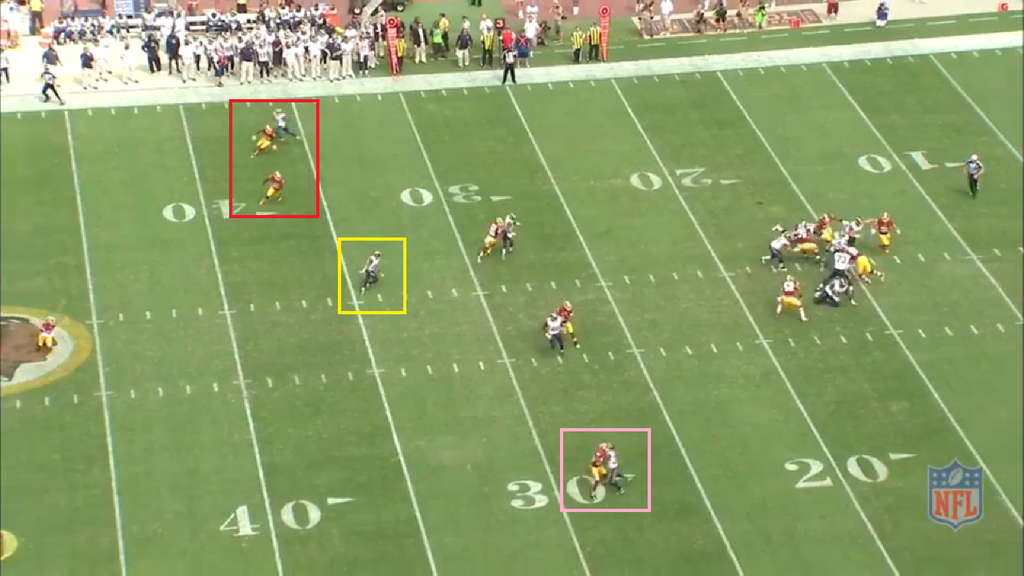
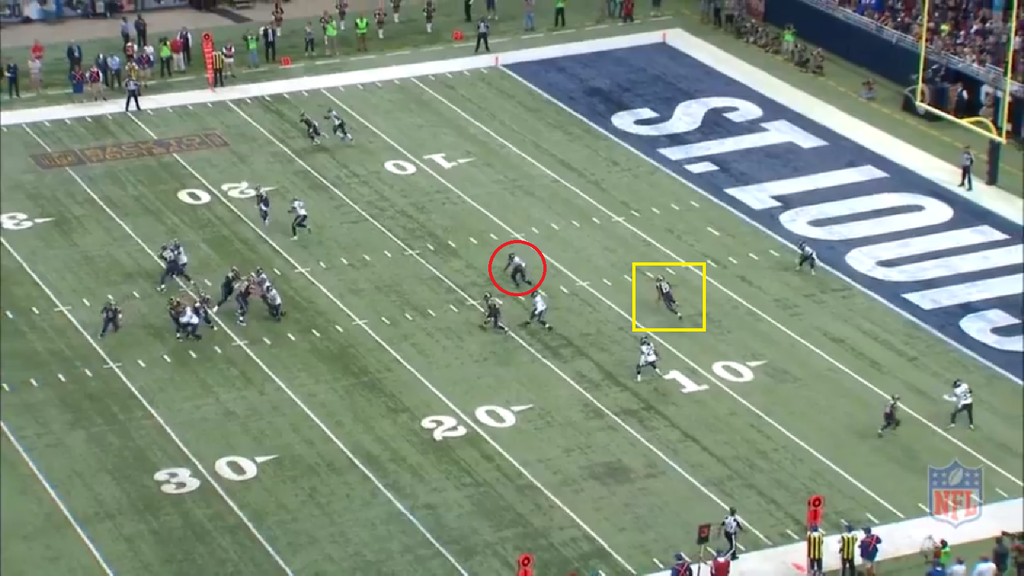



Recent Forum Topics
-
around the league & NFC west, week 8
by

-
interviews, podcasts starting week 8
by
-
injuries after week 7
by
-
Rams tweets etc. … 10/26 – 10/27
by
-
Setting up Chargers game: Week 8
by

-
Raiders game: tweets, plays, highlights, articles, n that kinda stuff
by
-
our reactions to the Raiders game
by
-
RIP Lawrence McCutcheon
by
-
Zooey, what are your thoughts on the upcoming California election?
by

-
marshall faulk diagnosed with parkinson’s
by

-
PHP Concerns
by

-
Setting up the Raiders game: Week 7
by
-
injuries after week 6
by
-
general Rams reviews & assessments, after week 6
by
-
Rams tweets etc. … 10/19 – 10/21
by
-
Arizona game, tweets & stuff like that
by
-
our reactions to the Arizona game
by
-
Rams tweets etc. … 10/15 – 10/16
by
-
around the league (& the NFC west), week 6
by
-
Setting up the Cardinals game: Week 6
by
-
Rams tweets etc. … 10/13 – 10/14
by
-
special teams
by
-
Bills game — tweets, plays, articles, etc.
by
-
Our reactions to the Bills game
by
-
Stafford?
by
-
around the league & NFC west, week 5
by
-
Rams tweets etc. … 10/10 – 10/11
by
-
Week 5 – Nonram games
by
-
Rams tweets etc. … 10/7 – 10/9
by
-
where the Rams are at (reviews after games 4 & 5)
by